
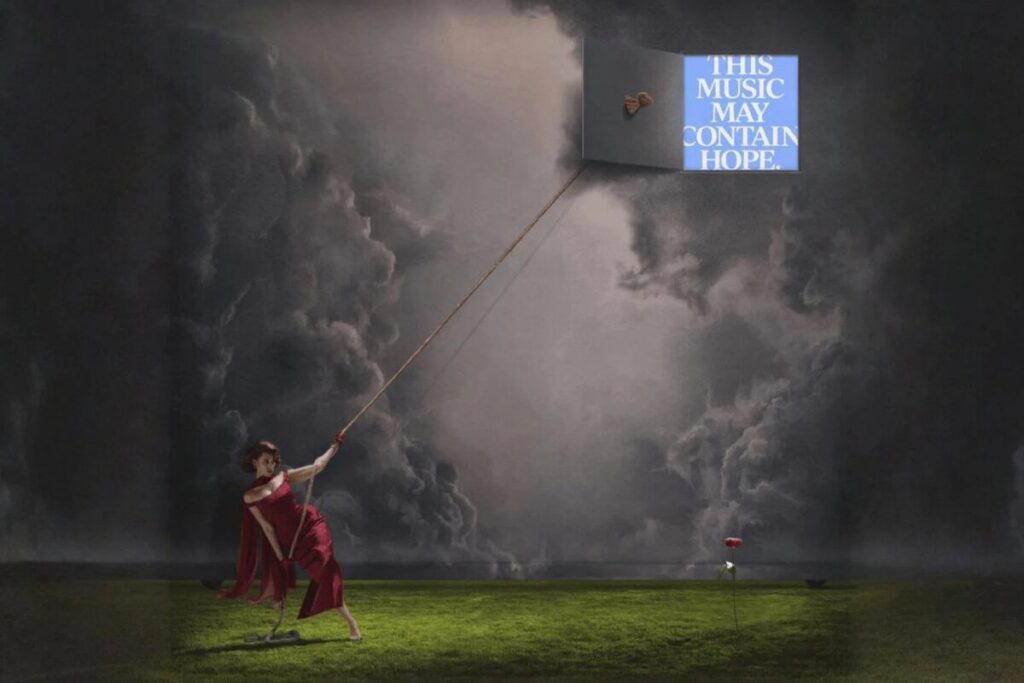
Raye, with her new album This Music May Contain Hope, asks us to follow her through a musical story. Through the album’s narrative, we parse out her complex spectrum of emotions before landing on a Raye far more at peace than we initially find her. All of this considered, I have to ask whether this music actually contains hope.
Music is often an escape, a refuge from the irritations of daily life. Sometimes it is also the exact opposite, and serves as an affirmation of our frustrations and our emotional turbulence. Raye’s new album, This Music May Contain Hope, appears to be cognisant of this power. Her previous album, My 21st Century Blues, was for many an introduction to the independent artist. It flexes her ability to meld genres and focus with ease, moving from the hedonistic Escapism to the existentialist Environmental Anxiety. With as bold a title as she has chosen to use as her sophomore’s moniker, I have to look at its track run and wonder if it indeed does make me feel hopeful. While most album titles surmise something essential about what the project seeks to communicate, This Music May Contain Hope plays with that idea more than most. Hope is an endangered commodity in our current social climate.
The album is, however, a lot more about the idea of inward hope, not hope for existential change, but greener pastures for oneself, particularly surrounding love. While this may sound like a detraction, the result is something that actually feels extremely evocative of the current state of dating. As someone who has been single for a few years, I remember living the arc that Raye takes us on throughout this album. She communicates these musings through an inherently cinematic piece of work. Raye utilises a collection of motifs, maximalist production, and narrative framing to present an album that commands to be enjoyed the same way one would a film, with all one’s full attention from start to finish.


Additionally, following on from the universal critical acclaim garnered by Rosalía’s Lux, and Charli xcx’s flirtation with strings on Wuthering Heights, it’s official – the girlies are going analogue. Raye takes this in a more jazz and R&B direction than Rosalía’s Catholic Mass core or Charli’s electronic approach. Teaming up with no less than Hans Zimmer for Click Clack Symphony, she is exploring the classical genre with a specific view to its cinematic power. The motif here is utilised with the greatest interest of adding to the evocation of cinema throughout the work. It shows that the direction of popular music is shifting away from high-gloss digital production and is far more interested in music with a decidedly human quality. I have to wonder if this is an intentional response to AI fatigue or a symptom of it.
Cinematic music
Raye’s album is incredibly cinematic in nature. Initially, the use of a spoken word intro and the following I Will Overcome, serves as the album’s opening thesis. Raye takes us on an arc of devastation, self-growth, and finally, the aforementioned elusive hope. Everything on this album feels intentional in telling that story. The sonic direction, the motifs and stylistic decisions made all further the overwhelming sense that this is a project that seeks to be treated like and received like a piece of cinema. It reminds me of previous albums like Beyoncé’s Lemonade, which structure cohesion around a narrative arc.
While there are imprints of her previous album on This Music May Contain Hope, it feels a lot more focused, a lot more restrained even. Raye maintains the same quirks and idiosyncrasies that appeared on her first album, but they feel a lot more directed. They’re more well utilised and tell a cohesive yet expansive and maximalist story through music. This album is singularly about the spectacle. The whole point of This Music May Contain Hope is to be an overwhelming maximalist exploration of Raye’s internal journey. Songs like I Hate The Way I Look Today and Where Is My Husband! are evocative of the greats like Ella Fitzgerald and Billie Holiday. Pair this with the several Gospel moments on the album, and I am recalling classic films of the past that were scored with these styles of music. As both genres or both styles of music are deeply connected to specific points in history and time, it makes the album strive for a timeless or even revisionist quality.

An authentic sound
Across the run of the album, Raye uses a very wide spectrum of genres, from the aforementioned Jazz and Gospel, she also deploys R&B, Dance, House, EDM, and Soul. It feels like she presents a sampler of all the music made by Black artists who have influenced her as a creative. There is a real current of homage in her work, with a mind not toward imitation but true inspiration. Raye takes sounds that we may be familiar with and bends them to her will. It is probably most evident in the fact that several songs across the album do not run along smoothly but instead splice and switch between different instrumentations, tempos, and genres in order to imagine a message or emotion as fractured and complex rather than straightforward.
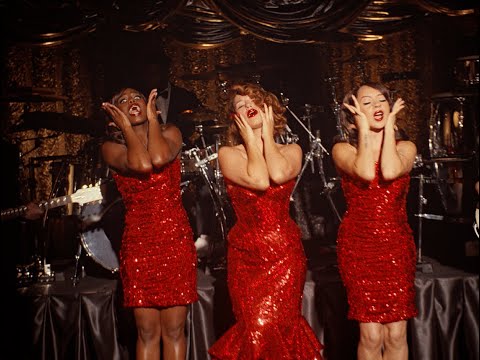
Returning to Raye’s central idea that this music may contain hope. Perhaps the most hopeful thing about this album is how much fun it sounds like Raye had making it. Throughout the entirety of the 17 tracks, there are moments that feel like pure and utter joy. That can be found through the musical choices, the expression in her voice, the lyrics, or a combination of all of the above. It is a refreshing approach in a musical landscape that often now feels far more commercial than it does artistic. Raye flexes her ability to weave a rich network of different types of music, different sounds and different eras, making an album that feels cohesive, but also incredibly authentic to her.
Another way that this album feels authentic is through its use of humour. The lyrics are satirical at times, often tongue-in-cheek, and feel humorous in a way that is not overt. Particularly, the juxtaposition of the more traditional genres with lyrics that are so 2026 creates an album that has an abusrdist quality. The dichotomy of these sounds, which we associate with a time in the past, with modern language or themes like those used on I Hate How I Look Today, WhatsApp Shakespeare and Beware… The South London Lover Boy culminate in a very unique project. The summoning of these very identifiable archetypes and Raye’s musings about dating add to the sense that if this album were to be a film, it would not be a tragedy nor a comedy but somewhere between the two. Perhaps it is best understood as a rom-com in MP3.
This Music May Contain Hope… and a story arc
The overarching story arc of the album is that we see Raye at the beginning leaving a relationship, having family issues and essentially at her lowest point. Throughout the first few songs, we see her determined to overcome what she’s experienced. We then move through the pitfalls of modern dating and the realities of how hard it is to find a partner. The way that we date now is so online-centric; it is so much more about looking at a screen rather than a person’s face. Raye’s sentiments are very evocative and very cognisant of the moment. The story arc sees Ray also explore things like mental health, relationships with her family and fame. This Music May Contain Hope has very clear beats that punctuate the story.
One of the most clear is Click Clack Symphony, which centres on Raye hitting up the girls and having a night out. The lyrics tell of how this is Raye doing something for herself for the first time in the story arc of the album. It muses on how sisterhood, being with people who make you safe, and who don’t have expectations from you, helps you get over a broken heart. That is incredibly true. The arc then continues, seeing Raye explore further facets of her emotions and processing the initial and subsequent challenges that shape the narrative direction of This Music May Contain Hope.


Raye is full of emotional maturity and brevity on the album. Songs jump from uplifting to vulnerable to satirical to excitable, to neurotic, even at times. They all feel real at the same time. You don’t come away from the album feeling like she’s a person who’s emotionally unregulated, but the opposite. Melodrama is at the heart of the sound and the themes on This Music May Contain Hope, but the nuances of her experience are not lost in the sauce. Quite a feat, given just how maximalist the album is. The second single, Nightingale Lane, and the song Goodbye Henry before it, probably encompass the true sensitivities of this album best. Both songs tackle the topic of heartbreak in very different ways, even directly mirroring each other at points. Goodbye Henry is, as literally announced by Raye in the first few lines, a song that sounds happy, but is sad. Over smooth, soulful production, she sings about a relationship that shaped her, but not necessarily in good ways.
Almost inverse, Nightingale Lane is a song that may sound somewhat sad because of its slower pace, and it’s heavier focus. Goodbye Henry is about feeling jilted and trying to process that. Nightingale Lane is a lot more enlightened as it looks back on, in Raye’s words, the greatest heartbreak she’s ever known. The song ends with a resolute assertion that when you have been loved by somebody, that means you are capable of being loved. She reminds us that even when a love is not the right fit for us, it proves to ourselves the capabilities of a heart to open up to another person. In the aftermath of her greatest heartbreak, she looks over the wreckage and doesn’t see a ruin but a foundation. There is an idea that a love that gives one perspective is not a love wasted. Raye seemingly subscribes to this mentality. Throw in the fact that this song is Raye at her very finest vocally, showing her range and her ability to emote with complexity, and we have a true tour de force.

You don’t need a man!
The arc about romance on the album comes to a conclusion before the end of the track list. The song, Where Is My Husband!, the album’s lead single, closes off the focus on relationships. In Raye’s final statement about romance, we see her question where the man is that she deserves. Where Is My Husband! is bombastic; the quick tempo, her speedy vocals, and the lyrics feed into an overarching feeling of frustration, even suspense. The song’s music video shows us Raye in a state of mania, hunting for her future husband, only to find that the reality is she needs to love herself first. While this message of self-love is nothing new, in fact, it is pulled right out of RuPaul’s rolodex of catchphrases, it doesn’t feel overwrought enough to be a cliche yet.
The songs immediately following Where Is My Husband! shift the focus onto Raye’s family. Fields is a Gospel song about her connection to her Grandfather, who features on the track. While I usually find songs like this to be trite, Raye avoids the saccharine by just bombarding you with utterly stunning vocals. The following track, Joy, continues the Gospel theme, taking us to a church sing-along accompanied by Amma and Absolutely, Raye’s younger sisters. Raye centres the importance of those she loves who are not romantic connections; it’s something that many single people who are also tired of the dating game can relate to. Finding solace in people, in familial love or platonic love, is what feels most hopeful on this album.
This Music May Contain Hope had the undesirable task of trying to convince me, a cynical at best, nihilist at worst Gen Z listener, that, in fact, there can be hope. While she does not provide hope in any existential sense, the narrative of the album shows us that hope is not something we are given, but instead have to cultivate. The essence of the story and the message that Raye communicates on this album is that hope is something we choose. This Music May Contain Hope also feels like a celebration of music itself, particularly Black British music. In a time where our culture feels fractured, that in itself does feel hopeful. As the album enters its last few tracks, the hopeful outlook that Raye herself has washes over you as a listener. Hope is a famously fickle and sometimes dangerous thing, Raye has proven that its spark exists within all of us; we just have to kindle the flame.