
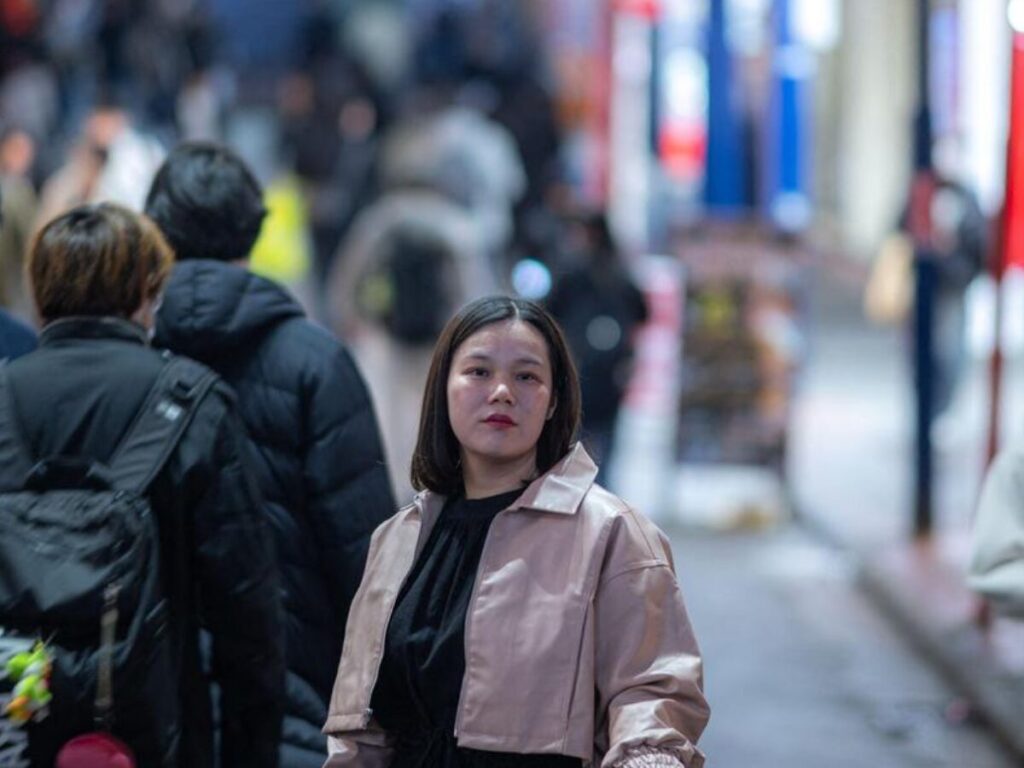
Five Japanese women are challenging a wartime law that makes it virtually impossible to be voluntarily sterilised.
Five women in Japan are awaiting a court verdict that could, for the first time, establish a constitutional right to voluntary sterilisation. A ruling in the landmark case, dubbed “maternity is not my body’s purpose,” is due next week. The government’s position, filed with Tokyo District Court, is that existing restrictions on sterilisation “help guarantee those considering surgery rights to self-determination over whether they want to have children.”
The word the government chose was self-determination. For a law that requires spousal consent.
Japan’s Maternal Health Protection Law sets the threshold for legal sterilisation extraordinarily high: a woman must have multiple children and face serious health risks from further pregnancy, or be in life-threatening danger. Even then, her husband’s written consent is required. Healthy, childless women are simply barred from the procedure entirely. The lead lawyer for the case, Michiko Kameishi, told AFP the law effectively “manages all fertile women as potential maternal bodies” and that its spousal consent requirement signals women are “not seen as independent beings capable of self-determination.”


Among modern democracies, Japan is an outlier. A 2002 study by EngenderHealth, a global NGO focused on sexual and reproductive health, cited in the lawsuit found that more than 70 countries, including many industrialised economies, explicitly permitted sterilisation as a method of contraception. Japan was among eight that forbade or severely restricted it.
The law is a holdover from wartime population policy, designed at a time when women were considered resources for national growth. It was revised in 1996, when its eugenic provisions were stripped out and it was renamed, but the sterilisation restrictions remained intact. The spousal consent requirement for abortion, which has faced years of feminist opposition in Japan, stayed too.
That opposition has rarely extended to sterilisation access. According to Kameishi, few women have felt able to speak publicly about wanting to end their reproductive capacity in a society where, as she puts it, “the myth persists that women are incomplete without motherhood.” Even being childfree carries guilt. The desire to make it permanent has been effectively unspeakable.
Kazane Kajiya, the lead plaintiff and now 29, was one of those women. She flew to the United States at 27 to have her fallopian tubes removed, describing it as a minimally invasive procedure and her “ultimate no” to being treated as a “future incubator.” Growing up, she told AFP, she had been told her uterine lining was “the bed for a baby” and that period pain was preparation for labour. “I felt like I had been shoved onto a train bound for motherhood,” she said. “We’re not wombs, we’re humans.”


A second plaintiff, 26-year-old Rena Sato, a pseudonym used in the lawsuit, is aromantic and asexual and categorically rules out marriage and childbirth. “To me, the act of bringing a life out of my body is strongly linked to heterosexual romance, so this function of fertility has no place in my sexuality,” she told AFP. Her only realistic route to pregnancy, she said, would be through rape. “If I’m forced to maintain my fertility, it’d be tantamount to the state telling me to accept the risk of sexual violence while alive.”
The government’s demographic anxiety runs alongside all of this. Japan recorded 686,061 births in 2024, a 5.7% decline from the year before, with deaths outnumbering births for the 18th consecutive year. Preliminary data suggests 2025 figures will fall below 670,000, the lowest since records began in 1899. Prime Minister Sanae Takaichi has called the birth rate the country’s biggest problem. The government committed the equivalent of roughly $25 billion annually to child-rearing support in 2024.
The word “protection” has long done significant work in reproductive policy. It protected women from the consequences of choosing abortion. It protects them, according to this law, from the regret of sterilisation. Each time, the protection flows in one direction: away from the woman’s choice, towards the state’s interest in what her body might produce.
The lawsuit’s lawyer aims to establish sterilisation as a constitutionally guaranteed right, placing it on the same legal footing as any other elective procedure. The verdict, due next week, will be the first time a Japanese court has been forced to answer that argument directly. We’ll be following it closely.