
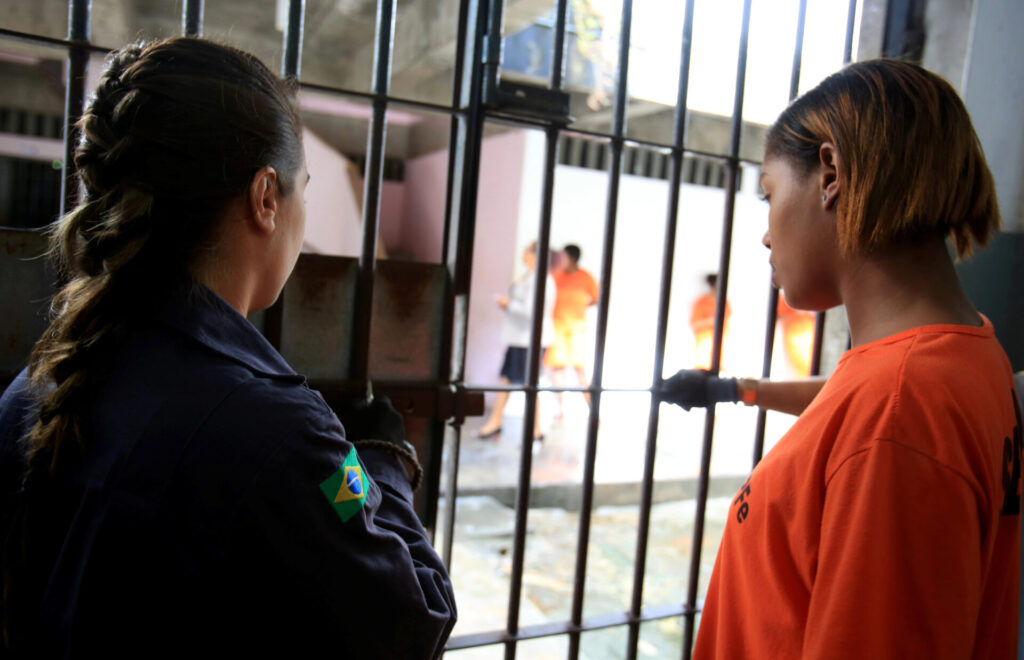
A landmark global agreement on women’s access to justice has, for the first time in the 70-year history of the UN’s primary gender equality commission, explicitly recognised women in detention and imprisonment as part of the international women’s rights agenda.
The agreed conclusions of the 70th session of the Commission on the Status of Women (CSW70), adopted on 9 March at UN headquarters in New York, set out to address the situation of women in prison while drawing direct connections between discriminatory laws, violence against women and girls, and the increased risk of incarceration. The conclusions carry recommendations and policies directed at governments, civil society and other institutions, and are negotiated by UN member states during the session.
Patsilí Toledo, a member of the UN committee on the elimination of all forms of discrimination against women and a lecturer in gender and criminal justice, described the development as historic. “It is really the first time in 70 years of this commission that the topic of women in prison is being taken seriously,” she said. “It’s groundbreaking, and sends a very strong sign that all countries are behind this.”


That sign comes with one notable exception; that the United States was the only country among the 45 member states to vote against the conclusions, with six abstentions. The US delegation proposed eight amendments, arguing the text contained “ambiguous language promoting gender ideology” and references to reproductive health it claimed could imply abortion rights. All eight were rejected. It was the first time in the commission’s history that its agreed conclusions were put to a formal vote rather than adopted by consensus.
The inclusion of incarcerated women comes as the scale of the problem intensifies. More than 740,000 women and girls are estimated to be held in detention worldwide, around 7% of the global prison population. Since 2000, female imprisonment has increased by 60%, nearly three times the rate for men. Around 19,000 children are living in prison with their mothers.
The shift at CSW70 follows years of advocacy. A 2023 open letter coordinated by Women Beyond Walls, a global organisation dedicated to combating the incarceration of women and girls, called on leading feminist forums to stop overlooking women affected by the criminal justice system. In February this year, a group of UN human rights experts warned member states that access to justice, safety and dignity for women deprived of their liberty remained “gravely inadequate.”

Sabrina Mahtani, a lawyer and founder of Women Beyond Walls, said the moment built on years of pressure from formerly incarcerated women and civil society. “Recognition like this signals that women deprived of liberty are finally being acknowledged as part of the global women’s rights agenda,” she said.
Mary Robinson, former president of Ireland and former UN high commissioner for human rights, welcomed the development but made clear the work was not done. “This recognition at CSW is an important step forward,” she said. “For too long, women who have experienced criminalisation have been largely invisible in global conversations about gender equality. Visibility is important, but it must now be matched by action”, action she said must address “the root causes that drive women into prison, including poverty, discrimination and violence, and investing in community-based solutions.”
The CSW session continues until 19 March.
Photo from Depositphotos