
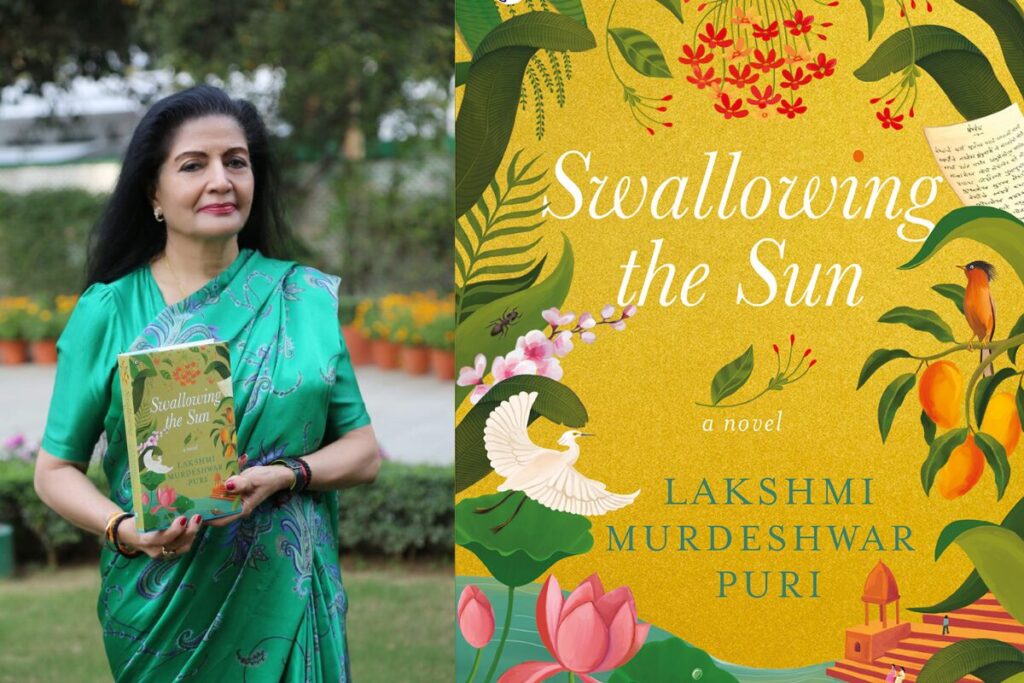
Lakshmi Murdeshwar Puri is an incredibly accomplished diplomat and former key player within several bodies of the United Nations. She is now enjoying a second life as an author. Her debut Swallowing The Sun has been a breakout success in her native India and is now being released internationally.
I often find myself gravitating toward postcolonial fiction. The stories told by those whose histories have been tested by the rigours of colonialism often have the most nuanced and considered observations on how this time period has shaped global culture. Lakshmi Murdershwar Puri’s debut novel, Swallowing The Sun, is one of the most apt books to support this musing.
The novel follows the stories of two sisters, Malati and Kamala, as they navigate life throughout the years leading up to and just following India’s independence. Through the story we meet a collection of characters from different sectors of Indian society who represent a multitude of lived experiences.
I was able to speak with Lakshmi about her impressive career as a diplomat and at the United Nations, as well as the inspirations behind Swallowing The Sun. Her passion for India’s history and honouring the feminist upbringing she had shone through when she spoke with me. The novel is a feat of Indian storytelling, and one that says so much about where India has been and where it is going.


Lakshmi, you’ve had an incredible career both as a diplomat and as a key player at multiple bodies of the United Nations, how did you begin your career? What inspired you to be involved in diplomacy?
My parents were feminists. My father, in particular, wanted all three of his daughters to be someone in their own right professionally. Initially, I wanted to be a doctor. I was born to them when they were 45, so by the time I finished school, he was already retired as Permanent Secretary in the law ministry of India. He said, “Look, becoming a doctor is going to take you eight years. You have seen what it is to be a diplomat when we were in Nepal. I think that is your calling. Why don’t you join the foreign service instead?”
We had spent seven years as children in Nepal when my father was in the Indian Embassy as legal advisor to His Majesty the King of Nepal and drafted the first constitution of Nepal. He was also involved in the drafting of the constitution of independent India with Dr BR Ambedkar.
Nepal was where my love of diplomacy started and soon it became my destiny. And I am glad I listened to my father and became the youngest to join the Indian Foreign Service and never looked back.

It is a wonderful profession to be in, to be representing a country like India, in all its civilizational glory and complexities and also challenges, but also the kind of opportunities that it presents to the rest of the world and the world presents to India. To build mutually beneficial relationships with other countries and global institutions was an honour. I worked both in bilateral diplomacy including as an ambassador but much of my career as an Indian diplomat too was in multilateral diplomacy dealing with the UN and the WTO, World Bank and the IMF among other international institutions. I consider myself privileged and blessed to be where I can make a difference both to achieving India’s foreign policy goals and global public goods.
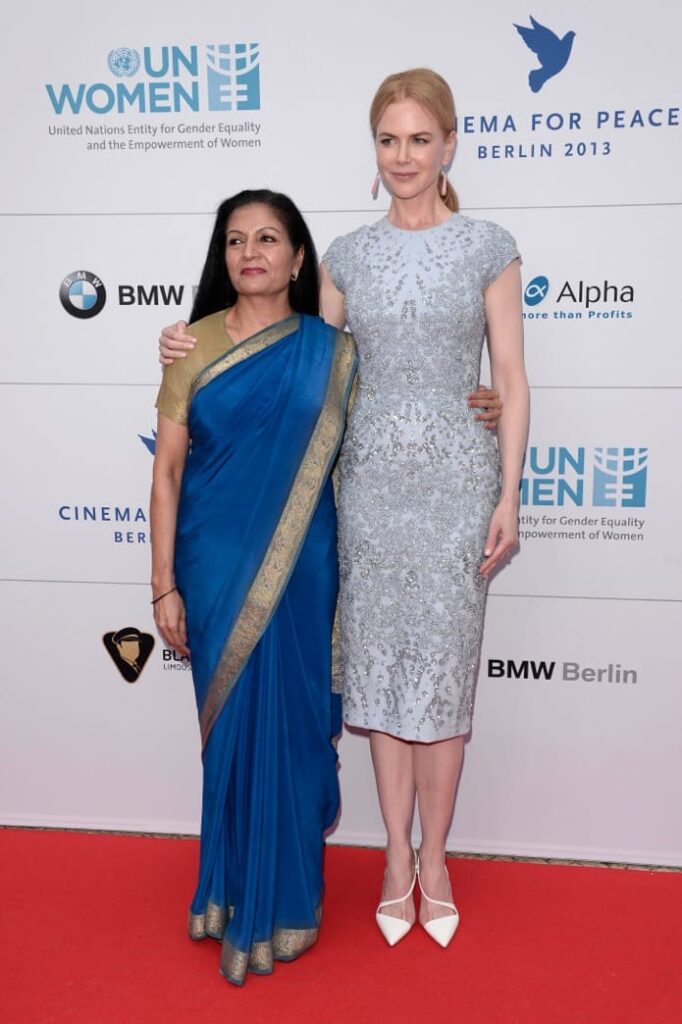
As Assistant Secretary General of the UN you served as deputy executive director of the pioneering global entity for promoting gender equality and the empowerment of women, UN Women. What did this role involve? What were some of the things that you felt were your biggest accomplishments working at UN Women?
I worked with the UN as an Indian delegate and within the UN for 15 years as an international official. In the first avatar I I worked in Geneva twice, dealing with key global public good issues- peace and security including disarmament and counterterrorism, sustainable development, climate change and environmental protection. disaster risk reduction and humanitarian response, human rights, and democracy and technology for all.
I joined the UN after 28 years in the Foreign Service as Director of the flagship Division of the UN Conference on Trade and Development in Geneva. For seven years there, my role was about championing the trade and development causes of developing countries and promoting North-South dialogue and cooperation. Then I was Director in the UN Office of the High Representative for least developed countries. But the climactic point of my mission in the UN was when I became Assistant Secretary General and the founding Deputy Executive Director of UN Women, the first all encompassing global institution set up in 2011 to promote gender equality and women’s empowerment.
My contribution and my role was to advance the mission in 5 areas. The first was intergovernmental norm and standard-setting .We succeeded in adopting the highest standard global norms on women’s empowerment in all sectors and areas – what I call a Global Gender Equality Compact or the Global Feminist Compact that included resolutions adopted in the UN General Assembly, the Commission on the Status of Women and in other relevant fora.

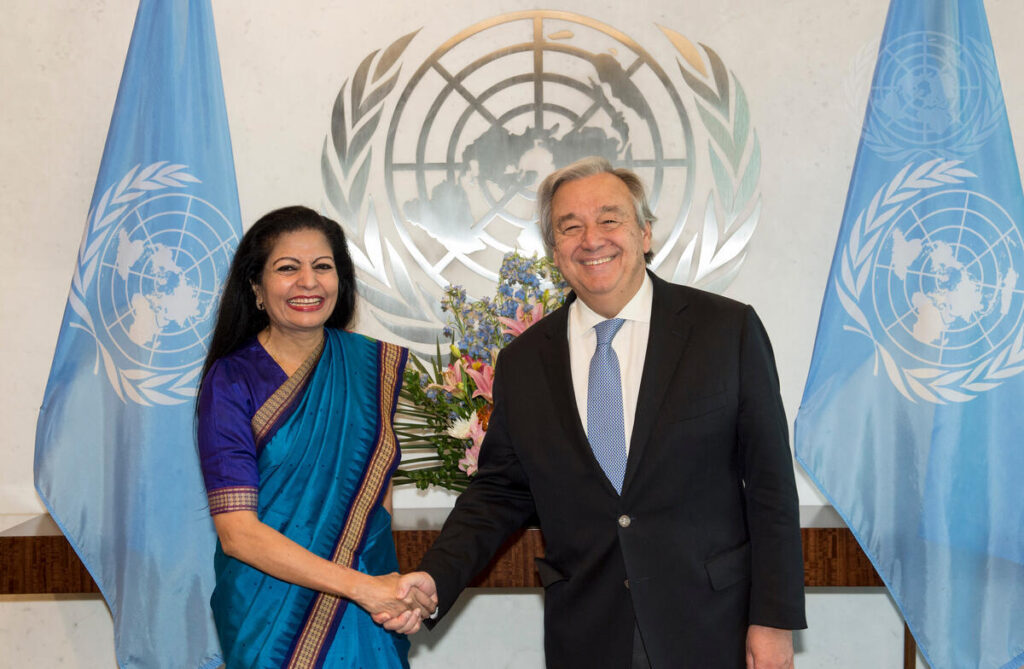
I felt immensely fulfilled in being able to conceptualise and work with governments to ensure that a self-standing, dedicated Sustainable Development Goal 5 on achieving gender equality and the empowerment of all women with 9 targets covering economic, social, political and technological aspects was adopted in 2015. Additionally, 11 other SDGs incorporated gender responsive targets and Agenda 2030 for Sustainable Development itself was gender mainstreamed. These achievements were among those cited for my being awarded the Eleanor Roosevelt Prize for Human Rights.
This was a big breakthrough, an uphill task and I had the privilege of making this happen, working with member states and regional groups from the North and the South, including the European Union, the UK, India, South Africa and Brazil, and so we were able to get together a strong coalition to push ahead with this SDG 5 file.

The second major achievement was convening of the first ever global summit in history to promote gender equality and women’s empowerment and commit to the implementation of this global compact of norms and standards. We had a record 72 heads of state and government there in September 2015 to coincide with the UN General Assembly.
The third aspect was advocacy and movement-building. We had very successful campaigns: He For She, Planet 50-50 by 2030, Step It Up for Gender Equality, the Un stereotype and Women on Boards 20% by 2020 campaigns with the private sector, and Ring the Bell for Gender Equality across 56 stock exchanges around the world, including New York and London Stock Exchange and Women’s Marches. These campaigns galvanized a people’s movement, energized the women’s civil society groups changed mindsets, and built confidence that progress was being made in this most important but politically and culturally contested project for humanity.
The fourth part was bringing together the entire UN system – some 65 agencies / entities including the BWIs to adopt principles and programs under System Wide Action Plan or SWAP because gender equality is not limited to one area and is important to be mainstreamed into everything – from the World Health Organization looking at women’s health issues, to the ILO looking at women’s employment, to UNESCO focusing on women’s and girls’ education.
We also built a knowledge and policy hub and drive a data revolution globally and in countries, working with the private sector, the Bill & Melinda Gates Foundation, and governments and statistical offices to set standards and collect gender-disaggregated data, build policy and monitor progress accordingly.

These were some of the major endeavours and achievements I was associated with, alongside programmes on the ground that focused on economic empowerment, political participation and leadership, ending violence against women, women, peace and security, and laws and policy making at national level that support women and end discrimination against women.
Since working at the UN, you have become an author. What inspired you to begin writing Swallowing The Sun?
Well, Swallowing The Sun is, in a way, my tribute to my ancestors. I realised the truism that there is no greater agony than bearing an untold story inside you for almost 40 years. And there is no greater ecstasy than to tell it at last in a cloudburst of expression. This was a story and stories within stories that wanted to be told and had not been told. I had started writing this in 2000 when I was an ambassador in Budapest and I resumed during the COVID period and finished it within one year.
Because it is inspired by my parents’ extraordinary story. They were ahead of their time, iconoclasts including on social issues- women’s equal rights and caste divisions, defied conventions. That period of time when they grew up- 1918 -1952 had always fascinated me and called upon me to memorialise it for posterity. I grew up listening to their stories, living in those times myself virtually. So I wanted to pay a tribute to their audacious generation of young people – I quote my friend Malashri Lal’s poem, “May you honour your ancestors whose genes sleep deep within you, Those who fought for freedom and kinship. For little women such as you.”
My parents were involved in the independence movement and in the reimagining of India. This resonates so much with the present and is so much a prophet of the future. I really have focused on these Western-educated young people who came from different backgrounds, but then were caught up in this transformative moment in the history of India, the United Kingdom and the world.
There is a certain pride and affirmation of who they are in the midst of all the colonial superstructure that is there, the oppression and the awareness that they live in a slave country. They admirably try to rise above that, conquer self-doubt, and reclaim that civilizational sense of the self, to carve the idea of India from the more amorphous one of Bharatvarsha as a spiritual, cultural and geographical entity.
They are also inspired by and drive the cultural renaissance that is happening at that time especially in Maharashtra with Bombay as its hub but also in different parts of India vividly captured by me in the novel – in the flourishing of theatre, music, literature. And all of that provided the soul force for that reimagination, for the freedom struggle and the Indian national movement. I’m a student of history, too so all of this prompted me to write this novel – historical, yet contemporary fiction, this epic love story, a coming of age and family saga and women’s empowerment tale.
Critics have said the book sings – both in the way poetry has been woven into the tapestry of the novel and lyrical prose. Why have you used poetry like this?
They say that your first novel is so much about who you are. I grew up in a home which was immersed in poetry. All this poetry in the book came from within me. I do believe that poetry is about making thoughts come alive; about words burning and singeing. What better way than to express noble passions of love, of spiritual seeking of all kinds and also different colours of emotions than through poetry.
My father was a poet and a playwright himself in his youth. Later on, he moved on to his legal profession full-time but he never ceased being a poet. He had this book inscribed in 1926 which he bequeathed to me because he knew that I also love poetry. If you look at the first page of the novel, there is a poem called Prem Lekh or Love Letter in Marathi in his handwriting. He would recite his favourite poem every evening to us – each one to a different tune.
The novel is also about inspiration from real life, their memories, their recollections, my interpretations of their experiences. All the epiphanies that came along, and accosted me. My third eye of imagination. Poetry is so important to blend into all of this. To mark different turning points in the story and expressions of love, loss, patriotic fervour and much else. The readers have enjoyed this symphony of English, Marathi and Sanskrit poetry along with lyrical prose that I have composed in the Swallowing the Sun.

You have drawn upon the 148 love letters between your parents when they were living apart as lovers and even after marriage. What did these letters mean in the novel?
I discovered, a treasure trove of these 148 letters in a tin trunk in 1999 as I was leaving for Budapest. That was actually the trigger. The story was always within me, but these letters prompted me to start writing. I belong to a generation that grew up writing and receiving letters as the only means of real live communication between people, especially that matter to you, but particularly those you love and are separated from.
My parents went through that phase as lovers through a courtship of nearly 7 years and later as husband and wife. It was that outpouring which I wanted to reflect in the novel. But of course, it is a mix of the original letters and what I have imagined as responses. Because most of the letters that I found were written by my father, and those of my mother were only a few. Hers are quite dry and matter of fact while his are lyrical, poetic, emotional, chatty, newsy, storytelling, funny, so many emotions. Many of them are very dramatic and erotic and readers have warmed to them, some even demanding more.

The book follows the stories of Malati and Kamala as they navigate Indian society from before independence through to after the liberation of India. What drew you in to this specific period of time to set the story?
Let me just begin by saying that this book at its heart, is a feminist treatise. That’s because of the conjunction of two serendipities, one of my mother’s life itself as a feminist, and my being in UN Women. I learned at UN Women that there is nothing more powerful than storytelling to bring about or to create the new normal of gender equality and women’s empowerment. That is why I wrote this novel, with Malati as the main protagonist who is inspired by my mother’s character, and some elements of her life’s trajectory. This includes the fact that her mother died young and her father, saved her from child marriage and child motherhood by sending her and her sister Kamala to an orphanage cum boarding school and later to Elphinstone College and Law College in Bombay as pioneering women graduates.
My grandfather who inspired the much-admired character of Baba in the book was a social reformer, an advocate of women’s education as the silver bullet of change, he was an enabler of gender equality and women’s empowerment. All of that came together in writing that book.

What I have done is also to create women characters who are what Tony Morrison calls outlaw women and Maya Angelou calls phenomenal women. These are women who are breaking boundaries, who are trying to be extraordinary. There are a few caged bird women characters, like Surekha Malati’s sister and Ayee her mother who, even within their traditional trajectories, exercise freewill from time to time. Sometimes this will to be extraordinary ends in tragedy, sometimes in triumph.
I do try to mirror all the key issues that are relevant even today for women and girls. And to show that 100 years ago, progress was made. There were people who went against the norms of the times and challenged them successfully. So it can happen now. There has been some progress, but we need to move on all fronts so that women can be anyone they want, do anything that they feel they are capable of doing, feel that no frontier is impassable!
That is the kind of key message that my women characters, the story and the epigraph of the book gives. The title of the book is drawn from a 13th-century woman saint, Muktabai and her devotional verse, which talks about miracle making. She says the little ant flies into the sky and she swallows the sun. My women characters try to be like those ants who dare , keep faith and who persist to leap through limitations, who metamorphose into self-realised beings, making the impossible possible.
Across Swallowing The Sun there are consistent references to Hindu mythology, particularly of the Tridevi, how has Hinduism shaped your own relationship with women’s rights? Was it important for you to underscore the story with Hindu mythology?
I draw deeply from Indian and Hindu epics, lore, philosophy and tradition for presenting the themes of the novel in bas relief, for world and character building. This is something I learned from life but also during my tenure at UN Women. You need to interpret tradition as an asset to advance progressive ideas so they are more palatable and convincing to all constituencies – those who hold on to patriarchy or those women and girls who hesitate to seize opportunity. I weaponised good traditions to prove that the patriarchal interpretations were distortions and that the core of Hinduism and Indian civilisational values actually strongly affirm gender equality celebrate woman power.
To give you an example, when Baba (Malati and Kamala’s father) tries to get more village girls to go to the boys-only school, he makes his case before the village council. He invokes the goddess Saraswati, the goddess of knowledge. Later, he tells them you can be like the three goddesses, the three Devis: Saraswati, the goddess of learning, Lakshmi, the goddess of well-being and intelligence, and Parvati the goddess of Shakti, the feminine power if you believe in yourself.
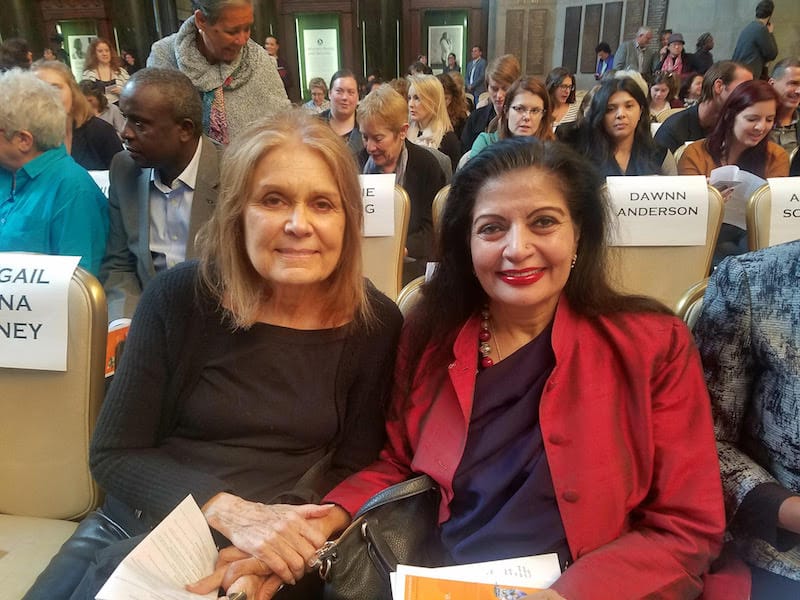
At UN women and in India my advocacy always invokes this concept of the Tridevi. as also that of Ardhanarishwara, cosmic power and divinity in the fused being of half man, half woman. These examples show that India and Hinduism are unique in their deification of women.My dear friend, Gloria Steinheim, has defined a feminist as one who recognises the equality and humanity of both men and women. I’m saying that in India and in Hinduism, there is not only this recognition of equality and humanity of both men and women, but equal divinity of men and women!

A key theme in Swallowing The Sun is the nuanced relationship the characters have toward British Colonial Rule, with a central theme of resistance. Can you tell us more about how colonialism has shaped the way you told this story? What messages did you want to express about British occupation over India in the story?
I want to say that this is very much an Indo-British book. The period, the many British characters and historical events, literary and philosophical references woven into the novel speak to that amalgam. In so many ways, it illustrates a dialectical relationship between these young people at that time and the British-one of love and resistance. On one side, they admire so much the British language, Western liberal ideas, literature, theatre – everything that is the soft power of the British. But of course they oppose and resist in every way they possibly can British colonial rule, rascism and oppression as freedom and justice seeking young people. And they engage in acts of resistance – from staging a patriotic play in Marathi to participating in the non-cooperation movement of Mahatma Gandhi and staging protests against the Simon Commission among others.

I draw a distinction between the typical colonial agents who ruled India – cast in the mould of as imperialist villains, and those enlightened British characters – professors Wodehouse, Hamil and Adfington, Guru’s British bosses and Annie Besant – who are sympathetic to Indians and their aspirations and whom the protagonists admire. That nuance has been very much appreciated by readers. Then there are British women characters – Dorothy and Miss Crawford who are perhaps victims of the Empire themselves.
Malati’s swallowing the sun moment is when she is defending revolutionaries in court, and she wins the case, and frees them. It is unsung sheroes and heroes like her and Guru without whom the Gandhis, Nehrus, the Patel’s and the Ambedkars would not have been able to secure independence for India. I try to bring out their stories and also make the point that young people cannot leave it to the so-called recognised national heroes or leaders to build a nation or a world They have to contribute and to be a force for good for humanity.
India is at the heart of many conversations about women’s rights; how do you hope the conversation about women in India changes? Are there any aspects of the discourse that you feel deserve more attention?
This novel is about showing that 100 years ago, so much progress was attempted and made. There was an iconic social reform movement against harmful practices like child marriage, child motherhood, ostracisation of widows. There were young women and girls who came forward and seized their agency. Equally, as I have shown in my novel, the male characters are so enlightened. We need men to be champions of women’s empowerment and stand up for their rights.
Much progress has been made in India. What happens in India in regard to this project for humanity or womanity, is going to be consequential to scale and scope for the rest of the world because one-sixth of it is in India.
Many issues still subsist, particularly in the villages. There you have the of intersectionality of poverty, remoteness, and gender. The cultural baggage and structural patriarchy is more resistant to reform there. But the progress has also been spectacular for example in education – literacy, digital inclusion and STEM

You have 43% women graduates in STEM, but not everyone goes into careers in STEM, so that gap between education, skills, jobs and labour force participation still needs to be worked on, in both the formal and informal sectors.
Technology as an enabler of emancipation is working, and social media is being used to spread what I call the new religion of gender equality and women’s empowerment. For example, Prime Minister Modi had this campaign against girl aversion and boy preference, Beti Bachao, Beti Padhao – save the girl child and educate the girl child – and that was seen even by UNICEF as one of the most successful campaigns in changing mindsets and correcting the sex ratio asymmetry.
- METAMORPHOSIS
Malati and Kamala had come to believe that
they were living in Bombay at a time when
everything was being turned inside out and
upside down the improbable Muktabai way. It
was as if the small, sweet elaichi bananas, grew
with their ivory coloured, fragrant, sweet, pulpy
flesh outside, enveloping their thin, yellow,
blotchy skin inside. It was as if the Indian tiger
had come out of the forest, and sat supping with
brown coolies at the starched linen covered table
in the Gymkhana Club of Bombay, being served
by British sahebs in red and white uniforms
doubling over to please the natives. It was as if
the frail Indian ascetic with nothing but the
sword of his soul force, the shield of his khadi
loincloth, and the cannon fire of the Indian
masses, was breaching the iron and stone
battlements of the great British empire, riding on
the waves of his tremulous voice. They cherished
their freedom to become part of this miracle
making—even if as a tiny particle! They did not
want to lose that privilege.
Thanks to PM Modi’s bold leadership India was one of the pioneering countries to adopt a 33% reservation for women in parliament and state assemblies in 2023 after 27 years of procrastination. I am hopeful that this would be implemented in time for the next Parliamentary elections in 2029. That will come on top of the grassroots leadership revolution that has already happened. There are 3 million village- and district-level women councillors because of the quota system instituted in 1995. These local government leaders will provide a rich reservoir of women leaders at highest legislative levels.
Prime Minister Modi has been at the forefront of advocating for the concept of women led development and he has implemented programmes and policies where women are intentionally targeted for support. In India, one of the key issues is that in inequality and discrimination comes from financial and economic asymmetry, the feminisation of poverty, and women’s access to resources, property and housing. For example, in housing-for-all programmes’ of PM Modi women have to have the property title, and that has increased the economic power of women. Similarly, access to bank accounts, women’s entrepreneurship and jobs, education and skill development, health, nutrition are major areas addressed.
Swallowing the Sun has done extraordinarily well in India – 7 reprints, 5 book prizes, signed up for a premier multi-part internet film series – it is hardly possible to imagine a better outcome. How does it feel?
I’m very happy that it has been both critically acclaimed and loved by readers too both in India and in the English speaking world. The international edition of the book was launched in UK – aptly so – by publisher Prabhu Guptara of Pippa Rann Books in February 2026 and will be launched in Canada as well as the USA in the Autumn this year. It is being produced right now as as a global multiseason web series, and so will reach out to an even wider audience.
I am told that it draws in readers into Malati’s world from the first page itself. It’s time travel, and yet it feels like it’s happening now. Every one – men and women and young and old can relate to it, It’s not remote. It’s accessible and speaks to the intellect as much to the heart and soul. It is also , as David Davidar the legendary author, and editor has said, one of the most powerful debut novels by an Indian writer in the 21st century.

My readers love the kind of sisterhood that the relationship between Kamala and Malati celebrates and with other women characters like Hema, Chandra Surekha, Sarala, Veena and Maa Saheb. They admire the men characters too. They are enchanted by the love stories, and the grand romance not written about in recent times.
Then there’s the broad sweep of the novel – the epic drama about generations of Indian women and men in the British Raj, acted out over 30 years against the pulsating backdrop of a global exemplar of a freedom struggle. Also, I think the incidents, the poetry, the letters, the stories within story, the play within the play, the Indian soul but universal appeal that this book has, all of that has endeared it to the readers. It is a novel about young people and for them as for people across genders, generations and geographies. Critics and readers alike have said that although it is a 412-page book, it’s a page turner. It’s unputdownable.
Do you have any other projects you’d like to share with our audience?
Yes, my second book The Sari Eternal is also on its way to becoming a best seller. It’s the story of the sari and it tells stories about the sari, as a civilisational garment, dating back 5000 years, as a symbol of Indian womanhood – beautiful, unique, strong, creative, resilient, fluid and evolving, as a river of unstitched cloth that wraps and unites all of India in its bewildering diversity. It’s my personalised vision of the sari and I think will both inform and enlighten neophytes and connoisseurs alike about this ‘back to the future garment’ if there is any! The six chapters corresponding to the six yards of the sari include my love affair with the sari, its history and depiction in art and sculpture, regional variations and styles, the sacred and the temporal, the sari in the epics and classical literature, in Indian cinema and modern media and Gen Z taking the sari from its timeless past and present into eternity.
Swallowing the Sun is clearly a labour of love, what is the main thing you hope readers take away from it?
The indomitable human spirit and undying hope is what my readers should take away from the book. That nothing is impossible. If you set your heart to it, and you dare, you can overcome limitations. Everything that is seemingly impossible can become possible. When I was with UN Women, one thing which we kept telling ourselves and kept telling all who would listen was that our work around gender equality was not mission impossible, but was mission possible. That is what I would also ask my readers to take away. That for every good thing that they do, every worthy goal they aspire for, every noble venture they undertake – however Sisyphean it may appear, it is mission possible. we have to act with this conviction specially in today’s conflict ridden, dystopian world. Otherwise there is no salvation for humanity.