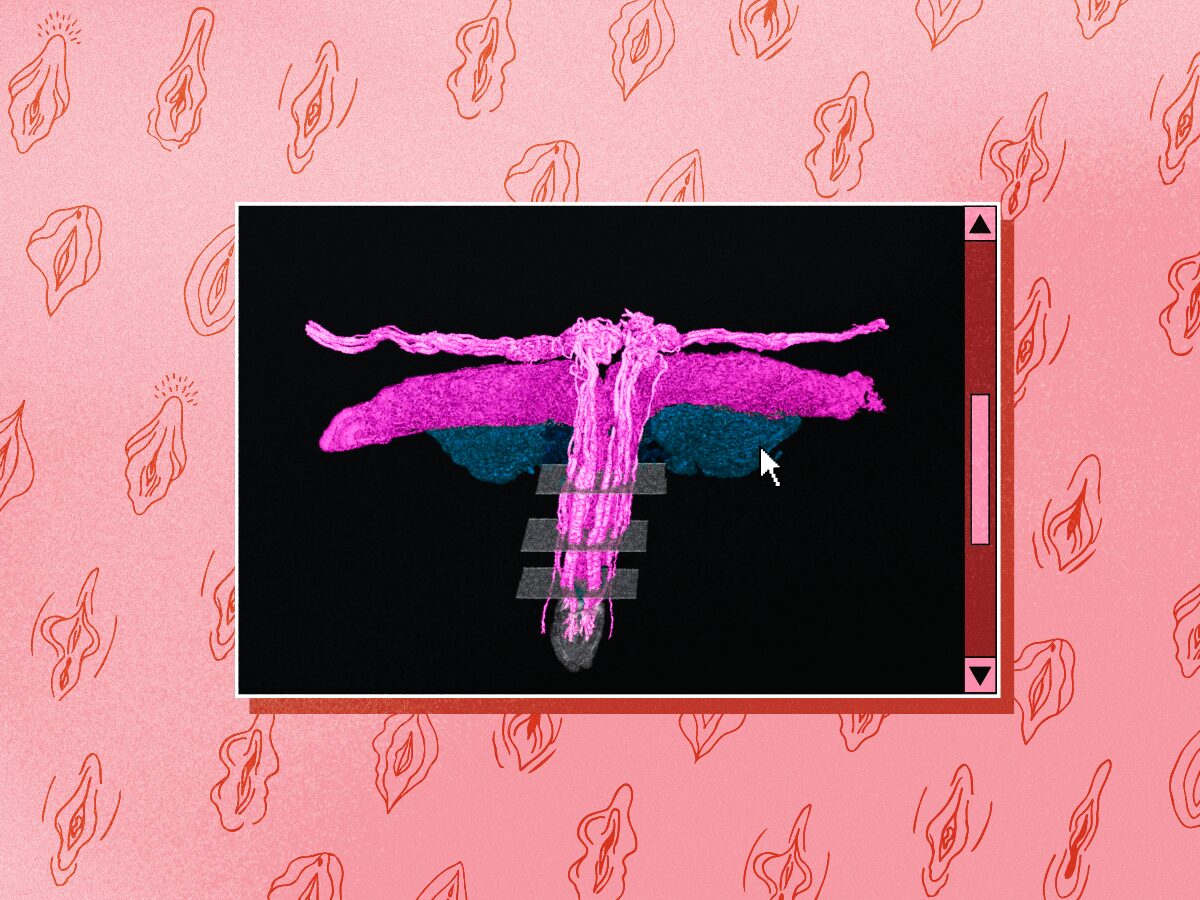
Scientists have completed the first-ever 3D map of the full network of clitoral nerves, almost 30 years after the same was done for the penis. The findings from this clitoral nerve mapping could transform surgical practice and challenge what medicine thought it knew about female anatomy.
The first-ever 3D map of the full network of clitoral nerves has been carried out, almost 30 years after the same mapping was completed for the penis. This work is just the beginning of a new wave for clitoris science, but it has already revealed the extent of the nerves crucial to orgasms and highlighted errors in current medical teachings about the clitoris. It could also help lead to improvements in sexual function for women who have undergone pelvic operations, including reconstructive surgery for victims of female genital mutilation.
Ju Young Lee, a research associate at Amsterdam University Medical Center in the Netherlands, together with her colleagues, used high-energy X-rays to create 3D scans of two postmenopausal female pelvises donated to them through a body donor organ programme. The scans provide a detailed view of the five complex branching nerves that run through the clitoris, revealing that some nerve branches extend to the mons pubis, others to the clitoral hood, and others to the folds of skin and labial structures of the vulva.
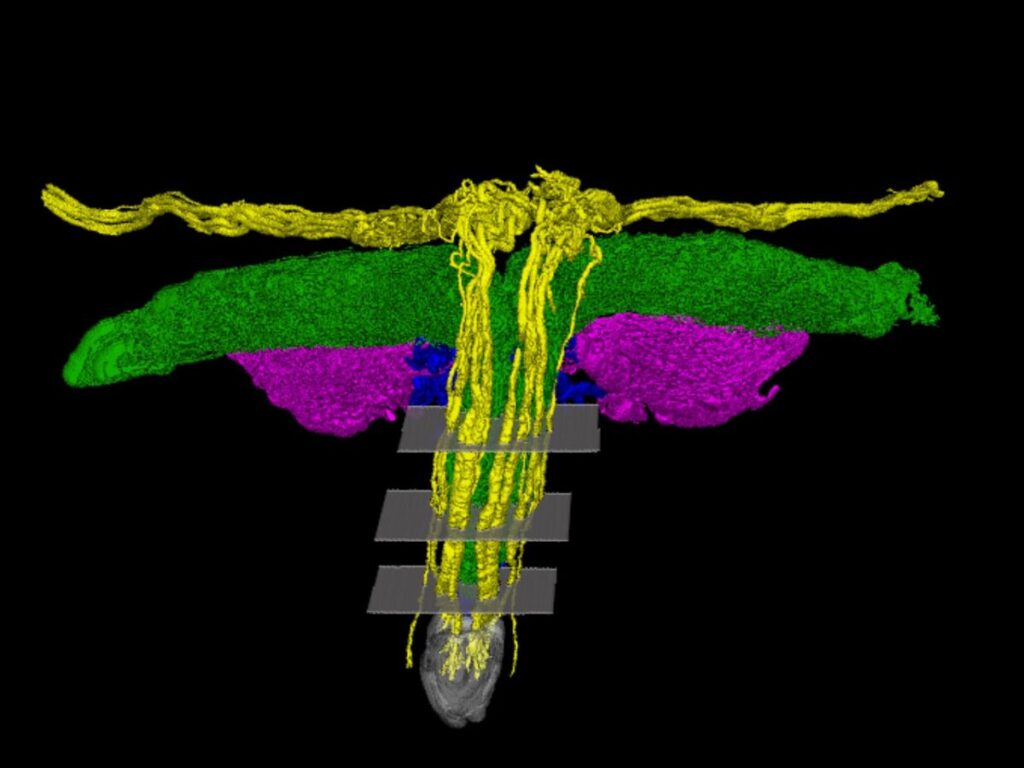
Where previous research reported that the dorsal nerve of the clitoris (DNC) – the organ’s main sensory nerve – tapered off as it neared the clitoral glans (the external part of the clitoris), the new scans reveal that the DNC actually extends a strong set of branches into the glans. Lee’s 3D map and this type of visualisation are vital, because you simply cannot see all of the nerve branches of the clitoris via dissection or clinical imaging methods.
From being described as the “devil’s teat” and a sign of witchcraft (the Malleus Maleficarum, a 1486 guide to identifying witches), to “a small penis” (the 38th edition of Gray’s Anatomy in 1995), the clitoris has long been ignored in scientific study. The clitoris cycle in science over the centuries has been one of discovery, debate, getting forgotten about and rediscovery, on repeat.
The first published anatomical dissection of the clitoris was in 1546 by the French anatomist Charles Estienne, who described it as the “shameful member”. It was described as “a new and useless part” by another anatomist of the same time, Andreas Vesalius, who tried to argue that a healthy woman had no clitoris. By 1672, the Dutch physician and anatomist Regnier de Graaf managed to write that every female body he dissected had a visible clitoris, while a midwife called Jane Sharp was busy describing the sexual function of the clitoris in 1671.
Just last week, Meta deleted from Instagram one of the largest women’s sexual health communities on its platform, @bellesaco, for using anatomically correct terms in an educational context. “Our violation? Using the word ‘clitoris’,” they said in posts on X and Threads. “We’re calling on Instagram to reinstate our account and explain why women’s sexual health is treated as explicit while erectile dysfunction ads run freely across the platform.”
The cultural taboo around female sexuality that continues to run rampant in 2026 held back scientific investigations and kept the clitoris out of standard anatomy textbooks until the 20th century. Even as late as the 1980s, it was still only put in as a footnote, much to the fury of Melbourne urologist Helen O’Connell, who published the first comprehensive anatomical study of the clitoris in 1998.
The sole purpose of the clitoris is female sexual pleasure, so it’s hardly surprising that it’s one of the least studied organs in the human body. A literature review conducted by O’Connell’s team found that only 11 articles on anatomical dissection of the clitoris had been published around the world since 1947. Hundreds mentioned clitoral anatomy, but only in relation to sensation restoration procedures following a clitoridectomy or female genital mutilation. “We see literature doubting the importance of female orgasm, entertaining the argument that from an evolutionary standpoint, female orgasm could merely be a byproduct of selection on male orgasm,” she wrote.
In O’Connell’s 1998 study, she concluded that current anatomical descriptions of human female urethral and genital anatomy were inaccurate. Later, in 2005, a study examined the clitoris under MRI and concluded that the clitoris was not just a small nub of erectile tissue, but an “otherworldly shape”, and the nerve-rich glans were the external protrusion of an organ that extended beneath the pubic bone and wrapped around the vaginal opening, with bulbs that become engorged when aroused.

O’Connell said the findings of Lee’s new mapping are crucial to understanding the female sensory mechanism underlying arousal and orgasm via stimulating the clitoris. “Orgasm is a brain function that leads to improved health and wellbeing as well as having positive implications for human relationships and possibly fertility,” she added.
Dr Blair Peters, an associate professor of surgery at Oregon Health and Science University School of Medicine who specialises in genital nerve procedures, said this new study may help surgeons avoid damaging clitoral nerves during operations on or near the vulva. “We have peripheral nerve treatments for everything else from head to toe, but the genital region is like a black box that’s been unexplored,” Peters said. He added that there is a rise in medical recognition of the importance of genital nerves, thanks in part to insights from gender-affirming surgeries, but there is still a long way to go.
“I see this work as the beginning of a long journey for a new clitoris science,” Lee said. She hopes to expand her research to cover a greater variety of ages, and also to open a clitoris exhibition within Amsterdam University Medical Center, inspired by the Vagina Museum in London, to expand knowledge about the clitoris.
Lee and her colleagues’ findings were published on 20 March on the preprint server bioRxiv and are awaiting peer review.