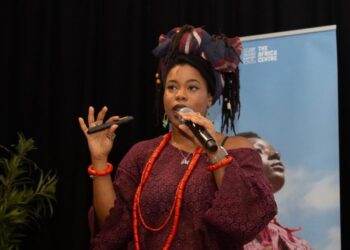
Poppy Sheward-Skelton is a writer and researcher from the UK, currently touring her project The Wandering Womb. Having had her concerns around her period dismissed by her GP, Poppy is passionate about campaigning against period shame and argues that society makes menstruation a much more painful process than needed. Poppy chatted with TNF writer Meg Thomas to discuss her project.
Like many young people with periods, I had been shamed into silence about my menstrual cycle – my understanding of it shaped by whispers about sanitary products and not being allowed to go to the bathroom in school had led to me internalising a sense of disgust about my body. To be honest, I had never really considered how my shy attitude about periods could have been shaped by wider systems of oppression. What erased stories had contributed to my shame? What lies was I telling myself about my own body?
That is until I was lucky enough to stumble onto a phone call with the magnificent Poppy Sheward-Skelton – a writer and researcher exploring the false narratives peddled to us about periods, and presenting her findings at “The Wandering Womb” workshop at the Vagina Museum on March 21st. I chatted to Poppy about her story and how she hopes to re-imagine the way people view the menstrual cycle through encouraging creativity and reflection.
Medical mispractice and Poppy’s experience
By trade, Poppy is a researcher interested in memory, community and storytelling. Following a stint working in Cambodia, Poppy came home to ill health. Poppy’s GP told her that while she did have some of the antigens from an autoimmune disease, this wasn’t significant enough to be explored further. Poppy’s concerns that she may have a tampon stuck inside were largely ignored following a brief examination. With persisting symptoms and no answers, Poppy felt disappointed and yearned to reconnect with herself and her body. After working odd jobs, she had saved enough money to go away to Mexico. You’ll have to attend her workshop for the details, but fast forward through an intense Day of the Dead, a hypnotic yoga trance and a hospital trip, Poppy discovers that she did, indeed, have a tampon stuck inside her and needed urgent hospital treatment. Poppy’s intuition, ignored by doctors in the UK, was correct.

This experience, while traumatic, is what fuelled her current project – helping people to reconnect with their intuition while tackling myths about periods and the shame that runs dominant in our culture. Following the incident in Mexico, Poppy reflected:
I began really retracing my steps, how I became so disconnected from my body and instinct and how my GP did not believe me. Basically, I applied all the research that I’ve been doing about community and storytelling about how we experience our bodies and the world, and applied it to menstruation.
Poppy is not alone in her experience – half of women say that the severity of their period has been dismissed by someone. Poppy believes that patriarchal socialisation is the reason many people struggling with their periods, and other reproductive issues, go largely ignored:
part of the reason why it went on for so long is the fact that periods remain so taboo – I didn’t have it in me to cry for help more loudly.
Tackling patriarchal narratives
Through her workshops, Poppy hopes to encourage people to connect with repressed histories and reconsider the cultural narratives that have been pushed concerning menstruation. I was interested to find out what Poppy hoped guests would take away from her workshop:
“Everyone that comes to the workshop will learn something. It’s such an unexplored history that you can’t come to the workshop and not learn something. It’s designed in a way that you relate experiences to yourself and what is going on with your body at that time. I know that everybody that comes to the workshop will feel more connected to themselves.
Poppy stressed the inclusivity of her project, and that participation isn’t only for people with ovaries, or for people with creative experience – Poppy teaches that everyone can benefit from creativity, self reflection and re-thinking the way we look at our bodies.
Poppy aims to subvert a patriarchal way of thinking about health which has been primarily about “dominance, structure, rational thinking – which are all very valuable things, but they’re more valuable in harmony with feminine.”
Grounded in her background as a researcher, the workshop goes back into the history of medicine. Poppy highlighted to me that women were only allowed to practice medicine professionally from 1876, despite the Hippocratic Oath being nearly 2,500 years old at that point:
So, what we consider modern medicine has been growing for a very long time without women. All that time female voices have been dismissed, females have not been able to be trusted with authority over their own bodies.

We reflected on the role that capitalism and the advertising industry plays in our cultural narrative around periods – I began to consider before how companies profit off insecurity around menstruation. Poppy explained: “adverts will often say things like avoid embarrassing leaks, or odor. If you stop and look, it is very rare to find storytelling on menstruation that isn’t embedded with shame in some kind of way”. Through her current workshop, Poppy is aiming to subvert this narrative of shame into one of empowerment, acceptance and self-understanding.
Creativity and intuition
Along with her authoritative background in research, it was clear to me that creativity and connection played a vital role within Poppy’s practice. Within a medical institution that all too often encourages people to disconnect from their intuition, Poppy insists that practicing “creativity is one of the best ways of connecting with intuition.” Within the workshop, Poppy uses her own creativity to encourage participants to write about their reflections and experiences, without a need for prior writing experience. In fact, Poppy has used her own subconscious creativity to process her feelings around menstruation. Talking of her time in Mexico, she shared with me:
I facilitate my writing in a way that I ask people to allow their subconscious to come through, this might help them feel connected to their bodies needs. My sketchpad at the time was starting to become filled and filled with these female bodies, with bolts of lightning almost coming out of their reproductive system and their bodies contorted in pain.

Closing the interview, I wanted to know what stories in culture are normalised about the menstrual cycle that Poppy aims to challenge. She answered immediately and with determination:
Silence. 1 in 7 children don’t know what a period is before they get their own. You wouldn’t do that with potty training. 12% are told not to mention it to their parents when they do get it. This silence creates shame.
Poppy’s workshop hopes to teach that this culture makes periods a more painful experience than necessary. I left the interview feeling inspired by a woman who had taken an instance of medical negligence and turned it into an opportunity to teach, and to help combat patriarchal misinformation. I reflected on the role that creativity, shame and cultural-myth building played within my own life and self perception. Through her creative practice, and being vocal about menstruation, Poppy aims to combat the root of the problem, “the fact these stories aren’t being told at all”.
Poppy’s workshop is currently touring London. To find out more, follow this link.