

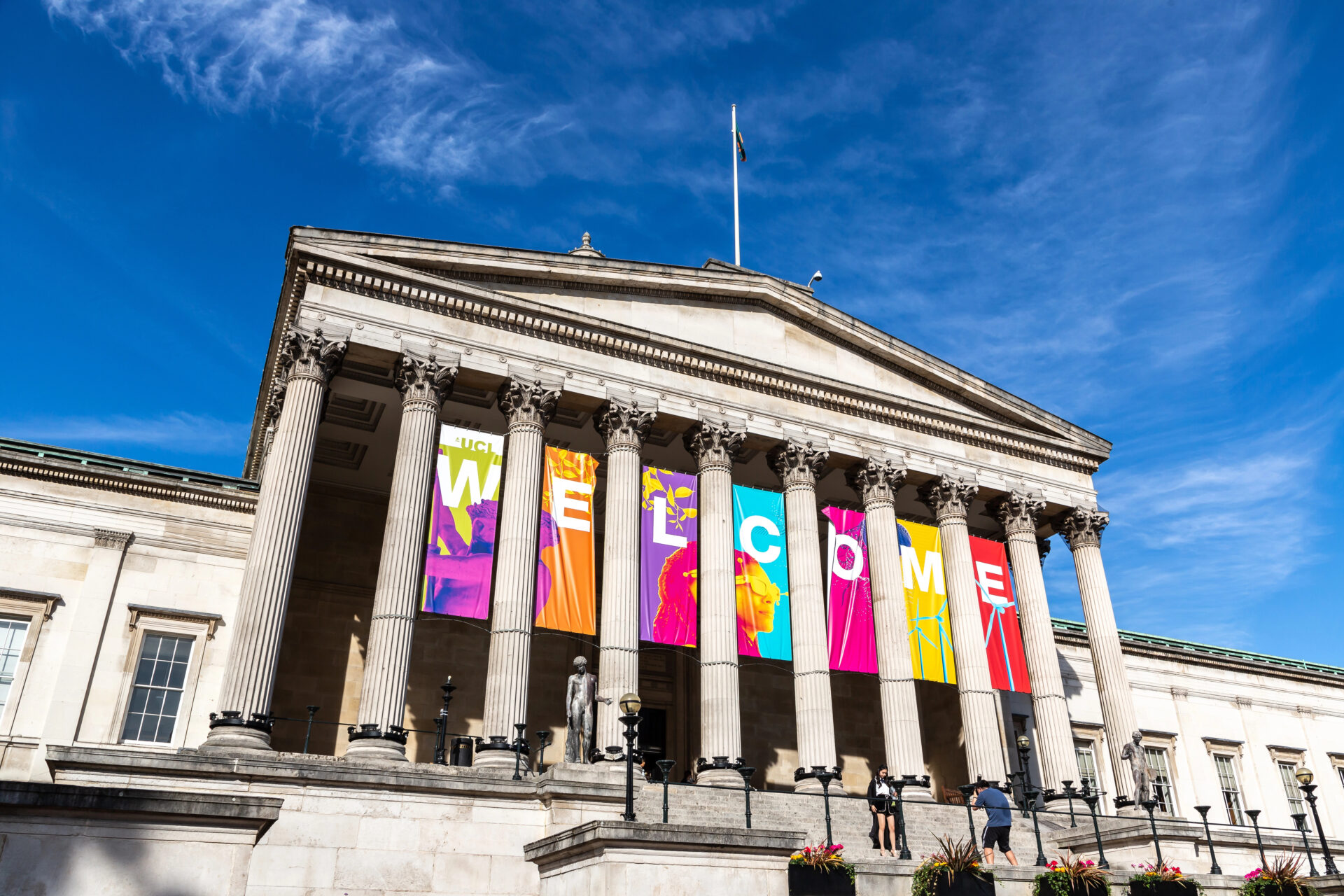
UCL’s Institute of Advanced Studies, home to over 20 feminist, queer and race research centres, is closing in July. The academics inside it say the decision amounts to “institutional self-harm”.
For the past decade, UCL’s Institute of Advanced Studies (IAS) has been home to over 20 research centres, conducting revolutionary research across feminist, queer and race issues. That was until a statement from the IAS released in February stated they will be “winding down” the centre before its official closure in July.
Academics seeking a clear explanation for the IAS’s closure are still waiting for answers. UCL’s press releases have been unclear, with sustainability issues being raised in internal statements that The New Feminist received. However, a recent ‘Times Higher Education’ report cited financial issues. In their own press release announcing the closure, the IAS stated: “Maybe the IAS is too good to be true. Maybe.”
Centres like the Gender and Feminisms Research Network, qUCL (LGBTQ+ studies) and the Sarah Parker Remond Centre for the Study of Racism & Racialisation (SPRC) have called the IAS ‘home’ for the last ten years. The centre’s closure leaves many academics unsure of how their work will continue.
The New Feminist spoke to the initial founder of the IAS, along with an anonymous source close to the IAS, and a PhD student at the SPRC. All of whom corroborated that internal efforts to prevent this have been largely ignored.
Tamar Garb, founder of the IAS and its former director, said: “I feel very angry that what I see as an act of vandalism is about to be perpetuated. No amount of consultation and support, and real advocacy on the part of a whole lot of academics seems to have made the powers that be pay attention.”
“I think they have a rather limited understanding of what the IAS achieved and the extraordinary intellectual environment that it created. So I find it very short sighted, amounting to a form of institutional self harm that they’ve decided to close it down.”
This announcement comes amid dramatic nationwide cuts to the arts and humanities in higher education. In February, Bristol University offered all staff in their Humanities and Modern Languages departments the option of a new voluntary redundancy scheme, with three weeks given for staff to express interest.
Student-suggested PhDs funded by the Arts and Humanities Research Council are also expected to fall by 60% this year alone, from nearly 400 student-led PhDs to 150.
In the case of UCL, the IAS was founded to both house established research forums and create new research initiatives like the SPRC or “The Centre for Collective Violence, Holocaust and Genocide Studies”. Garb stated hundreds of books have been launched, and hundreds of events have been held in the IAS over the last 10 years.
Regarding what happens to the research centres the IAS contains, UCL stated that there are concurrent discussions to ensure research groups based within the IAS are “appropriately and supportively” moved into different faculties.
However, a source close to the IAS told The New Feminist that following the initial announcement of the centre’s closure last summer, IAS-affiliated staff were “able to plead” for a one year delay, stating: “We tried to put together defences, critiques, and alternative proposals to no avail.”
Another source stated that academics have been having meetings with centre directors and asking them, “who am I going to work for now?”

Regardless of how this disbandment was facilitated, the academics interviewed all expressed uncertainty as to why the IAS was being closed beyond the general idea of sustainability.
Sophie Chauhan, a PhD candidate and post-graduate TA based in the SPRC, said: “The university is never going to put a proper end to things and say they’re no longer interested in queer studies and race studies.
“What they’re gonna do is through attrition, slowly uproot what has become a very firm and grounded space and pick it apart. Gradually disperse it across the campus, across funding pools, and let it wash away.”
Changing priorities were consistently raised as a potential motivation for this closure. Chauhan also revealed that the IAS fellows’ office was replaced by UCL’s 200th anniversary planning committee, UCL200. This team now occupies the office that previously had over 16 desks in it for IAS fellows.
She said: “Everything is quite literally diverted to make space for nebulous operations clearly oriented towards drawing in private sector investment, and the shifting priorities are making themselves known on a day to day basis. For a week, we had to leave our PhD office and the whole corridor by 4pm every day because there was a light show happening for UCL 200.
“It’s not just a matter of saying ‘we can’t justify this expense anymore’. It’s quite literally being displaced by another massive expense, recruiting people to work on a branding activity.”
The celebrations have been running since February of this year. Specific statistics relating to expenditure on UCL200 are unclear, spread between advertising and building services, but UCL spent over £350m on “premises” in 2025 alone. Garb alternately stated that during her tenure, the IAS had an annual budget of £50k for all the events they hosted.
Garb said: “These sorts of things are very hard to build, they take many, many years and a lot of collective effort.
“It was just extremely exciting, and you felt that you were in an expanding world of creative dialogue and open ended thinking. It represented the best that a university could offer.”
Notably, the decision to shutter humanities research is often made based on speculative data. The closure of university courses, 4000 in the past year alone, is weaponised as both the cause and effect of a nationwide move away from humanities research. In most cases, however, the reasons for closures like the IAS are institution-specific and bureaucratic.
In a report mapping the growing inequality in the provision of humanities courses in UK higher education, The British Academy warns that leaving the focus of universities “solely up to market forces” will result in “lasting consequences for students and for universities’ ability to serve a public good”.

In this circumstance, the division of operations between different departments, funding bodies and centres creates difficulties in mapping why decisions like these are taken, or where the source of the decision comes from.
Chauhan said regarding this bureaucracy: “At each level, there’s this dynamic of ‘we’re doing what we can, given the pressures from above’. With that kind of deferral of responsibility, what trickles back down is this hogwash. Opaque, inscrutable explanation of why your institute doesn’t exist anymore.”
The IAS’s closure date is set for late July, and will remain “open, active and busy as usual” until this time, according to their press release.
When contacted for comment, a UCL spokesperson said: “Last year, we made the difficult decision to disband the Institute of Advanced Studies at the end of July after the conclusion of a review led by a panel of senior academics.
“No staff redundancies are expected as a result of this decision, and there will be no loss of academic programmes.”
Chauhan also mentioned that her PhD’s funding body is disbanding as well. An unrelated research-producing organisation, “winding down” with the hope that another will appear in its place. The loss of the IAS is a drop in a bucket of cutbacks happening to academia like this.
The absence of research like this from prestigious institutions doesn’t mean it will stop being produced. It will, however, become less accessible and increasingly fringe as the brief window for progressive research seemingly closes further by the year. Losses like the IAS show that spaces that have been hard fought for by hundreds of academics, over the course of years, can be pulled apart with a fraction of the time and care it took to build them. Garb, the founder of the IAS, hopes for “a new generation of people, who are going to build something different.”
Photo by Depositphotos











The closure of the IAS feels like a devastating loss for interdisciplinary research. With PhD funding for arts and humanities expected to drop by 60% this year, how do institutions expect to maintain a diverse research pipeline when the hubs fostering that very work are being dismantled? visit us master of informatics