Meryl Streep expressed recently that she was struck by how “alarmingly thin the models were” at a recent fashion show she attended, adding, “I thought that all had been addressed years ago.” The modelling industry has spent decades insisting the problem is solved, and we keep on believing them.
As someone who has modelled for over six years and was signed with four agencies, I can say this with certainty: the culture of body shaming and unattainable beauty standards was never addressed; it was simply repackaged.
“We’re so excited to get you on the books, but if you can just tone up a bit… you know, get in some gym sessions, then we can put you forward to our clients. Maybe take two weeks?” I sat across from two modelling agents in a pristine office in London. I’d just been signed with them and had moved down South to try out modelling full-time.
I looked down at my stomach and thought, ” Well, I guess I always wanted abs.” I left the office feeling…motivated. Two weeks of gym or running every day and eating super healthily – no problem.
A few days later, I went to the pub with a friend and ordered a veggie burger. I took a bite and felt the thick mass of food go down my throat. “What am I doing? I’m supposed to be getting more toned… I should throw this up, get rid of it.” This was the first time in my life that eating felt shameful – the thought of throwing up my food both appealing and shocking. Luckily, I didn’t act on it, but vowed to be more careful about what I eat from then on.
I then got a call from my agency saying I have a casting for a really big brand. Only on the call, the agent said it’s for the company’s plus-size collection. “We know you’re not really plus-size, but we thought we’d put you forward anyway”. At the time, I was a UK dress size 6/8.
After just 2 weeks in London, I caught a bug that made me throw up every day for a week. I remember at the end of a week of not eating anything, I took a shower and looked at my slender naked figure in the mirror, noticing my bony shoulders and ab muscles popping out of my stomach. It looked like all the fat had left my body, and all I remember thinking was, wow, my agency will be so happy. I’m so slim.
What happened next saved me. I got so spooked by this thought that I made up some excuse about having a family emergency (the only way I felt I could get out of my contract) and moved back up to Scotland. Sadly, for many models, the experience of body shame and restricted eating doesn’t stop there.
Lived experience
Unfortunately, my experience with the harmful beauty standards of modelling agencies was far from an isolated incident; it’s an integral part of the modelling industry to this day.
But we have more diversity than ever before, I hear you say. What we are really seeing is more categorisation. We have plus-size models, older models, models from a range of ethnic backgrounds, petite models, trans models and disabled models. While an increase in diversity is always to be celebrated, I can’t help but feel that models are now just being put into categories, like aisles in a store. If you don’t adhere to the beauty standard of these categories, you are told to change, to tone up and fit into a category, or you’re no longer welcome. And of course, the people in these diverse categories are still grossly under-represented and under-signed.
It’s true that we are now seeing more than just super-thin white models coating the runways. However, “diversity” is still too often surface-level, therefore creating a false sense of representation. For example, many black models report being asked to cut their hair to make it more “manageable” for hairstylists due to their lack of training with textured hair, or even being passed over for work entirely. Other models have experienced racial slurs in the workplace, and were not taken seriously when they raised the issue.
Not to mention, “plus-size” models are usually below the average size, often a UK size 10-12. Whereas in reality, the average dress size for a woman in the UK is a size 16.
This categorisation allows brands to tick boxes in their diversity campaigns while still leaving the status quo to be thin white models and not creating real equity and breaking down barriers. As model, writer and creative Sophia Tassew said perfectly, “Brands need to know how best to shoot and capture black plus-size bodies correctly and not just use them as some sort of prop or to fulfil more tokenistic roles.” Or as Nan Li commented about Paris Fashion Week 2025: “Paris celebrates elitism, and elitism means skinny and white.”
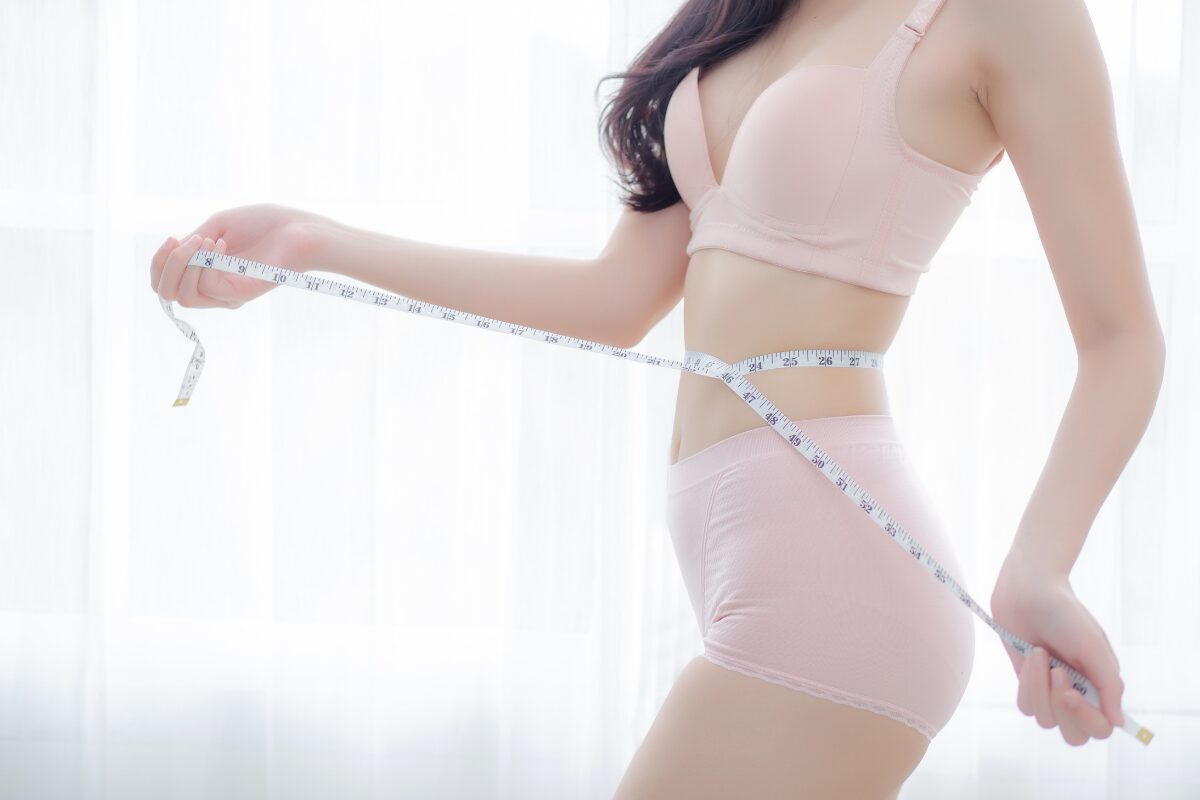
Super-thin models are still a dominant feature in our magazines, on runways, and in the books of modelling agencies. With the alarming return of the 90s “Heroin Chic” body “aesthetic”, glamourising extreme food restriction, it begs the question, why is the modelling industry so obsessed with skinny?
What’s the excuse?
One reason given is that clothes simply “look better” on tall, skinny models, often referred to as “coat hangers”. But I’d argue that the fashion industry’s primary service should be to the people who wear it. Women’s bodies are wonderfully diverse. There is no one size for women, so there should be no standard model size. If you argue that fashion is wearable art, then is it not the mark of a skilled designer and craftsperson to design looks for the multitude of body shapes? Or as fashion content creator @itsxaqsa points out, when “skinny” is the outfit, “just admit you know nothing about fashion”.
This persistent ideal of extreme thinness brings me to the thought of how a woman’s body is subjected to power and control in a patriarchal society. With only 14% of the top 50 fashion brands being owned by those who identify as women, from Gucci to H&M, men dominate the fashion industry. Some men who’ve had a strong influence on today’s beauty standards are business tycoons such as Leslie Wexner, the former CEO of the beauty empire Victoria’s Secret, whose name has been found peppered throughout the Epstein Files. This raises uncomfortable questions about where these body and beauty standards are coming from, especially when the desirable woman’s body is often still seen as a slender girlish look with no body hair.
Most models start out modelling very young, and the modelling industry takes advantage of this, packaging it up as a glamorous, once-in-a-lifetime opportunity – only for the models to be then met with unhealthy beauty standards, a lack of safeguarding, industry training or emotional support.
Intimidating contracts, the narrative that models are easily disposable, and verbal body shaming from agents mean models are constantly self-conscious of their bodies, which and gives room for eating disorders and low body image. Furthermore, this set-up leaves little room for models to call out unfair standards, discrimination or even sexual harassment.
Why won’t the industry change?
The modelling industry will never change because inadequacy sells. If we truly empower people, champion diversity and end exploitation, there would be less profit. Our current society functions by bringing people down, then selling them products (from skin whitening products to weight loss drugs) and lifestyles (such as extreme exercise and dieting or surgical enhancements) as a solution. And the modelling industry, along with the fashion and beauty industry, is a key player in this narrative.
From the inside, as a model, it’s hard to make changes, too. When you get signed, you aren’t employed by the agency; you work with them on a freelance contractual basis. Most agencies offer two-year contracts, which can be very hard to get out of or dispute.
Issues in my contract
The first model contract that I signed in 2018 stated in vague terms that I wasn’t allowed to decline work the agency gave me (or it was at the agency’s discretion to deem the decline reasonable). If I declined work, I could be subject to a penalty equal to a “minimum sum” of 200% of the fee the agency missed out on. Furthermore, if I changed my look and it affected upcoming work, I could’ve faced the same charge of a minimum of 200%.
To put this 200% charge into perspective, with an agency fee of 25%, if the assignment was £1000, the model could be charged over £500. While it’s understandable that an agency wants to accurately portray a model’s image to a client, the vagueness of these terms could mean that if a model has a slight body fluctuation before a shoot and the client complains, the model could receive a financial penalty.
As a model, you can be dismissed at any time if you break the contract’s strict terms. However, my contract also stated that my agency could keep me under contract for an extended period if they believed I was deliberately trying to break the terms to get out of it. Looking back over the terms, I can see the possibility of models being stuck in contracts they don’t want to be in, doing work they don’t want to do out of fear of financial loss.
What’s the next step?
I would say that brands need to step away from their reliance on modelling agencies in their campaigns, for one’s own autonomy, as you can never really know what’s going on behind the scenes.
In the past year, I decided to try modelling without an agency. While it’s had its hurdles, e.g., some brands taking me less seriously, I’ve enjoyed having the bandwidth to help challenge beauty standards and take work on my own terms.
I still often find myself being critical of my appearance. However, without an agency, I can work towards gaining a healthier relationship with my body without external pressure.
With this, I encourage brands to remain mindful of the visual messages they’re sending into the world. Prioritise diversity and equity in your campaigns and create positive working environments for models. Let’s celebrate diverse bodies and appearances and not just degrade them as “coat-hangers” for products.