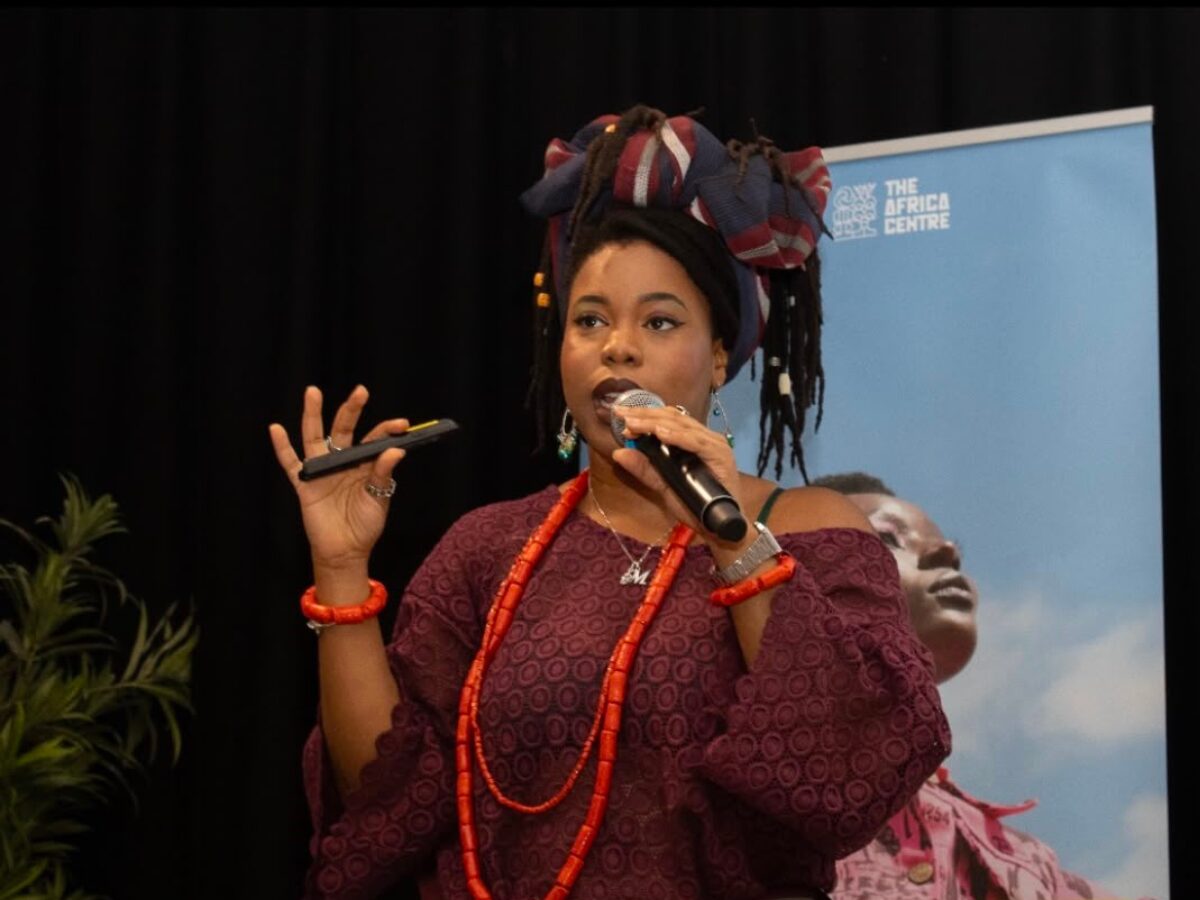
The Sexual Offences Awareness Map (SOA map), created by Moyosore Ale, is a free tool that has the potential to revolutionise how we navigate public life with confidence and safety.
To be a woman, or a femme presenting person, is to have a universal experience – of feeling unsafe as you navigate the world. We’ve all had moments when we’ve been aware of a man walking a little too close behind us on a night, or felt nervous walking past a white transit van. While these experiences are hard to avoid, award-winning London-based product designer and builder, Moyosore Ale, has created a tool to help us all navigate the world with more safety has created a tool to help us all navigate the world with more safety. Her tool, the Sexual Offences Awareness Map, is a free-to-use platform that helps you plan journeys with better awareness of which routes are the safest. It does this by providing a heat map of where the sexual offences have been reported in your local area, helping you make more informed decisions about how best to travel. The SOA map also has several features that provide direct and tangible support if you find yourself in an unsafe situation.
The map is currently in website form, but Moyosore has plans to develop it into an app, meaning it will be even more accessible. I spoke with her to learn more about the reasons why she created the SOA map. As we spoke, her determination was clear – she is dedicated to making a platform that is inclusive, effective, and frankly quite vital. So many people, myself included, feel more and more unsafe in the midst of a hostile social climate. Tools like the SOA map are on the frontlines of innovative solutions made by women, for women.

You’ve made a very innovative tool for safety. What inspired you to create the Sexual Offences Awareness map in the first place?
As I mentioned in the initial Instagram story where I talked about this, I moved into a new area, so I was taking a new path to the gym. Something about the path just felt really weird. I remember going with a friend one day, and saying I would not go there alone because something about here just doesn’t feel safe. I found a different path to the gym, and I just never went through that park again. Then I was talking to a friend that I met in the area, and I mentioned the park that I was avoiding. She’s said, “Do you mean rape park?” I was shocked. That’s useful information to know. Then I Googled the park and different articles about assaults there came up. One was as recent as last year.
You would think that kind of information would be easily accessible. A lightbulb lit up in my head because I have a computer science degree. Could I build something to help make this information easier to find? I was initially trying to see if I could scrape things on the internet, like Reddit and Instagram, but there were a lot of mechanics behind that. I decided to focus on the police API and other rape databases. That also gives a very good overall picture. That was the opportunity at the beginning of all of it.
What was the process of developing the Sexual Offences Awareness map?
So at the time, I was focused on the location search. I was thinking about making a journey planning tool. I was wondering whether anyone would find that useful? One thing I always do is test a product with real people before going live because I work as a product designer, and that’s a big part of the process. Something can sound really great in your head, then you put it in front of people, and it’s really hard to use, or it’s not even useful. People can also inspire new ways to reconceptualise what you are building. I reached out to a couple of my friends, Anny, Cheerye, Janice, and Vee.
I asked them if they’d be free to test it and give feedback. It was a collective effort. While I built the map, the people who gave me feedback helped shape the tool. Some features wouldn’t have existed if they hadn’t suggested them.
The SOA map is a free resource that makes it inclusive to anyone. Was inclusivity a driver behind its development? You specifically state online that the SOA map can be used by women, queer people, children, and anyone who knows what it is to feel unsafe.
Inclusivity was a very big part of it. Even the name itself. The biggest thing I didn’t want was to name it anything that would put other people off from using it. I thought about the idea of naming it Medusa, for example. I understand the nuances of that name, but does everybody else understand it? Some people might just reject the idea of it because of maybe some biases they have around Medusa. I asked myself, what’s the most inclusive name that everyone’s going to understand? No one’s going to have a reaction towards it because it just tells you what the tool does. You can remember it.

Then there was the design itself, and how easy it was to use. A lot of people that I tested were my friends, who were queer women and women of different minority backgrounds. That was very intentional because I wanted to have different opinions from different people to make sure that it was easy to use. If you’re not someone who likes to go into the details, the heat map feature is really useful. The colours are more intense in areas with more reported offences, so you can have the information you need without having to do a lot of legwork.
Another thing in terms of how the tool actually works that I was thinking about was if as wide a range of people as possible would want to use this, how do I make it as agnostic as possible so that it reflects their experiences navigating places safely? We all plot or guess the data on a location, how do I make sure the tool reflects the kind of thinking that goes into that, without overwhelming people? How do I make that possible? I was able to empathise because there’s my own experiences being a woman of colour and a queer person. I’ve lived this life, and I have friends who have lived this life. I have community members who I’ve lived this life with. We’ve all had that experience where you’re going home, and you’re not sure if you should call your friend or share your location. I’ve had to call friends on my way home sometimes because I have no idea what’s going to happen.
Street sexual harassment is so common in the UK. Tools like the Sexual Offences Awareness map help make us more aware of this, but what do you feel needs to be done to tackle the issue?
There are a couple of things here. I think one, there’s a general systemic issue in terms of the laws around sexual harassment on the street, and how tight the laws are. If you look at any report in any area, you see a lot of things like cannot prosecute or insufficient evidence. One of my friends who was testing the map was assaulted in public. She called the police, and they said they can’t do anything about it. Even though there was a CCTV camera on the street. And she’s like, there’s a camera, let’s do something about it. I think that because the laws and the police are so lax about it, it makes it hard for people to even speak up. What’s the point? Even if I say anything, nothing is going to get done. That doesn’t instil a lot of confidence in people who are experiencing harassment to say anything. If anything, it makes abusive people feel more comfortable doing things because they know that they won’t suffer any consequences for their actions.
The map allows you to plan a journey to avoid hotspots and judge your plans based on trends in your area. It also has features to avoid areas like pubs, which is especially helpful as the World Cup this summer. What inspired the thought process behind this feature?
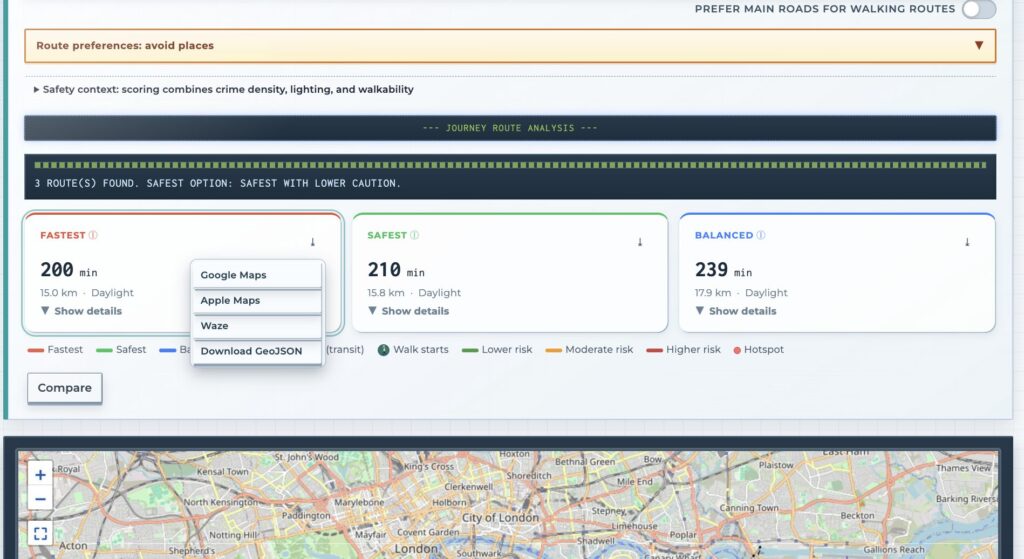
I need to give a shout out to my friend Anny because this came as a result of one of my trial sessions with her. Initially, I was testing the tool to plan one of my journeys, and it was leading me through like an underground area. I knew it shouldn’t be prescribing me that path because it was secluded. I made some changes to the code, but I only changed it so that you prioritise main roads. I was testing Anny, who really liked that feature but also thought it would be good to choose the things she’d like to avoid. I thought it was a great idea, and thus the feature was born. So, yeah, shout out to Anny.

In the comments under your video so many women talked about how a tool like this is invaluable, how did that make you feel?
Joy and pride. My core driver as a designer is that my job is to create the new normal. I feel a lot of pride to see that for people, it becomes a normal part of their day to be able to use a tool like SOA Map that they’ve always hoped for, subconsciously or consciously, that something like this would be available to the public. I’m really grateful, but at the same time, there’s the stark reality of the necessity of this tool. It’s bittersweet, the fact that something like this had to be created.
When I was creating, you’d set up your location, and then you see 500 violent and sexual crimes have happened in the past month. That doesn’t necessarily instil confidence in you as an individual. I think it’s better to know than not to know. That was one of the reasons why I added the safety features. If you need help, this is how to get help. I don’t believe in just making people scared or making people aware of all the bad things that are happening without there being any kind of reassurance. So, yeah, there’s a lot of joy. There was a lot of, you know, reading the comments and seeing the stark reality of this. This is our life. This is every day. It’s a tool born out of necessity. Alchemising something that is actually quite painful.
To further assist in keeping people safe the SOA map includes practical tools and advice for when you feel unsafe, can you tell us more about them?
I actually went to a couple of websites. I read through a lot of rape awareness tools and forums, just to get an idea of what is useful. I didn’t want the SOA map to be a thing that made people feel scared. I wanted it to be practical. I asked how do I include useful information in a way that is accessible. It’s literally floating on the platform so that you can click it very quickly. It hasn’t been hidden somewhere. For example, you might want to call a friend, or share your location. You might want to have an alarm – I think there’s one built into the iPhone, but in case you don’t have a device that allows for that, you can just use the tool included. You can start recording, which is useful to document what’s going on. It does it in a subtle way; it doesn’t have any flash, which can draw attention. There is also a feature that shows you safe locations close to you. If you actually put in a specific location, it will show you spots around you that you can go to very quickly. I don’t know if anyone’s used these features. I really hope no one’s had to, but they are important to have.
You’ve spoken about feeling like there is a collective responsibility to make the unsafe world we live in safer, can you speak to that more?
We have so many resources at our fingertips. Let’s actually be honest, in our age, we have the most information we’ve ever had in any generation so far, at least that I know of. There’s a lot that we can do with that information to actually make ourselves and to make our society better. There’s a lot of responsibility that we have because we have more access and we have more tools. We can help each other. We can build things and build spaces that actually prioritise collective health and our community health as opposed to just individualism.

I know it’s really hard. It’s simple, but it’s difficult to do because of resources, money, capitalism, and everything else in between. But the little steps matter, you know? You lend a hand, or you see something that’s not going well, and you report it, or something’s happening in your community where you can volunteer. The question is, what can you contribute to the general well-being of the people around you? I think collective responsibility is keeping in mind that we’re an ecosystem, that we all are interconnected in one way or another. We all kind of depend on each other. Everyone is connected. When you think about the fact that everyone is connected, that makes you more conscious of the actions that you are taking.
Now, for example, even though the idea for the SOA map came to me, it was as a result of the conversation when someone said there was a rape park. That sparked something in my head. Even though I built the tool, I had friends who tested and contributed to specific things in the SOA map. Everyone matters in this space.
I’ve been using the SOA map to help plan journeys, and I think more people should be aware of it, what do you have planned for it going forward?
There are two things. When I posted about the SOA map on Instagram and TikTok, everyone mentioned how it’s good that it’s web-based, but it’ll be nice to have it as a mobile application that they can use. There have been two things I’ve been considering there. One is that I don’t want to collect anyone’s location in any way because I don’t feel like that data is needed. If it’s a safety tool, I don’t know that it should be collecting that data in any way. But I am looking to see how this can be hosted in a mobile version.
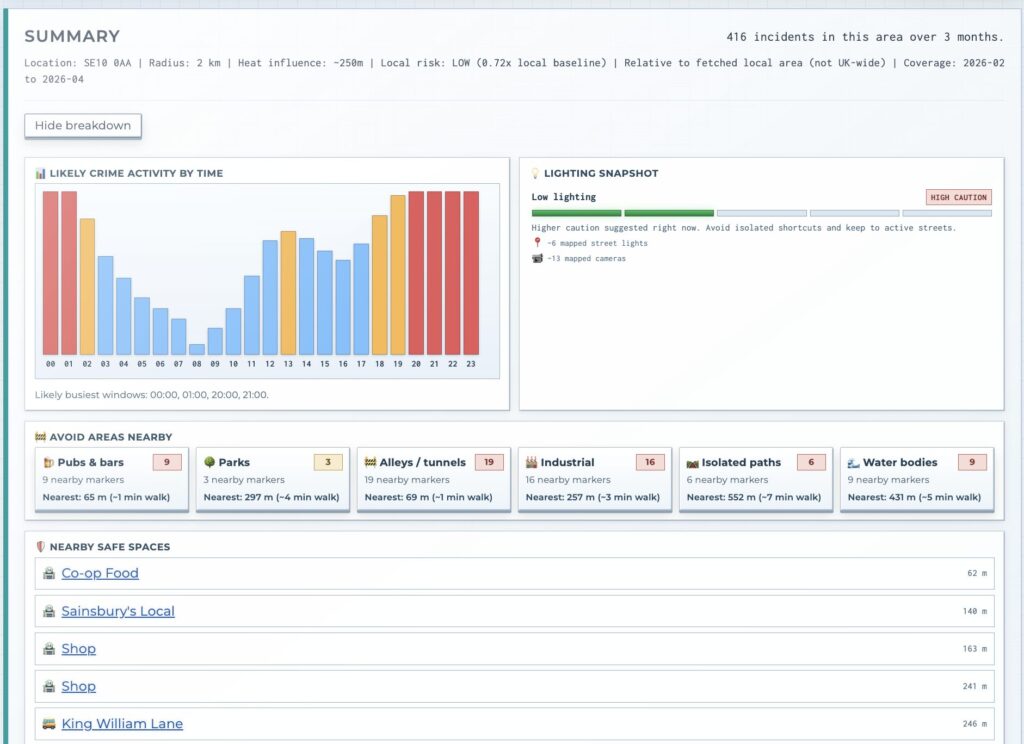
I’m also looking to see how you can export a particular path that you choose into Google Maps or Apple Maps. I’ve been working the past week, and I’ve been able to implement it. So, a sneak peek at two core new features coming soon: Downloading a chosen path into your other maps tools, so that you can use the shared live location you have there. Another feature is “Show breakdown”; you can see a detailed summary of any area on likely times for violent crime, detailed details & how many high-risk locations, e.g. water bodies, are nearby any location you search.
I would also love for this to become a bigger thing, expanding beyond the UK, maybe working with some government agencies and some safety organisations.
You can access the Sexual Offences Awareness Map here.
If you want to find Moyosore or work with her, you can find her here:
Email: alemoyosore@gmail.com
Linkedin: https://www.linkedin.com/in/moyosore-ale/
Website: moyoale.com