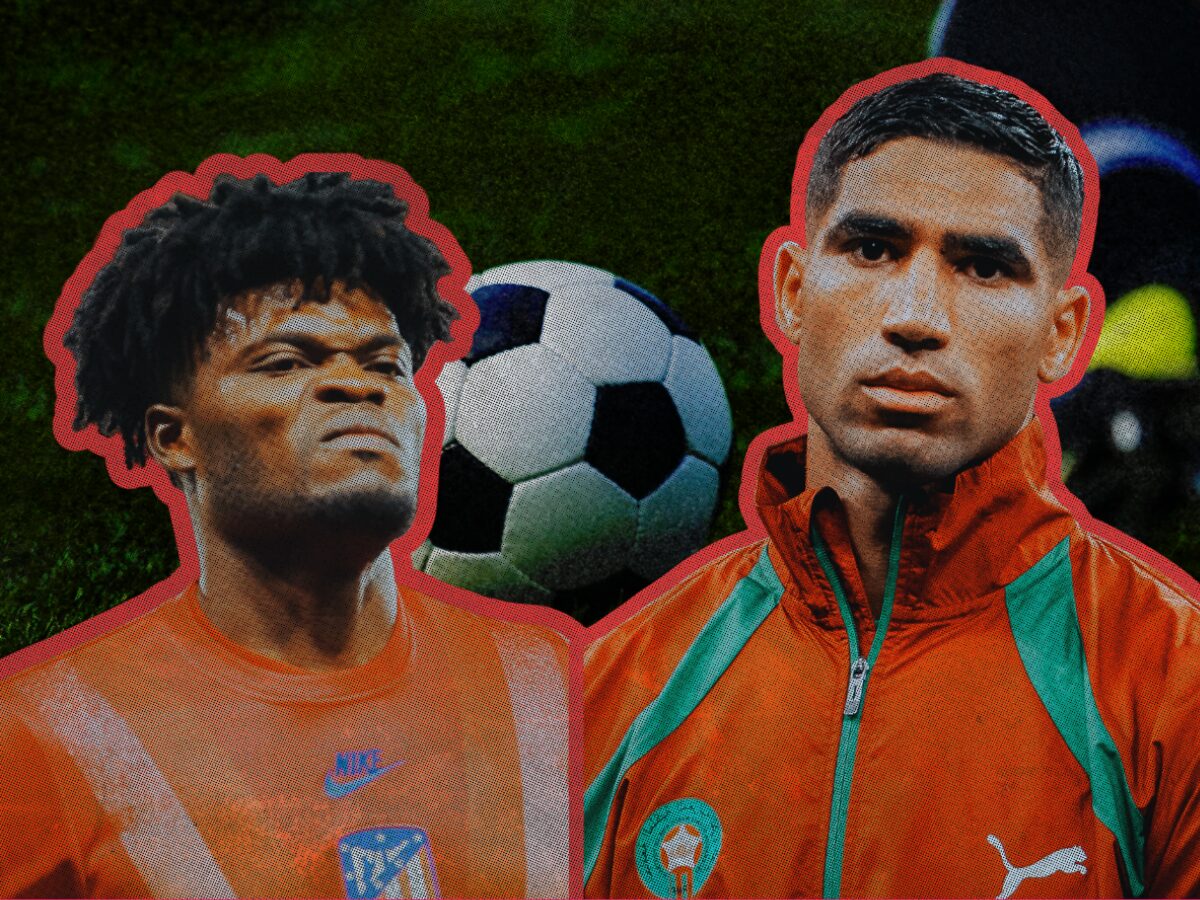
Thomas Partey, Ghana’s World Cup midfielder, has been charged with five counts of rape and is awaiting trial in the UK, yet he was allowed to represent his country on a global stage. He is one of several rapists playing this year.
A charged serial rapist is at the heart of the World Cup this year, and it feels like hardly anyone is talking about it. Ghana’s midfielder Thomas Partey was charged with five counts of rape and one count of sexual assault while playing for Arsenal. He is scheduled to go on trial at Southwark Crown Court next year. While these are still charges that have not received a legal verdict, there is a very dangerous precedent being set by allowing Partey a position on a team at the World Cup.
FIFA is not exactly known for their golden morals, with their highly questionable choice to pacify Trump with the first-ever FIFA Peace Prize despite his aggressive warmongering in the Middle East and an illegal invasion of Venezuela. They have remained quiet on Partey’s inclusion in Ghana’s team, following a pattern set by other large sporting organisations when rapists, or alleged rapists, participate in their events.
But I thought rape accusations ruined lives?
The Paris Olympics saw Dutch volleyball player Steven van de Velde, a convicted child rapist, allowed to represent the Netherlands. The sentiment here is much the same. While Partey is not convicted, whereas van de Velde was, it demonstrates that sexual violence does not actually have tangible consequences for men, so long as they’re athletic enough to be a professional athlete. Frankly, that is bullshit if you ask me.
Partey’s crimes are severe and represent a violent entitlement to women’s bodies that cannot and should not ever be minimised. By allowing him this opportunity, that is exactly what the Ghanaian team are doing. They are demonstrating on one of the biggest stages on earth that it does not matter if you abuse women and violate their bodily autonomy.

We see this time and time again; we’ve written about this time and time again. Rape allegations and charges do not take anything from men’s lives so long as they have enough social and economic power to offset their crimes. Partey and van de Velde are just two examples within the world of international sports, but they are not unique. Supreme Court Justice Brett Kavanaugh allegedly sexually assaulted a woman at a party. This was brought to light during his ascension to office, but no action was taken. Now he sits in one of the most powerful positions in the United States.
When you live in a world that was built by men, for men, the severity of rape is often conditionalised. I think the statements made by Ghana’s team coach Carlos Queiroz exemplify this approach: “Let events run their normal course, let the river flow and one day, when the river meets the ocean, we will find the truth”
On the face of things, that may seem to be a fairly pragmatic, if non-committal, approach to appointing an alleged rapist to your team, but let’s unpack what it really says about Queiroz and the culture he seeks to foster. It says that he would rather appoint someone knowing that they have multiple charges of rape, accepting that there is a chance he could be found guilty, over the possibility of giving this opportunity to another athlete without these charges. He ignores the fact that Partey has already been charged, and that if found guilty, he knowingly allowed a sex offender to not only play for his team, but to represent his nation while doing so.
The handshakes…
The Ghana v England match set to commence at 9pm tonight in Boston will be a particularly tense one for anyone sensitive to Partey’s participation. As part of the opening of the match, Ghana and England will walk past one another and shake hands. Given the fact that his crimes took place in the UK, this ritual will be particularly tense.
Speaking to my brother-in-law about this, he explained to me that the context around the handshake is one of mutual respect and sportsmanship. Ghana are allegedly planning to position Partey at the front of the line in a move to force England players to shake his hand or risk disrespecting the whole team.

If this is the case, they will be leveraging sportsmanship to force the England team to either capitulate and shake his hand, effectively acknowledging that he is a valid presence on the pitch, or refuse and appear unsportsmanlike to a widely underinformed public. It is likely that the team will shake hands with Partey, begrudgingly, but with the eyes of the world watching as they demonstrate communion with a man who has six charges of rape and sexual assault.
Partey was actually absent from Ghana’s first match of the World Cup because it was hosted in Canada, which denied him a visa to enter the country. They serve as the only party with any responsibility over who participates in the games to have actually taken a decisive step against allowing a rapist to be platformed on a global stage. Partey has been allowed entry to the United States, where the lion’s share of the games this year will take place – including the match later today against England. The Ghanaian FA stated that the visa ban was “mischaracterised” and claimed Canada had a responsibility to approve all the Ghana team’s applications.
There are several rapists playing at the World Cup
I was aware of Partey’s charges because of my conversation with my brother-in-law, but as I continued to research for this article, I found at least two other men playing at this year’s World Cup with ongoing or confirmed charges of rape. They represent different nations and cultures, and demonstrate that this is not a regionalised issue. The normalisation of rape is rampant across the planet.
Japan’s midfielder Kaishu Sano was arrested for gang-rape in 2024. His case was dropped when he privately settled out of court with his victim, this included paying an undisclosed sum of money to her. Despite this publicly known story, for which he issued a generic apology, he was able to return to the Japanese national team and is now playing at the World Cup.
In addition to Sano, a French court confirmed that Morocco’s Captain Achraf Hakimi will face trial for an alleged rape of a woman that took place in 2023. It was revealed ahead of Morocco’s match with Scotland. Hakimi has been vocal about wanting to go to trial, confident of a favourable verdict. Partey, Sano, and Hakimi are all successful athletes with the resources and respect of their peers to sidestep social exclusion and enjoy the clout that being a World Cup player garners. This is without any consideration of the fact that these men are, at the very least, alleged rapists.
Is this a football problem?
While rapists are not unique to football, I do believe the participation of at least three of them at the World Cup speaks to a wider culture around the sport that ultimately demands scrutiny. As much as the World Cup does serve as a forum for nations across the planet to share in their love of sport, it does not negate the fact that it also encourages the worst behaviours in men around the world.
In the UK, we know that domestic abuse skyrockets after any match England plays in, and now we know that it actually shoots up higher after a win – previously it was commonly understood to be higher after a loss. We could talk ad nauseam about the intricacies of why this is the case, but at its core, it is because football culture emboldens male entitlement and ultimately facilitates men to act on their worst impulses. That only worsens when you consider that this already hyper-masculinised culture is one that is openly platforming rapists.

I acknowledge that there are plenty of people who just enjoy the sport, but can we really take a laissez-faire approach to the World Cup if these are the conditions that surround it? The culture around football is widely one that predicates itself on a tribalist mentality, your team and theirs. This often snowballs into violence and vandalism, as demonstrated by the riots in Paris earlier this year after Paris St-Germain won the Champions League. There needs to be far more done internally to reshape fan culture within the sport, not worsening it by platforming multiple rapists.
Why is nobody talking about the rapists?
If you aren’t a fan of football, as I am not, you probably didn’t even know that this whole story was even happening. Even within the infrastructure of the World Cup, because of the lack of a real approach from FIFA, casual fans are also likely to be unaware of the presence of rapists on their screens. Their lack of a real response to Partey, Sano, and Hakimi is one that speaks to a culture of complacency and one of convenient silence.
FIFA, who have aimed to make the tournament bigger and more global than ever with this year’s events, do not want to face up to the inconvenient truth that they have a duty of care to their audience, their law-abiding players, and survivors of rape globally, to stand firmly against rapists at their games. Why start a conversation about the way these men felt emboldened by their position as professional athletes to rape women, or a conversation about how their ascent to the World Cup only confirms the entitlement they clearly feel?
As far as making a move now, FIFA most certainly won’t, and the milk is already spilt. Just like with van de Velde at the Olympics, millions of people around the world will watch as once again it is proven that men can be rapists, abusing women and violating their bodies, and still get to carry on with life unscathed. I am left with one question, where at the consequences?