
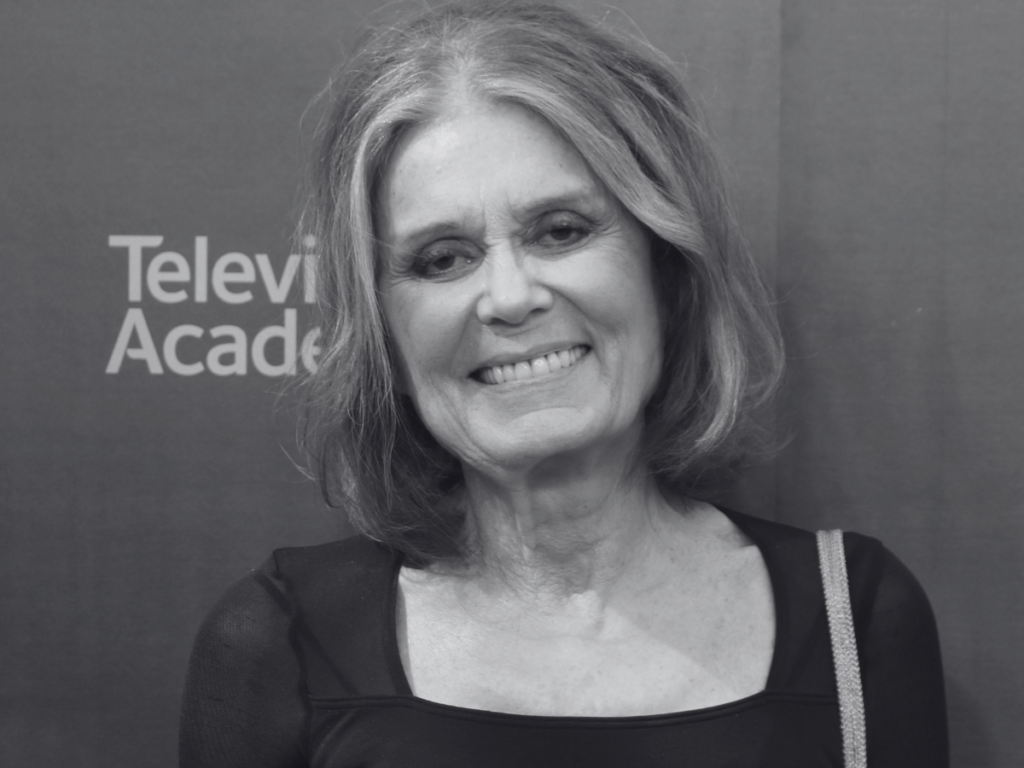
Gloria Steinem, the feminist icon, activist and Ms. magazine founder, has died in her home in New York at the age of 92.
In an interview a month ago, we were told by actress and friend of Gloria Steinem, Christine Lahti, that Gloria likes The New Feminist. I’m not sure if I can convey how monumental that moment was for me.
Those of you who know me know that I don’t have many personal icons. Humans are flawed, and though I value and celebrate many, I have never been fully captivated by one’s life in the same way that the people around me are. That is aside from one person: Ms Gloria Steinem. Despite being generations apart, and ultimately a complete stranger to me, this woman has influenced my life in more ways than I can describe.
After discovering her in my early twenties, I spent months immersing myself in her life and work, finding myself completely in awe of her achievements. Gloria introduced me not only to the nuances of the feminist movement but also inspired me to follow in her footsteps. Because of her, six years ago, I founded The New Feminist magazine, and Gloria Steinem was my north star. Her life and work have guided me in everything I do and have kept me going all these years.
For those of you who may not be familiar, Gloria Steinem created the world’s first ever feminist magazine, Ms. Magazine, in 1972, at a time when women’s magazines overwhelmingly centred husbands, babies, beauty and homemaking. At the time (and still today – let’s be honest), the mainstream media frequently treated feminism as ridiculous or fringe. So Gloria, and the women behind Ms. effectively decided that if existing media would not take women’s lives seriously enough, they would build somewhere that would.
As a female journalist in a very male-dominated field, Gloria understood that journalism could do more than document the world as it was, but it could also give women language for experiences they had been told were ‘private’, insignificant or simply theirs to endure as a woman. She saw the power journalism had to make the personal political.

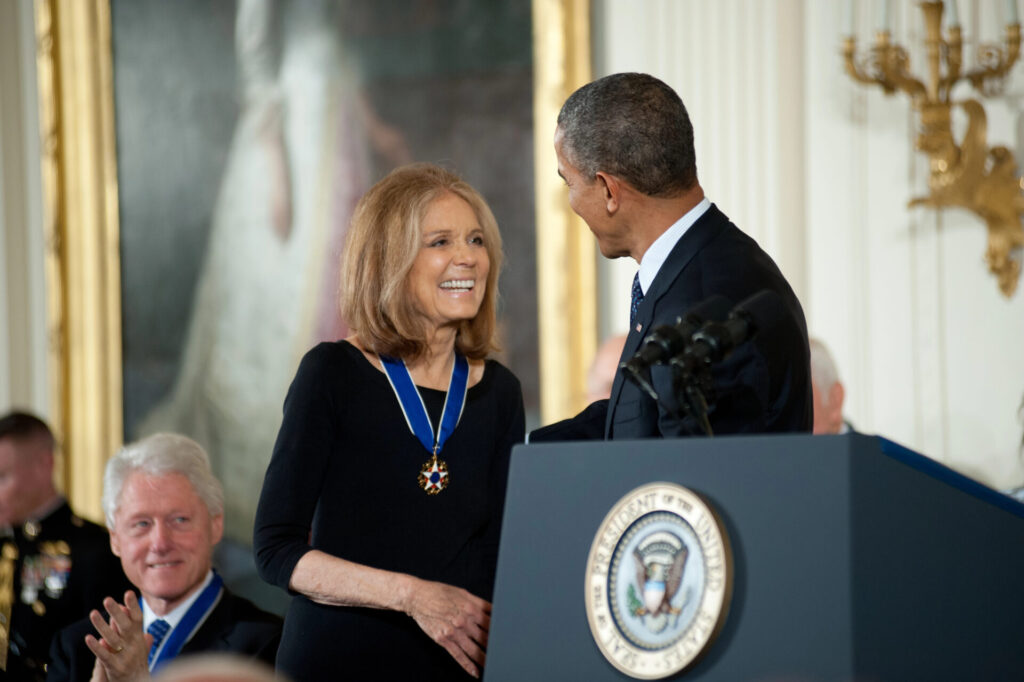
Of course, Gloria’s legacy reaches far beyond Ms. She spent more than six decades writing, organising, campaigning, speaking, listening and building. She fought for abortion rights, political representation, racial justice, equal pay and the right of women to exist as complete human beings. As my co-editor so eloquently phrased it, Gloria was a force of sheer feminist will.
As a second-wave trailblazer, perhaps one of her most pivotal works was her activism surrounding reproductive rights. At 22, she became pregnant and travelled to London for an abortion at a time when the procedure was still illegal. Years later, in 1969, she attended an abortion speak-out in New York where women gathered to publicly share their experiences. Gloria would describe listening to those women as a turning point in her life. She realised that there was a much larger system determining how much control women were allowed to have over their own lives and bodies; a topic that unfortunately feels especially poignant today given the mass rollback of reproductive rights in the US. Her death leaves us with a reminder that the work Gloria started must be continued, not just for the women in America but for all of us. In fact, I think the only way to honour her work is to continue it.
I could spend a very long time listing Gloria’s achievements. The breadth of her life-changing and pivotal work truly knows no bounds. She leaves behind a phenomenal legacy, and a road she paved just for us. She dedicated her life to confronting the patriarchy on the front lines in the fight for our rights, inspiring countless women to do the same. She was a leader in the face of great adversity, and despite everything she was up against, she never stopped the fight. Her family captured that lifelong commitment in a statement today, writing: “Gloria’s near-century on earth were years well-lived, and she continued working for equality until the very end.” I implore you to read her written work if you haven’t already – including her upcoming memoir An Unexpected Life: A Memoir that will be out later this month.
The breadth of her life-changing and pivotal work truly knows no bounds. She leaves behind a phenomenal legacy, and a road she paved just for us.
There have been many moments over the past six years when running this magazine has felt impossible. I have had moments when I have wondered whether there is any sensible reason to keep pouring so much of myself into something that is difficult to fund, difficult to grow, and sometimes emotionally exhausting to make. But then I would think about Gloria. I would think about the fact that a male ABC News anchor predicted Ms. would run out of things to say within six months, and I would think about the fact that it is still publishing more than half a century later.
Which is why learning, just one month ago, that Gloria herself knew about The New Feminist, and liked it, is something I still cannot quite process. For six years I had been looking towards her work, never imagining that, somewhere at the other end of that line, she might have looked back.
Gloria, thank you for fighting for us, and thank you for helping me find my life’s work. I am eternally grateful for you.