
Content warning: This article contains mentions of mental illness, psychiatric hospitalisation and suicidal ideation
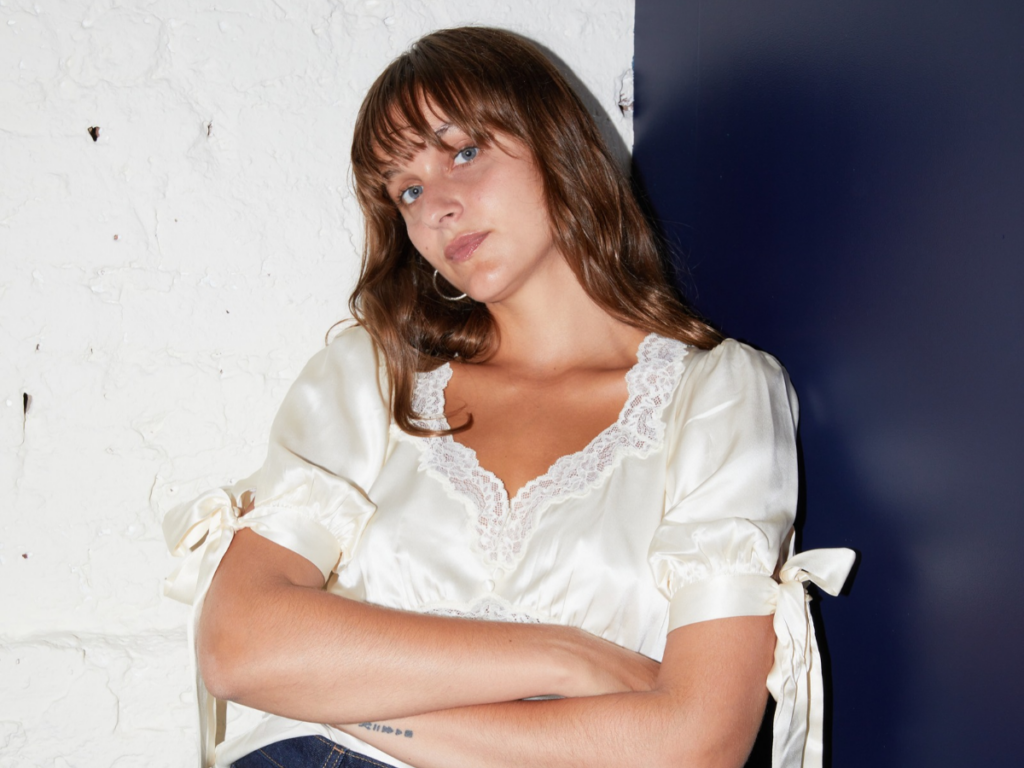
The New Feminist writer, Meg Thomas, spoke with writer and campaigner Rosie Viva about the role of privilege in mental illness care, the alleged links between bipolar and creativity and the lack of insight into how bipolar affects women.
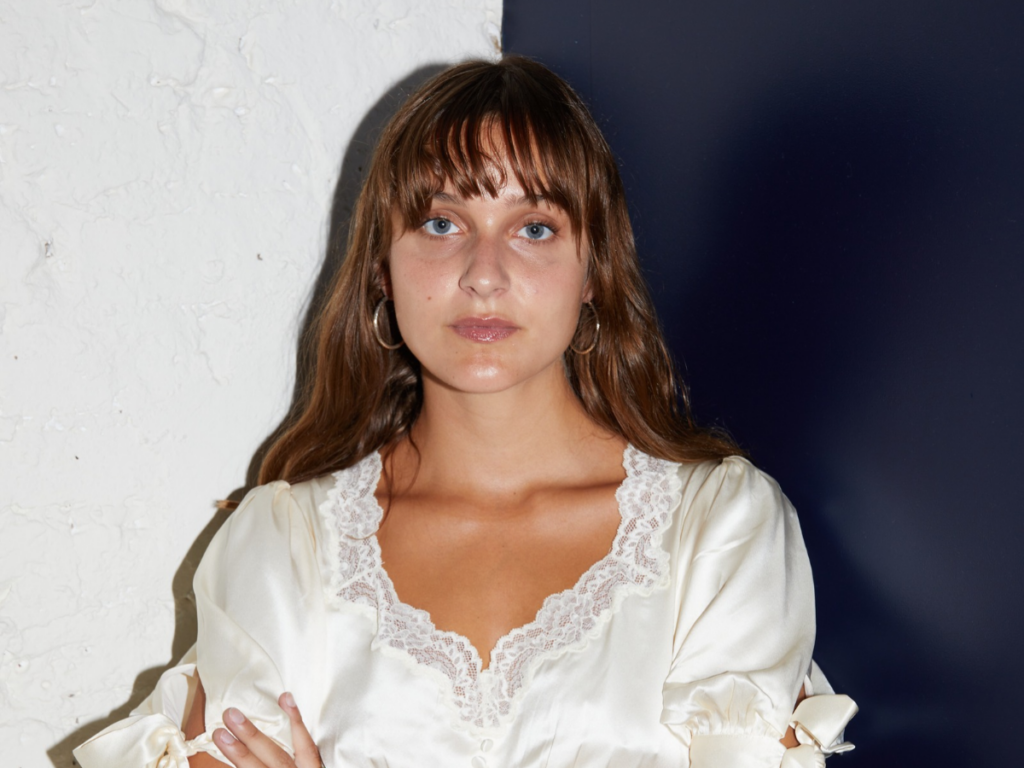
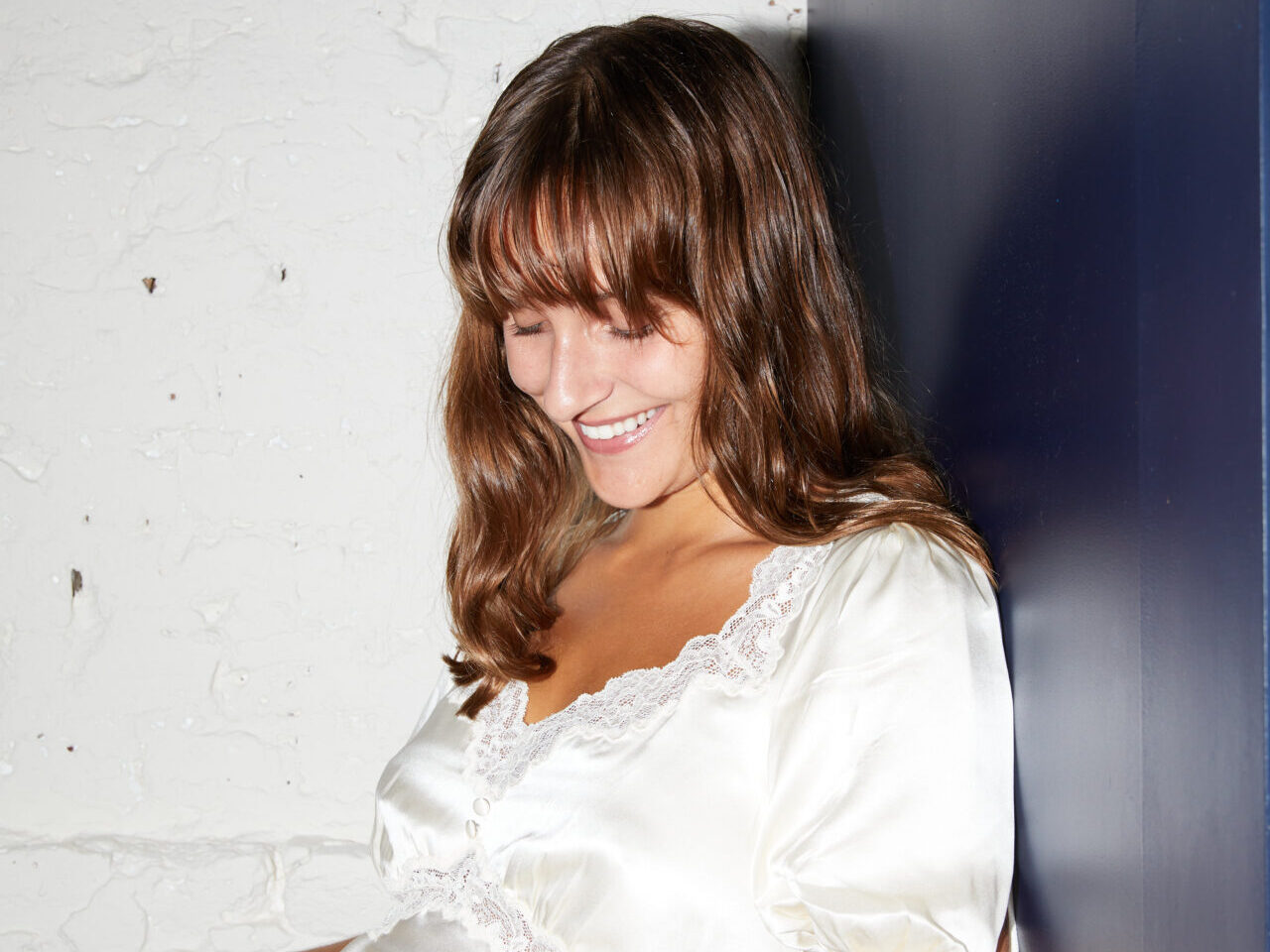
Rosie Viva is a writer and campaigner from London, known for her advocacy on bipolar disorder. After previously working as a model across the world, in 2018 Rosie suffered a manic episode that resulted in her being sectioned and diagnosed with Bipolar I at age 22. Following this experience, Rosie has moved into mental health activism, working closely with the charity Bipolar UK, and writing. Her 2025 book Completely Normal and Totally Fine received critical acclaim for its honest insight into the realities of living with this underrepresented mental illness. In her book, Rosie highlights the lack of diversity within the representation of the illness.
Completely Normal and Totally Fine found me when I needed it. Three months following a diagnosis of bipolar type II, I read the book on a train journey from Swansea to Durham. I spent most of the trip sitting on the floor, but with the company of this book it didn’t seem to matter. There I was, hunched over between suitcases, completely and utterly absorbed in Rosie’s words. Through what had been the most isolating period of my life so far, Rosie’s book offered a hand up.
I got in contact with Rosie through a friend I’d made at a literature festival. This friend and I had got along throughout the night, and when she got on stage and said her poem was about bipolar diagnosis, my heart leapt. I had made a friend who was like me, and it was separate from the cold confines of a doctor’s office. Here we were, two creative, passionate young women who both happened to have this diagnosis in common. We bonded over a post-show drink about bipolar, womanhood and our individual creative pursuits, and she mentioned knowing Rosie, whose book I had recently read. So, when the chance came to interview Rosie, I obviously jumped at it, eager to know how one moved through the world as a young woman after a diagnosis like this one.
Not being represented in the media
Like many people post-diagnosis, Rosie searched through the available media representation of bipolar disorder in an attempt to understand this label that had been put on her life, but found poor examples. I asked Rosie what mainstream narratives fail to capture.
“I couldn’t really read many accounts of people talking about being sectioned and the emotions around that, and so it felt like, you know, maybe my story was too much to share, maybe it’s something which isn’t as digestible as Stephen Fry talking about his suicidal ideation. It felt like I hadn’t really seen this more open dialogue around psychosis, and then I think I also couldn’t find a female voice in it.”
Rosie’s reflections speak to feeling isolated due to your symptoms, and this experience being exacerbated through a lack of representation in the media. Through her writing and advocacy work with Bipolar UK, Rosie is opening up the conversation about psychosis, allowing people to find solace in her experiences.
Intersectionality and serious mental illness
Women’s emotions, and their supposed lack of control over them, have long been pathologised. For women experiencing mental illness, that makes reaching out incredibly difficult: doctors may put it down to hormones, and there’s the shame of being seen as ‘unhinged’. Rosie says: “I think already as women, we want to be chilled, we want to be relaxed. And our hormones are seen as something where we become crazy. I think with bipolar, you are admitting that you’re someone who’s so sensitive because you have these extreme states. I hadn’t read any accounts by women who were talking about it because there was an extra layer of shame to say that you’re crazy or mad as a woman.”
Looking at the ways in which womanhood complicates the experience of serious mental illness, we discussed the role that intersectionality and privilege play within the experience of care, and especially institutionalisation: “After I was hospitalised, my parents had a house in London so I moved in with them and was in Westminster. Some people in other parts of the country might not be able to access a good intervention team. Your ethnicity makes a huge difference. If you are a Black person struggling with aggression, you’ll get treated differently in comparison to a white person. One might be seen as mentally ill, and the other could be criminalised. It’s so important to recognise my privilege when I’m speaking about this; I can only be an advocate because of my demographic.”


Listening to Rosie, I started to think about how my own privileges and demographics had played into my experience of mental illness. When I first began to experience the mood episode that would force me to seek diagnosis, I was halfway through a term at a prestigious UK university. My rapid decline was noticed by a member of support staff at my college, who took notes about my behaviour over time and gently prompted me to continue going to the GP, and eventually to take a short break from my studies. At the time, this experience felt humiliating beyond belief, as my lucidity and ability to complete daily tasks began to slip out of my grip. Looking back from a more stable place, I am filled with gratitude for the built-in support system that came alongside the institution I was studying in. I thought of those later on in life, or in a workplace with insufficient support, who slip through the cracks. Or those dependent on work to support themselves and families, where taking a break to recover is unheard of. Care for those living with serious mental illness should not be the result of a lottery dependent on your circumstances.
Rosie’s advocacy has recently focused on the bipolar experience and the hormone cycle, pushing for more recognition of premenstrual dysphoric disorder (PMDD): “I was having dinner with some friends, one of them being a man in his eighties who has bipolar, and he said he’d been stable for 10 years. And I kept thinking he meant everything was kind of okay, with highs and lows. And he said no – he was stable. I couldn’t understand it. I just thought, ‘Okay, men have it differently, as you do.’ But then, Dr Louise Newson read my book and pointed out that I was describing the up and down before my period.
“I got a PMDD diagnosis, and I was put on progesterone. Bipolar and PMDD are really comorbid – once their bipolar settles out of an extreme mood episode, their mood cycle will align with their hormonal cycle. The two are so clearly interlinked.”
Creativity and bipolar disorder
For better or for worse, bipolar is commonly associated with creativity, and the long, tangled association between mental illness and genius. For a lot of people with bipolar, this leads to a complicated relationship with their passions. I was interested to hear Rosie’s take on the ‘bipolar creative genius’ trope: “There is no proven link between creativity and bipolar; it’s just a stereotype. So that’s helped me a lot. The risk-taking side has benefited me a lot; it’s given me more confidence with my creativity, but it’s taken me a while to realise that”

Looking to the future with a career in advocacy
After my own diagnosis, I felt that I couldn’t start any sentence without mentioning my bipolar, and it was exhausting. I can’t take phone calls after 9pm; I’m trying to work on my sleep. I can’t drink anymore; I’m worried about how it will affect my mood. Simple conversations with loved ones often accidentally became psychiatric evaluations, and despite wanting more support for my mood my entire life, I became frustrated with the feeling of being watched. It took me a long time to even be able to write about my health. So, I’m inspired by people like Rosie, who have made these experiences a career, fighting for better treatment for others. I wanted to know how it felt to have such an intimate part of your life become a vocation: “I know that the bigger picture is so much bigger than me. I’m not talking about me, I’m talking about one in 100 people. When you get even just one message saying you’ve impacted someone, it’s incredible.”
Having already had such an impactful career, I was eager to know what Rosie’s goals were for the future: “My aim is to get a large-scale documentary made. There is no go-to resource exploring: What are these medications even doing? Is this something that we’re born with? There are basic questions that haven’t been answered.”
I asked my final question under the guise of an analytical writer, but secretly I was twiddling my necklace, hoping to find some wisdom for myself, and for all the young women who felt lost and cast aside by the current mental healthcare system just as I did. So I put it to her: what would you say to a young woman who had just been diagnosed with bipolar?


“The only thing I can say is be kind to yourself. Whatever emotions come up around a serious diagnosis, you’re not alone. I’d say this rather than any great life advice on how to be or what to do. Even the wellness stuff – running, eating well – that didn’t come until I was settled on my medication. There is no rush to get it right.”
In the UK and Ireland, Samaritans can be contacted on 116 123 or you can email jo@samaritans.org or jo@samaritans.ie. Text SHOUT to 85258 from anywhere in the UK, anytime 24/7, about any type of crisis. For peer support for people affected by bipolar, visit bipolaruk.org.