
Shane Gillis used his third time hosting SNL to call women ‘whores’ and joke about their fear of male violence; let’s unpack what this says about the current state of victim-blaming culture.
Content warning: This article contains mentions of rape, sexual assault and misogynistic slurs.
Last week, three-time SNL host Shane Gillis remarked in his monologue that “I haven’t been to the gym in so long, I didn’t know women just dress like whores now? … And don’t look, you’re not allowed to look. For real, don’t look because they are filming.” The line was met with laughter from the studio audience as the polite smiles of the musicians behind him fell almost in unison, though other jokes bombed so badly that the room went silent. The rest of his monologue, where he mentions his friend Joe Rogan, is openly fatphobic and insults lesbians, is deeply uncomfortable to watch because it represents how, when bigotry is passed off as comedy, it gives licence to the hatred and violence it engenders in the real world.
Gillis’ monologue has come at a time which feels particularly raw for survivors and anyone following events at Cornell University. Seven former Cornell students, now known as the Cornell 7, are accused of drugging a young woman identified as Jane Doe, raping her for seven hours and advertising “free pussy” in their fraternity’s Snapchat group. With new details and filings in that case still emerging, the internet is furious that Gillis was allowed back on SNL’s national stage at all (after previous monologues that bombed), and that he used it to feed the slut-shaming and victim-blaming rhetoric that stops sexual assault survivors from coming forward.
The word “whore” is a derogatory term against women that has been used for centuries not just to shame and bully women but to ostracise, torture, and outright kill them for defying a strict, patriarchal sexual code. When Gillis uses this term openly in his monologue, he normalises saying a slur and the violence it has long fuelled. This derogatory term is part of slut-shaming, a patriarchal culture where girls and women are routinely criticised and sexualised for wearing clothing. In this culture, women’s choice to wear “tight shorts,” as Gillis says, short skirts, or low-cut tops is an invitation for men to pursue them, sometimes even “causing” men to sin.


Gillis’ monologue was eerily familiar for many purity culture survivors and anyone who lived through the early 2000s. Plenty of us remember these same words being used to sexualise children and to hold women responsible for unwanted attention, even sexual violence, from men. How many of us were told to leave class for spaghetti straps or too-short shorts because it would distract other boys in the class? How is it women’s fault or their problem that they are filming themselves at the gym, largely to protect themselves from men like Gillis?
When Gillis claims women are choosing to dress provocatively, choosing to dress like “whores”, he shifts the blame off men who sexualise them, photograph them without their consent and assault them. It makes women responsible for the harassment and violence they face because they chose to wear this clothing, denying women dignity and respect, along with bodily autonomy. Women are not responsible for any man’s uninvited attention, harassment or assault, no matter how they choose to dress.
Gillis’ comment is outwardly misogynistic, but it also dehumanises women, reducing them to objects of male attention, attraction and pleasure instead of people with their own bodily autonomy and desires of wearing clothing that they truly like. When women become objects instead of people deserving of respect with inherent dignity, it makes it easier, and in some cases, acceptable, to commit violence against them. This is where an earlier part of Gillis’ monologue comes into play, where he jokes about the very real fear that women have that men will torture, rape and kill them.

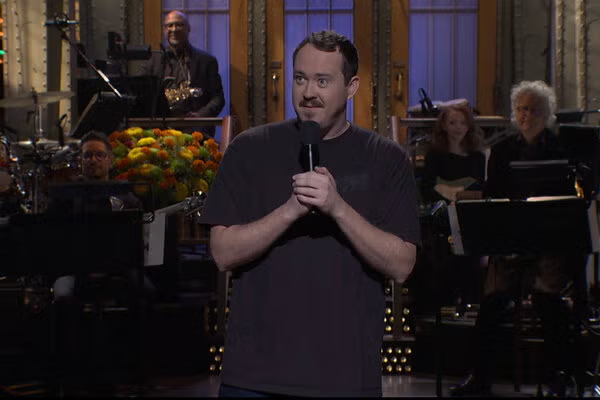
Earlier in the monologue, Gillis openly joked about violence towards women when recounting a time he was hiking alone. “The worst part was the only other person I saw on the hike. I turned the corner, and the only other person I saw was just a beautiful woman walking towards me, also by herself, so now I have like 30, 40 seconds both thinking it.” ‘It’ alluding to the idea that he will kidnap, rape, or outright kill her on the trail. This is a real fear, but Gillis argues that this real fear is funny. That it’s humorous that women are scared of this violence and that he is inconvenienced when he has to convince a woman he is safe (news flash: he is not).
In the aftermath of the Cornell 7, a case in which fraternity brothers are accused of drugging a woman who could not consent and reducing her to a “fleshlight”, the internet is primed to discuss and call out comedy that encourages the dehumanisation of, and violence towards, women. We needed this pushback years ago when Gillis hosted for the first time. Despite the fact that Gillis was previously fired from SNL in 2019 for racist and homophobic remarks, he is allowed to bounce back. It was less than five years later in 2024 that he was back on the host stage, with an even bigger platform and a Netflix special. Like the Cornell 7 (only two of whom were expelled and the rest faced workshops and essays), Gillis was largely forgiven and allowed to bounce back after two horrific monologues, after multiple cast members expressed frustration with the fact he was invited back despite his firing just years earlier.
Even though women and survivors of sexual assault and their allies are still furious and fighting for justice (and protection) for Jane Doe, SNL audience members still laughed at Gillis’ monologue, just as people have done for years in comedy clubs, cinemas and their own homes watching TV when a comedian or character cracks a joke at the expense of a marginalised community. In those situations, it can feel that laughing at the joke is easier. It may even feel like staying silent is enough, but our presence, our views, are our permission.

In a social media economy, our attention is our most precious commodity, and when we give attention to SNL in moments like this, we become part of the problem. There are strikingly similar examples in the past where SNL has platformed misogynistic, transphobic, and racist comedians. The comedy group even “poked fun” at their own history of using racist stereotypes, sexist language, and ableist and fatphobic talking points in sketches during their 50th anniversary special. While people did push back in these moments, why do we keep coming back? Why did we forgive this moment and return for more?
Silence isn’t enough any more (it never was). Our dissent must be vocal, and it must be actionable. If we were sickened by Gillis’ monologue, we can stop watching and sharing SNL clips, keep up the criticism online and, closer to home, refuse to let “it’s just a joke” slide when we hear it at work, at school or in the pub.
The problem isn’t comedy itself. There are many wonderful comedians, including white male comedians, who build successful stand-up routines and crowdwork without passing off bigotry and misogyny as comedy. Comedy can be an incredibly effective tool to resist misogyny, bigotry and fascism: just look at the outpouring of resistance art in Washington, DC. Some women are even using comedy to criticise Gillis. One account posted three women wearing long-sleeved dresses under the caption “how Shane Gillis expects women to dress for the gym”.
Laurie Meisner, host of the Mini Scroll podcast, believes that we will see more of this comedy as vocal misogyny takes the national stage. As Meisner posted in response, “Shane Gillis’ monologue on SNL is a great example of this more low-key insidious comedy that I believe we will start to see the rise in. … I think as we continue to see a pushback against left culture, especially in these mediocre white men spaces, we are going to see a lot more of this type of comedy.”
This comedy is a symptom of a patriarchal social order, of boys and men wanting to hear Gillis reflect their own frustrations about living in a world where their misogyny, their violence is no longer acceptable. They want Gillis to give them permission to use these words and enact this violence on women because then when they do it in the office, at school, on the bus, they can point to SNL and explain how it was just a joke. If Gillis gets laughs on SNL, why can’t they?
How many of us have experienced sexual harassment at work or at school, which boys and men and sometimes even other women laugh off as just a “joke”? Because on Netflix specials and comedy stages across the country, male (especially white) comedians continue to use women (along with queer and trans folks and people of colour) as a punchline. Comedy cannot be used to lessen the impact of bigotry, and as Quinn Padilla, a trauma therapist and abuse recovery coach, posted in the aftermath, it’s just bigotry; it’s not comedy at all. It’s a strategy by the patriarchy to share bigotry by arguing that the women and men criticising it are taking the “comedy” too seriously, and do not understand the “joke.”
“Most men are not funny. They are just mean, and they pass off insulting people as a way to be humorous,” she wrote.
If you have been affected by any of the issues in this article, in England and Wales you can call the Rape Crisis 24/7 Rape and Sexual Abuse Support Line on 0808 500 2222 or Victim Support on 0808 168 9111. Text SHOUT to 85258 from anywhere in the UK, anytime 24/7, about any type of crisis.