Lorde is back with her 4th studio album Virgin. The album is radical in its approach to body politics, sometimes leaning into body horror to critique gender roles and expectations placed on women in music.
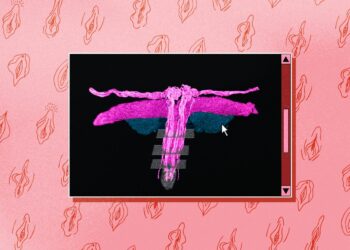
I remember the first time I felt truly confronted by a piece of art. On a visit to Manchester’s Whitworth gallery, I came across a piece by Tracey Emin titled Something’s Wrong. It depicts a woman with her legs open, with coins spilling out of her. The artwork made me think deeply as an 18-year-old about the ways women’s bodies are portrayed to us throughout the visual media we consume. So often we see and hear about women’s bodies, but far too often this is with the caveat of appealing to the male gaze or problematising women’s physical agency. I was reminded of Emin’s work when I saw the album cover for Lorde’s Virgin. The artwork depicts an X-ray of Lorde’s pelvis, showing her bones as well as an IUD and the zip of her jeans. An alternate cover for vinyl releases goes a step further by utilising an image of Lorde’s vulva shown through PVC trousers.
The ultimate nude
Lorde has gone on to describe this image as the ‘ultimate nude’. Positioning a part of her body that we as a culture fixate on, but subverting that narrative. The depiction of an IUD alone confronts a major issue of our times, around the control of women’s bodies and their fertility. Within the current social climate, especially in the United States (where Lorde currently lives), confronting the body politics of fertility and pregnancy is bold and necessary. Showing the area she did in this way, with the IUD especially, is a statement about the centring of the reproductive system in our current culture.

The run-up to the album has seen Lorde discuss how coming off the contraceptive pill changed her life and influenced the thematic direction of Virgin. The image of the album tells the listener that this is a project that seeks to malign and confront expectations placed upon women and their bodies. While the subject matter dives into various facets of Lorde’s experience, such as covering the end of a long-term relationship, it is the fixation on body politics that marks this as a significant and impactful body of work.
Fertility is political
In the middle of the album, Lorde directly confronts pregnancy with the song Clearblue. The song is visceral as it confronts the vulnerability and anxiety that comes with the possibility of pregnancy. Lorde captures a moment that hinges on her biology and her ability to reproduce. The idea of pregnancy and what it means, especially in the seconds before it is confirmed or denied by the clearblue, comes with so much expectation. Especially in an era where a pregnancy test no longer just means (at least for American women) a trip to the pharmacy for the morning after pill, but the potential for all kinds of mortal dangers, having a song capture this vulnerability is bold. Even if Lorde didn’t intend for the additional meaning, we cannot ignore the context around this album at large. It interrogates the realities that come with that and what it means to possibly be pregnant.
Lorde tackles this subject matter on her own terms, and while the song hinges on the way she felt internally as she waited for the results of the Clearblue, it speaks to so much between the lines, too. Women in 2025 are increasingly being forced to confront their bodies in a very direct way because of the increasing repeal of reproductive rights.
Generational trauma and the body
The lyrics of Clearblue also allude to something that is touched on elsewhere on Virgin, the theme of generational trauma. Lorde sings, “there’s broken blood in me, it passed through my mother from her mother to me”. With this line, she evokes the harsh reality that women do indeed inherit so many of the challenges and traumas of the women who came before. Again, in a climate where granddaughters are being forced to fight the same fights as their grandmothers for basic reproductive rights, the truth within the sentiment is confronting.

Generational trauma is a continual theme on Virgin, with the song GRWM (grown woman) referencing her mother’s trauma and Favourite Daughter centring on this topic. We know that women are greatly impacted by the traumas and internalised misogyny that their mothers have endured. Trauma lives in the body, and with the inherent body politics of the album, we are reminded of the fact that when we look at the women who came before us, we still feel the dull ache of their scars. Favourite Daughter especially has an evocation of Charli XCX’s Apple. Apple is a song that appears initially to be a fun pop song but actually centres the generational trauma of displacement and cultural clashing between Charli and her mother, who came to the UK as a refugee from Uganda after Indians were expelled from the country in the 70s.
Eating disorders and bold realism
Charli XCX’s influence on Lorde’s work is evident, as we know already that Charli’s blunt lyrical style on Brat inspired Lorde. This directive style is furthered by the subject matter that Lorde is tackling on this album. Instead of weaving flowery metaphors into an album that veers into body horror in places, we instead see Lorde say what she means and cut to the chase to tell us the visceral realities of her experience. This began before the album itself with her feature on XCX’s girl, so confusing remix. In her verse on the song, she talks about “being at war with [her] body” and “starving herself thinner”. Explicit in her delivery, she reclaims the narrative about her weight and having an eating disorder. Her rawness on the track has furthered with the song Broken Glass.
Broken Glass is one of the most deceptively confronting songs in an album that already pokes at uncomfortable realities. In it, backed with one of the most ‘radio-friendly’ structures, Lorde details how recovering from an eating disorder took all she had and how it made her want to punch the mirrors in her house. The juxtaposition in the production reflects the way many artists face eating disorders while being expected to produce bangers and be nice and poppy.

We very rarely hear women in music be so up front about the realities of body pressures imposed on them by an industry that is deeply affected by the male gaze and gendered expectations of how women should look. Lorde doesn’t hide from the cognitive dissonance that came from her eating disorder, discussing how it felt great to strip when she was thinner before punching you in the face with the mental and physical impacts this had on her. She veers into the fears about recovery and the hold that an eating disorder has over your psyche, showing that this isn’t a song that shows one side of her experience, but instead is a warts-and-all look at the realities of what she went through.
Within the context of a time when we are still having a lengthy conversation about women’s bodies, such a song is important. Last year, in the run-up to the cinematic release of Wicked, we saw a culture-wide discussion on Ariana Grande’s body and speculation on whether or not she has an eating disorder. This conversation was largely in bad faith and only serves to further impact how Ariana must perceive her own body. Similar sentiments have been expressed by Taylor Swift both lyrically on songs like You’re On Your Own Kid and in her 2020 documentary Miss Americana where she discussed having a long-standing eating disorder for years. Women in the media are placed in the narrowest of boxes, and any slight change in their weight is commented on ad nauseam. Lorde’s Broken Glass lays out the ugly truth before anyone can give their opinion. Essentially, she reclaimed the narrative.
The body is political
Lorde even confronts gender itself, exclaiming on Hammer, the opening track, that she is “sometimes a woman, sometimes a man”. While she has stated she feels like she exists somewhere in the middle of the gender spectrum, she doesn’t spell this out on the album itself beyond this initial lyric. Instead, she weaves subtle references to a shifting perspective on gender through the aforementioned topics she covers. Even with the title of the album itself, she is continually provoking notions of gender. Virgin is an incredibly loaded word. We have so much to say about virginity as a culture. It is a concept that we associate with purity and innocence, but the album itself speaks to an innocence lost. Within the songs, we are exposed to a near brutalist approach to songwriting that forces us to recognise the visceral realities of being in a body that is socialised as a commodity under patriarchy. Virgin is a subversive and bold confrontation of body politics in a myriad of themes.

With this in mind, what does this mean for us as the listener? At times, it means we may want to flinch. Within that desire to flinch back is a confirmation that confronting the politics of the body is still a necessary act in the landscape of our culture. Our culture is underpinned by inherent patriarchy, a patriarchy that polices our bodies, places values and beliefs onto them, and treats them like a political playground. The album invites us in to question what the body actually means, is it inherently political or do we have the freedom to politicise it on our own terms? Given the current climate we have a depressing answer already, the body is political whether we like it or not. Virgin feels like a stand against that, saying, just as Emin’s confronting artwork, that something’s wrong.