Out of a global WhatsApp chat came SISTALAND, a new creative festival built on care, honesty, and the belief that the industry can do better.
“Sorry I’m late,” Nikita Dare said at the beginning of the interview. She spoke with The New Feminist a weekend before the pilot launch of SISTALAND festival, so the feeling of chaos was high, with being knee deep in last-minute prep.
The festival in question is a newcomer in the space for women and nonbinary creatives. Which initially began for Nikita as multiple WhatsApp groups with others from all around the world: London, Scotland, New Zealand, America, all tackling the same problems of burnout, mental health, and representation in the creative industries.
Nikita decided to take the conversations out of the group chat and to develop an in-person event for that community, and below, she tells us more about how the festival came to be.
The New Feminist: Taking a WhatsApp group and turning it into a festival sounds like a huge leap. What pushed you to do it?
A: Honestly, I just got tired of waiting for change. So many people are leaving creative industries because they’re exhausted, underpaid, and unsupported. There’s a “creative exodus” happening, and no one’s really addressing it.
I wanted to create a space where we could talk about that — openly, safely, without the fear of being blacklisted or seen as “difficult.”
The festival is a mix of talks, workshops, and something I call the ‘Dream Wall’, where people can share what they want to see change in the industry. It’s part festival, part therapy, part revolution.

Q: What made you start all of this in the first place? Was there a personal moment that pushed you towards creating SISTALAND?
A: Definitely. I hit a wall in my own career. I was burnt out, disillusioned, and ready to walk away. Therapy helped me realise I wasn’t broken — the system was.
That’s what motivated me to build SISTALAND: to make something that could hold people the way I needed to be held back then. Every time someone messages me saying, “I feel seen here,” I know it’s worth it.
Q: You talk a lot about safe spaces. Why are they so important to you?
A: Because we all need them, and most of us don’t have them. I’ve lost friends to suicide, and I’ve seen too many creatives suffer in silence because they felt like they couldn’t admit they were struggling.
Safe spaces aren’t about wrapping people in cotton wool…they’re about giving people permission to be human. That includes men, by the way. I’ve had men message me saying they feel just as isolated. Everyone deserves to be heard and supported.
Q: What’s been the hardest part of building SISTALAND?
A: Without question — money. Trying to get funding or brand support for a female-founded, community-first festival has been tough. There’s a lot of lip service paid to “empowering women in the arts,” but when it comes to actual financial backing, it’s a different story.
We’ve relied a lot on authenticity and on people believing in what we’re doing. The community has been incredible. SISTALAND wouldn’t exist without that shared belief that things can, and should, be different.

Q: What can people expect from the panels and workshops at the festival?
A: We’ve been really intentional about who we’re platforming. No celebrity panels, no corporate fluff — just real creatives who are actually in the trenches.
We’re covering burnout recovery, inclusive leadership, mental health in the industry, and how to reenter creative work after a break, whether that’s because you became a parent, changed careers, or just needed time out.
The goal is for people to leave feeling less alone and more equipped to make creative work sustainable again.
Q: What talks are you looking forward to?
A: I would say ‘Pitch Without Permission’ as I really struggle with pitching and setting rates, so this is something I would like to work on personally.
I would add ‘Make Room For Us’ and the ‘Creative Exodus’, which will be the first talk of the festival. I strongly feel that this talk will set the tone for the entire festival by addressing current industry issues while remaining positive and empowering.

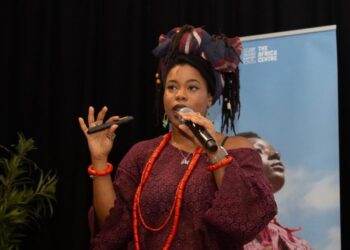
Founder of SISTALAND Nikita Dare | Photos provided
Q: It sounds like SISTALAND is just getting started. What do you see for the future?
A: This pilot festival is step one. I want to grow it into a three-day event and eventually open it up to under-18s too. Long-term, I’d love to offer training programmes and funding for creative projects — especially for those who wouldn’t otherwise have access.
Additionally, I want it to be a reminder that we can build the industry we deserve, one where people come first. Creativity thrives when we’re supported, not exploited.
My dream is that SISTALAND becomes a space where people can rest, reconnect, and remember why they started creating in the first place. We deserve that. We deserve to be seen as people, not just creatives.
Q: And finally, why the name SISTALAND?
A: So I’m a big Disney fan, and I was like, “Wouldn’t it be amazing one day to have a theme park that was just for women?”
And I just had this vision of having this incredible community. When you walk into Disneyland, if you’ve been there, you just get completely enveloped in it. I just don’t feel like I’m in this world anymore.
It’s not just happiness — it’s that goosebumps feeling, when all your favourite people are around and you feel like you could be anyone you want to be, right there in that moment. That’s what I want for the festival. I want people to arrive and think, ‘Oh my God, I’m not even on this planet anymore…I’m in this huge creative bubble.’
That’s actually where the name came from. People always tell me, ‘You’ve spelt Sister wrong!’ But it’s intentional. We have a non-binary community within SISTALAND who don’t always connect with the word ‘sister’, so the misspelling makes it more inclusive. For us, sisterhood isn’t tied to gender — it’s a feeling. We wanted to mix that feeling of sisterhood with a bit of that Disneyland magic — and that’s how SISTALAND was born.