Warning: This article talks about sexual assault, harassment, and rape. To seek help, please see the resources listed in this article.
From safer spaces to female headliners, Forwards Festival is setting a new benchmark for inclusivity.
Music festivals can transform the most lacklustre field into a brief feminist utopia. Yet without the right planning and precautions, an event – ideally intended for the enjoyment of all – can quickly become a cesspit of 21st-century misogyny.
Indeed, few events carry such contradictory potential to inspire, endanger, include, and exclude as the UK’s festival scene. Fueled by art, alcohol, drugs, and peer pressure, festivals can place people, and especially women, at greater risk of harm while simultaneously offering ‘the time of your life’.
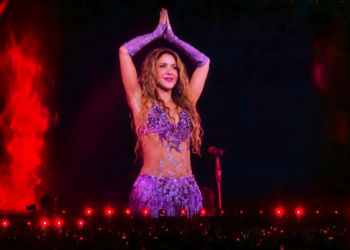
Of these risks and opportunities, Forwards Festival seemed well aware. Now in its fourth year, this Bristol event drew about 60,000 to the city’s Durdham Downs over August 23-24 for two days of live music, political talks, and a Sunday programme noteworthy for its three, all-woman headliners – Olivia Dean, The Last Dinner Party, and Jorja Smith.

“We want women to see themselves front and centre – on stage, in the crowd and woven into the culture of the festival,” Team Love, the Bristol-based organiser of Forwards Festival, told The New Feminist.
For the Forwards Festival organisers, weaving women into the fabric of the festival means not ‘only’ mainstaging female artists, but also providing services to protect and include all women visiting the Durdham Downs.
“Forwards Festival is committed to creating a safe, inclusive space for everyone, with a robust support framework designed to protect and empower women throughout the weekend,” the Team Love spokesperson said.
In between sets, including Ezra Collective, Confidence Man, and surprise hit Mermaid Chunky, festival goers at Forwards could not miss the bright signs flashing regularly upon the event’s big screens.

“Remember, if it’s unwanted, it’s not ok. Harassment of any kind is not tolerated at Forwards. Don’t be a bystander. Consent matters,” the message read.
“Our code of conduct is clear: harassment has no place here. Staff and stewards are trained to respond immediately and effectively to any incident,” Team Love said.
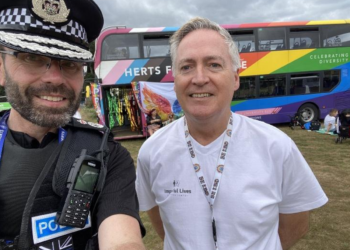
To further promote safety and consent at Forwards Festival, Team Love collaborated with Safer Spaces, a UK-based community interest company, providing both reactive and proactive services to help make festivals safer with the help of volunteers.
Reactively, Safer Spaces set up a space at Forwards where women – or anyone in need – could “rest and chill” if, for any reason, they needed to leave the main festival site.

“We can also go through the processes if they do want to report an incident to the police, but we never say people have to,” said Karen, an employee of Safer Spaces.
Safer Spaces services are both gender inclusive and gender informed, with staff and volunteers trained to operate respectfully and affirmingly.

“We wouldn’t turn anyone away if they’ve experienced sexual violence at a festival,” Phil, a member of the Safer Spaces team, told The New Feminist.
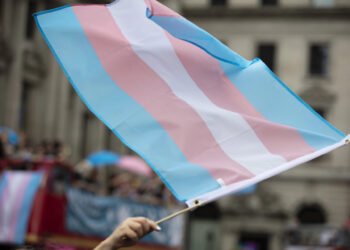
“Forwards is proudly a trans-inclusive space and we aim to ensure our facilities, language and on-site support reflect that commitment. We believe that trans women, like all women, belong at the heart of festival culture – their presence and voices strengthen the community we’re building at Forwards,” Team Love added.
Proactively, both Team Love and Safer Spaces aim to educate the whole festival about sexual harassment, consent, and what actions to take if you find someone in danger.
“The more outreach you can do at a festival, the better,” Karen said, adding that she and Phil had visited the food trucks and bars to explain what they should do if people report incidents to festival traders.
Safer Spaces aims to teach festival goers to look out for one another, to intervene, and to seek help if required.
“Being a good bystander is about knowing who you can ask for help, security, for example, if you can’t step in yourself, and it’s about making sure you know a person will be looked after after you leave them,” said Karen.
This education drive seemed to complement Team Love’s “ABC bystander approach”, aiming to promote a simple, three-step guide to safe intervention.
“Our ‘ABC’ bystander approach – A-ssess for safety, B-e in a group, C-are for the person affected – empowers all attendees to actively contribute to a culture of care,” the organisers said.
Their outreach efforts seemed to be paying off with several people The New Feminist spoke with remarking on the prominence of the Safer Space messaging around the mainstage, and the overall positivity of the festival site.
“We’ve only just got here, but straightaway we noticed a big thing on the board about safer spaces and consent, – so far so good,” said a woman visiting Forwards from Oxford.
Phil explained that Safer Spaces would not operate the same services at Forwards Festival as it would during an all-night event, adding that in his experience, camping festivals tend to be more dangerous spaces for women than day events.
“We usually have independent domestic violence advisors there to help out if something has happened, and we would also have sleeping pods so people can have a private place to rest,” he said.
“Here, we can do everything up until sending [someone] to a sexual assault referral centre,” said Phil, adding that, for a day festival like Forwards, Safer Spaces adds an extra provision to help people travel home safely.
“We tend to get good feedback from men, mostly because they realise they have sisters and daughters, and they want them to go to festivals and feel safe,” Phil added.
Inclusivity for safety
In addition to crisis management and prevention, Team Love aimed to make Forwards a safer space for women through inclusivity initiatives, offering a range of services, including volunteer-led childcare and innovative female urinals.
“Whether attending solo or with others, we want women to feel empowered to embrace the festival on their own terms: to dance, reflect, connect, rest and take up space without hesitation,” Team Love told The New Feminist.

“Our hope is that Forwards is a place where women can simply be – free of compromise or concern – and leave with a sense of joy, connection and possibility,” the spokesperson added.
For families, Forwards had a kids’ zone, providing parents with an enclosed area where children could run free under the supervision of festival volunteers.
“Quite often as a mum, you are doing something for your kid to have fun where you are kind of on the outskirts watching them or they’re coming along with you while you do your thing,” Cat, a festival goer from London, told The New Feminist.
“But here I felt like my husband and I could hang out together, still watching our kid, but all equally enjoying the space – and that’s such a rare thing,” she added.
Meanwhile, for people needing a break from the sensory overload of music and crowds, Team Love had teamed up with Diverse, a charity run for and by people identifying as neurodiverse.
“Diverse has always been set up to try to make any spaces that neurodivergent people want to get into more accessible, safer, and more welcoming,” Ged Roberts, an events manager at Diverse, said.
Ged kindly invited The New Feminist into Diverse’s darkened tent, filled with comfy chairs, weighted blankets, and ear defenders, to experience the calming environment first-hand.
“You can come here, rest a little bit, and then carry on with your evening,” Ged said, adding that sometimes simply having the Diverse signs and tent can help people feel more seen and included in a busy festival environment.
Team Love had recruited sign language interpreters for talks at Forwards’ information stage and for some of the artists, prompting headliner The Last Dinner Party to commend signers for managing to interpret their lyrics.
“I do think Team Love, who run this festival, do a great job of thinking about neurodivergent people,” Diverse’s Ged said.
Elsewhere, many women The New Feminist spoke with mentioned the female urinals at Forwards Festival, praising both their ingenuity and the quick turnaround.
“I love the fact that there are female urinals, that’s just great if that’s your thing,” one enthusiastic festival goer told The New Feminist on Sunday.
Women wait, on average, 34 times longer than men to use public toilets, the founders of Peequal, the brand behind Forwards’ female urinals, told The New Feminist earlier this year.
Forwards Festival shows that with the right planning, women’s safety and inclusion can be at the heart of live music rather than an afterthought. Its mix of practical support, education, and visibility makes the event feel both safer and more empowering. While the wider festival industry still has progress to make, Forwards sets a standard worth following.
If you need to seek help for sexual assault, harassment, or rape, please consider the following resources:
- Call the SARSAS helpline on 0808 801 0456 for confidential support.
- If you are based in the UK, you can find your nearest rape and sexual assault referral centre (SARC) on the NHS website.
- Contact Rape Crisis England & Wales on 0808 500 2222 (open every day, 24/7) for specialist support.
- If you are in immediate danger, call 999 or, if you cannot speak, press 55 when prompted to alert the police.
- For non-emergency situations, you can call 101 to report an incident to the police.