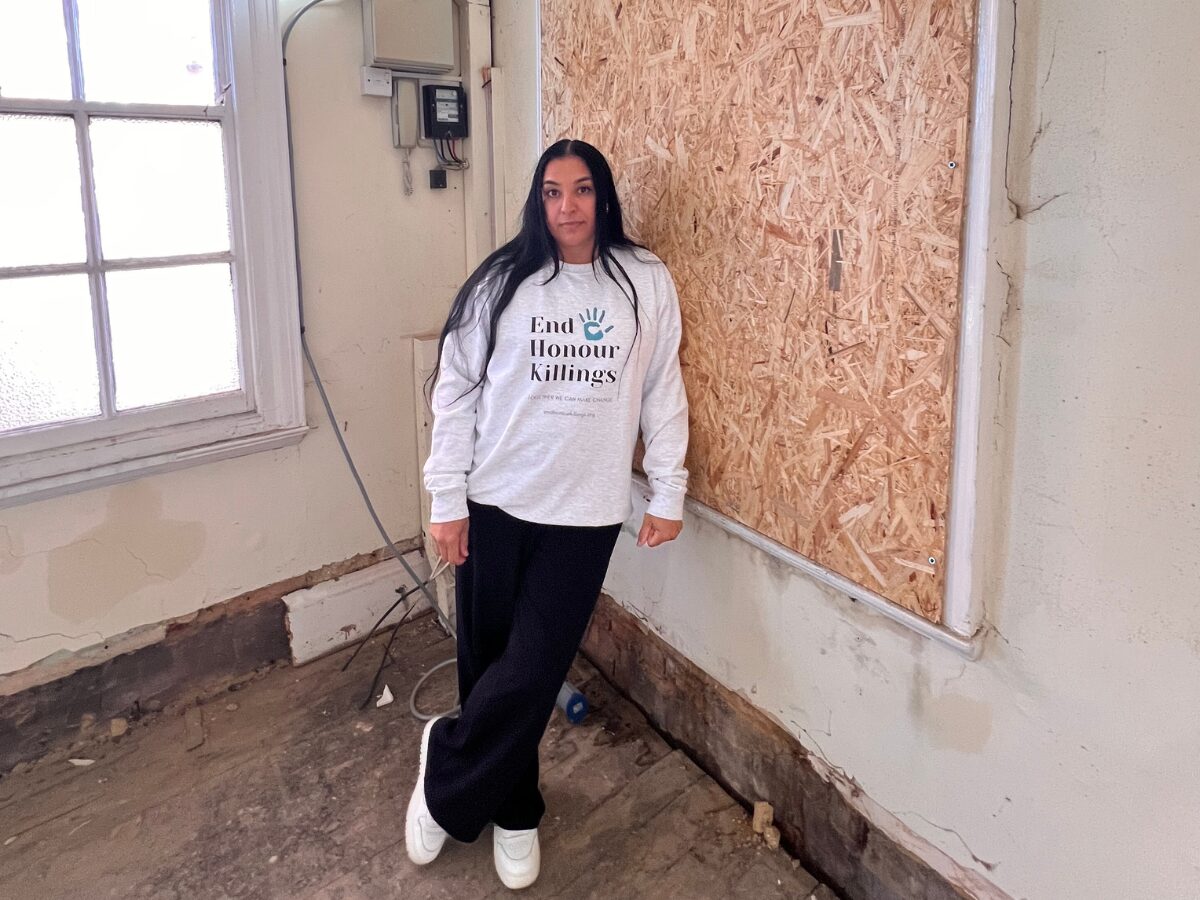
After fleeing domestic violence and honour-based abuse, Nina Aouilk is raising funds to convert buildings into six safe homes in Leicestershire, a project she says could protect survivors and change families for generations.
“As soon as you walked through the door, all you smelt was urine and human faeces. It had a really strong smell. It was in a really intimidating area.”
This was the emergency housing that Nina Aouilk and her young son entered after escaping domestic violence from her ex-partner. Aouilk remembers the hard sofas which “nobody could sit on for very long”, an industrial blue carpet, and a bed ridden with bedbugs. The housing’s atmosphere left a lasting impact.“In the back of my head, I said to myself, I will have a solution for the women and their children in a way that I couldn’t find one.” A little over a decade later, Aouilk set up ‘The Safe Six Project’, or six safe homes, for survivors of domestic violence and honour-based abuse to find refuge in Leicestershire, where she grew up.
With violence against women and girls continuing at epidemic levels in the UK, Aouilk’s non-profit is more than timely. According to the Office of National Statistics, an estimated 2.2 million women experienced domestic abuse in 2025, whilst the Home Office’s 2025 figures show a 7% rise in recorded Honour-Based Abuse offences, from 2755 to 2949. Aouilk emphasises the importance of survivors working in this field, having survived both domestic abuse from her ex-partner and attempted “honour” killing by her family. “Honour”-Based Abuse (HBA) is a term used to describe a range of abusive and violent behaviours carried out in the name of so-called “honour” as defined by The Crown Prosecution Service. Aouilk explains that her Indian Sikh background led to services not understanding how to navigate the cultural element of her case, leaving her isolated when she needed protection and support.

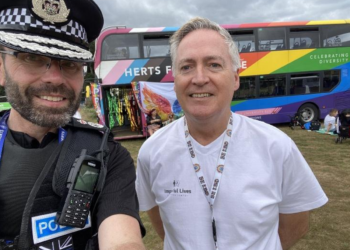
As the co-founder of the grassroots non-profit, she was in the same situation. After wrapping up work at the police station, where she’s “training the police on how to talk to a victim without retraumatising them”, she says this project feels like fulfilling her life’s duty.
“A lot of people are like ‘do you need six?’, but I just have this thing in my head where I’m like – it’s why I survived, it’s one of the reasons why I survived to start this.”
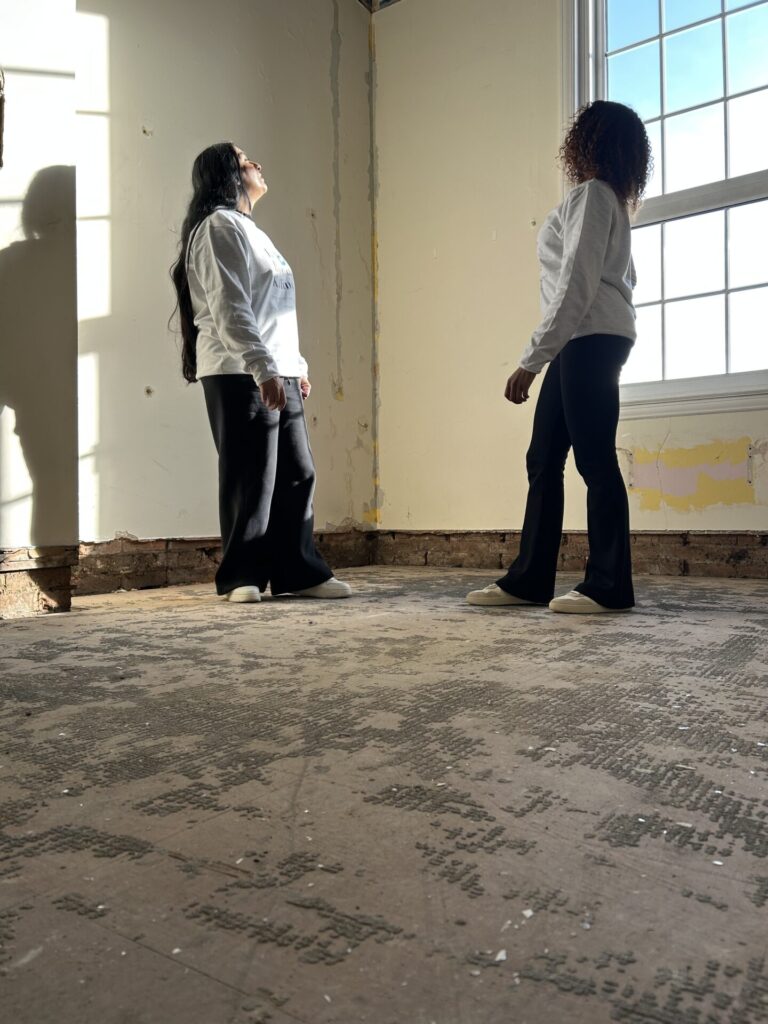
Both Aouilk and her son were classified as homeless after leaving the temporary emergency housing. “We weren’t allowed to stay there because on paper, I had assets which I couldn’t access. There was no solution to my problem in the sense that there was no affordable housing, and there was no non-profit that was helping me because they didn’t have enough space.” It wasn’t until a woman that they barely knew took them in that hope trickled back into their lives. “She opened her doors to us, and it was a relief, it was a chance to start a new life. Her house was beautifully decorated in a way I wanted to recreate,” Aouilk remembers, “it made me feel like I mattered. My son was also comfortable there. We stayed for a whole month. It was a house with a garden and dogs, it just…felt like love.” This is the feeling Aouilk hopes to replicate for survivors in these six safe homes. “I know that when women step into this place, they will feel that they’re not walking on eggshells. That they are able to find freedom.”

But bringing this project to life hasn’t been easy. So far, Aouilk has funded the first two phases of the project, but the third phase remains unfunded. This final phase includes the conversion from commercial buildings into safe homes, which is estimated to cost £700,000. The work will include plumbing, electric work, plaster, paint, and installations of bathrooms and kitchens. Aouilk has personally invested £400,000, and recently, even her earnings from speaking engagements have gone into the project’s financial pot. Having otherwise delivered talks at TEDx, Scotland Yard, Women in Policing UK, as well as major safeguarding summits, she’s even sold her car to contribute to her mission. “I’m not very good at asking for help – it’s a huge thing for me. I’m being constantly hit by shut doors, but I do believe that the right door will open.”
Aouilk has a nickname for the effect she hopes these homes will have on survivors, “I call it ‘The Nina Hug’. They’ll feel completely embraced with love and luxury.” But Aouilk is clear when she says that emotional and practical support doesn’t only comfort victims, but also saves lives. “That initial place is very, very important, because so many victims go back to the abuse, and I wanted to myself” she says. For Aouilk and others, the lack of support for survivors can make the abusive situation appear like an ‘easier’ option than where you end up.”

So what needs to change systemically? Aouilk puts down a lack of progress due to a few factors. “I do frequent parliament, and I listen in on a lot of discussions. The campaigns they create are always around the same non-profits. There should be a collective campaign for smaller non-profits, emphasising grassroots to come together and work together under some sort of umbrella.” Another issue is that “many decision-makers are not survivors and they’ve not had that lived experience” says Aouilk. “The wording is all wrong. It’s all stern, it’s cold, it’s not warm. That’s why victims don’t get the help they need.”
Every night before bed, Aouilk visualises the families who will enter these safe homes. “As that door opens, unlike me, where my heart nearly stopped because I was so disappointed, they’re relieved. They will have little bags that my non-profit will give to them. We’ll give the lady pjs, a toothbrush and toothpaste, a flannel, soaps, perfumes – all the little things that you need because you leave with literally nothing. And the boy, the little girl – they’ll have toys, pjs, soft things, a little blankie maybe.” This image makes Aouilk tear up. “It’s not six families that I will help,” she says, “it will be generations.”