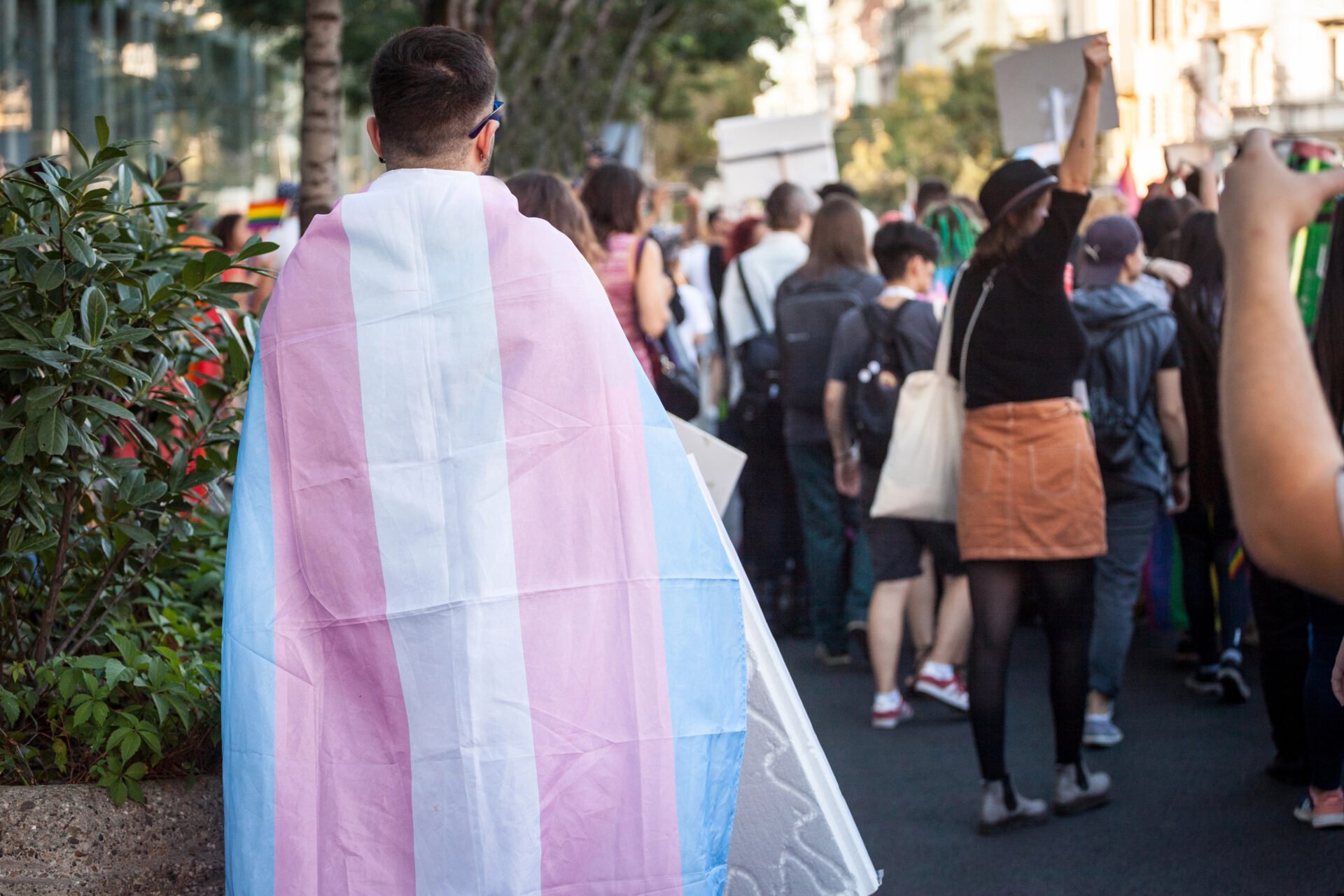
The TransActual Trans Lives 2025 report surveyed over 4,000 trans people across the UK. Its findings are a detailed record of a community being failed at every level: by GPs, by politicians, by the press.
Think about the last time you read a story about a trans person in a British newspaper that wasn’t framed as a debate, a threat, a controversy, or a problem to be solved. Think about the last time a politician spoke about trans people in terms of their actual lives (their healthcare, their housing, their safety) rather than in the language of “concerns” that never quite specify whose concerns, exactly, they are.
The Trans Lives 2025 report, published today by TransActual, has a number that should stop any reasonable person in their tracks: 99%. That is the proportion of the 4,008 trans people surveyed who said that media coverage of trans issues had harmed their mental health. Not some of them. Not most of them. 99%.
The same proportion reported hearing politicians express transphobic views. 87% had heard it from politicians in the past year alone.

What the report actually covers
Trans Lives 2025: Continuing To Endure The Hostile Environment, led by researchers Freddy Sperring and Dr Trent Grassian, is one of the largest surveys of trans experience ever conducted in the UK. Carried out between December 2024 and January 2025, it covers three central areas: access to healthcare, access to identification documents, and the personal and societal impact of transphobia. The subtitle is deliberate. This is the follow-up to TransActual’s 2021 report, Enduring the UK’s Hostile Environment. Four years on, the data suggests the hostile environment has worsened.
In his foreword, Chay Brown, TransActual’s Director of Operations, writes: “Not a day goes by without degrading stories about trans people in the media or politicians displaying outright hostility towards our community.” The report, he argues, should be “a wake up call for those in positions of power.” He is unsparing about what has actually happened: “Trans people in the UK have been failed by the very people and institutions that ought to have been protecting us.”
Overall, 97% of respondents reported experiencing transphobia, with 84% having experienced it in the past year. It was most commonly encountered online (82%), from family members (80%), from strangers on the street (71%), and on public transport (52%). Around half of respondents also reported it from colleagues (49%), friends (48%), and when accessing goods and services (50%). These are not exceptional experiences. They are routine ones.

The healthcare crisis hiding in plain sight
The section on healthcare is where the numbers start to compound. 64% of respondents said they had avoided going to their GP even when unwell. Nearly two thirds of trans people in this country are choosing to go without medical care rather than risk the experience of seeking it.
The reasons are well-documented in the data. Of those who had experienced discrimination from a GP, 97% said it was due, at least in part, to that professional’s lack of knowledge about trans issues. 89% reported being misgendered. 70% had mental health problems attributed to their trans identity rather than treated as separate concerns. And 60% had been refused care outright because they were trans.
The refusals extend well beyond transition-related treatment. The report makes clear that trans people are being denied routine, non-transition healthcare – appointments, referrals, prescriptions – across the board. A companion TransActual Healthcare Professionals Report, also published this year, found that the majority of GPs lack the training to support trans patients and that the NHS has not given them the resources to do better.
For multiply marginalised trans people, the situation is starker still. Trans people of colour were nearly 50% more likely to report being refused healthcare unrelated to medical transition. More than a third reported experiencing racism in healthcare settings specifically. 43% of disabled trans people had avoided A&E when they needed emergency care.
37% of all respondents had avoided A&E. 42% had avoided dental care. 42% had avoided sexual health clinics. The report’s conclusion on this is blunt: “Our healthcare system can and needs to do better for trans people.”
The ID problem that makes everything worse
56% of respondents said they feel less safe because their ID does not reflect their gender identity. This plays out at the GP, at work, when renting a flat, at border control, at the pharmacy counter. One in four respondents had avoided going to the pharmacy or collecting prescriptions because they knew they would be issued under the wrong name.
Yet only 13% of respondents had successfully changed the gender on their ID without issue. Barriers included cost, unclear processes, lack of medical documentation, and fear of discrimination. Only 9% held a Gender Recognition Certificate. For trans people of colour, that figure dropped to 5%.

40% said they would prefer access to an ID that does not list gender at all. TransActual’s position is that the government’s failure to modernise ID systems is an active harm. The Gender Recognition Act, passed in 2004 and barely reformed since, remains one of the most restrictive legal gender recognition processes in Europe. While debate has raged in parliament and in the press about what trans rights might cost other people, the costs being borne by trans people have received considerably less political attention.
One in four trans people have experienced homelessness
This is the finding that most clearly shows how a hostile media and political environment translates into physical, material harm. 23% of trans people surveyed reported having experienced homelessness at some point: having slept rough, sofa-surfed, or both. 5% had slept rough. Research suggests that approximately 6% of the general UK population may ever have experienced homelessness and around 1% have slept rough, meaning trans people appear significantly more likely to end up without stable housing.
The report identifies transphobia, family rejection, and discrimination by housing services as the key drivers. For trans people of colour and disabled trans people, low household income compounds the risk further: 61% of trans people of colour and 63% of disabled trans people in the survey were earning less than 30,000 pounds a year.
When family rejection is validated by a media environment that treats trans identity as a legitimate subject for “debate” – where trans people are asked to justify their existence and account for the actions of others – that rejection does not stay within the family home. It follows people into housing services, into healthcare settings, into the street. The report’s authors note that the data was collected before the April 2025 Supreme Court ruling on the definition of ‘sex’ in the Equality Act, and that “a repeat of the survey now would have even more concerning results.”
The media-politics feedback loop
TransActual’s 2021 report found that 93% of trans people said media transphobia had directly impacted the transphobia they experienced from strangers in public. The 2025 report builds on this significantly. 96% now believe media coverage has affected how strangers treat them. 91% believe it has affected how family members treat them. Of those who had experienced transphobia from family in the past year, 98% also believed media coverage was a contributing factor.
Research commissioned by IPSO found a 400% increase in coverage of trans issues in UK newspapers over the past decade. A 2025 study in the International Journal for Equity in Health described the situation as a public health crisis, documenting how stigmatising coverage had risen sharply alongside an increase in vitriolic language.

A 2024 Trevor Project survey of over 9,600 LGBTQIA+ young people in the UK found that more than half had considered suicide in the past year, with trans and non-binary youth reporting significantly higher rates. The relationship between a hostile media environment and mental health outcomes is documented, replicated, and consistent. That language does not stay on the page.
What TransActual is asking for
TransActual’s recommendations to government are concrete and, in the context of a country that ranked 22nd out of 49 in ILGA-Europe’s 2025 rainbow index – down from first place a decade ago — urgently overdue. They include an independent statutory inquiry into media transphobia, a working definition of transphobia with transparent mechanisms to hold politicians accountable, tougher regulation for social media platforms, ring-fenced funding for trans-specific hate crime support services, and mandatory training for healthcare professionals.
TransActual also calls for an independent press regulator with statutory authority. Currently, IPSO operates as a self-regulatory, opt-in body. As the report puts it: “The press are marking their own homework and complaints about transphobic reporting go unaddressed.” That line lands differently when you read it alongside the 99% figure it relates to.

When asked how hopeful they feel about the future compared to the start of 2023, respondents were more than twice as likely to say they were less hopeful (58%) than more hopeful (23%). That shift happened before the April 2025 Supreme Court ruling, before the EHRC’s widely condemned guidance, before the government enacted a bathroom ban for its own employees.
As The New Feminist has reported, what gets framed as “debate” has always had a material cost. Brown’s foreword closes with a call that is worth sitting with: “It is not too late to change the UK’s trajectory and to make this a welcoming home for our trans residents. But things do need to change and they need to change now.”
The report is a record of what is happening. The question of whether anyone in power is listening is a different one entirely.
In the UK, you can find support from Mermaids for trans young people and their families, from Galop for LGBTQIA+ people experiencing abuse, and from Switchboard for general LGBTQIA+ support. The full Trans Lives 2025 report is available at transactual.org.uk/trans-lives-25.
Photo from Depositphotos