
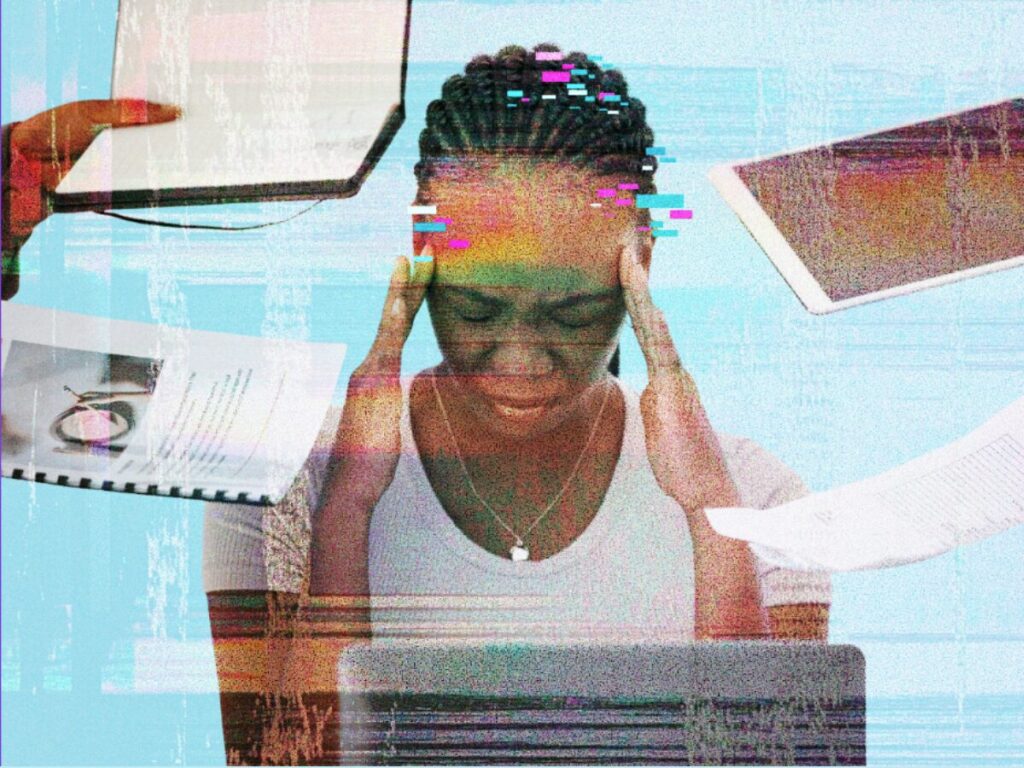
Former commercial real estate lawyer and founder of Next Generation Women, Mandy Rees, argues that well-meaning workplace labels like “Superwoman” and “Warrioress” aren’t empowering women – they’re burning them out.
It sounds like exactly the kind of motivational, Thursday afternoon question a corporate trainer, or an email-chain Buzzfeed quiz, might pose to help women unlock their true selves in the workplace. The kind of question designed to help women harness their inner potential. But in 2026, it is time to recognise that labels like this are doing more harm than good. They are actively damaging our mental health and our ability to stay in the room.
I spent two decades as a commercial real estate lawyer at an international firm. I have seen first-hand how assigning women “superpowers” is just a polite way of trapping them in a cycle of relentless pressure.
We all know the types. The Superwoman is the one who is brilliant, gets everything done on time, and supports everyone else while her own plate is overflowing.
Then there is the Warrioress. She is fearsome. She puts people in their place and takes on every challenge without blinking.


These labels are usually given with good intentions, especially in male-dominated offices, but they are not helping us. They are exhausting us. They force us to maintain a “mask of invincibility” that is impossible to keep up.
At various times in my legal career, I was given both of these labels, and, at the time, I felt like I loved it. One minute, I was Super Mandy, dashing around the office at lightning speed, solving crises and lifting everyone up in the palm of my hand. The next, out came Warrior Mandy, the fearless female who took no prisoners. It felt exhilarating – liberating even – but these were personas I couldn’t hope to maintain.
An early realisation came when one female executive – my senior and with a ferocious reputation – took me aside for a meeting. I was expecting a grilling. After all, she was a warrioress. But within seconds, the mask slipped, and this frightening boss was breaking down in front of me in a meeting room. All that toughness was just a reputation she felt forced to uphold.


The numbers show how this grim theatre still plays out. 2025 data from LawCare shows nearly 60% of legal professionals report poor mental wellbeing. Women are scoring higher for burnout and lower for psychological safety than men, with half of us living with frequent anxiety.
It is exhausting to see that thirty years later, thousands of women are still performing this same script. It is an image that is quite literally making them sick.
This isn’t just a “women’s issue” to be discussed once a year on IWD. It is a massive economic failure. Work-related mental health issues cost the UK economy over £57 billion annually. A huge chunk of that comes from “presenteeism,” which is just a fancy way of describing the terror of being seen as weak, so you show up even when you are drowning.
Inevitably, I hit burnout during my junior years, but that wasn’t what finally led me away from the law. I chose to leave the profession in 2010 because the price of the family/work juggle had simply become too high. I realised then that the “superwoman” ideal was of no help to me.

If I joined the profession again, I’d take a very different approach to being my true self. However, I believe real change can be made from the outside. I’m done watching brilliant women break themselves trying to be superheroes. It is why I started Next Generation Women in Birmingham. We have already held events for over 100 women in the legal sector, and the feedback is always the same: we are done with the mask.
In the confidential “Chatham House rules” sessions I run with firms, we do something radical. We stop the act. We talk about the competition, the perfectionism, and the bone-deep fear of being seen as a failure. When we finally drop the Superwoman act and the Warrioress armour, we lead better.
We do not need to “toughen up.” We need workplaces where we can be ambitious without feeling under threat, and competent without burning out.
If you are ready to stop the performance and start working sustainably, I am hosting a breakfast panel at Revolucio n de Cuba in Birmingham on Wednesday, 6 May (08:30 to 10:30 am). Let’s talk about how we can actually change the culture, rather than just changing our masks.