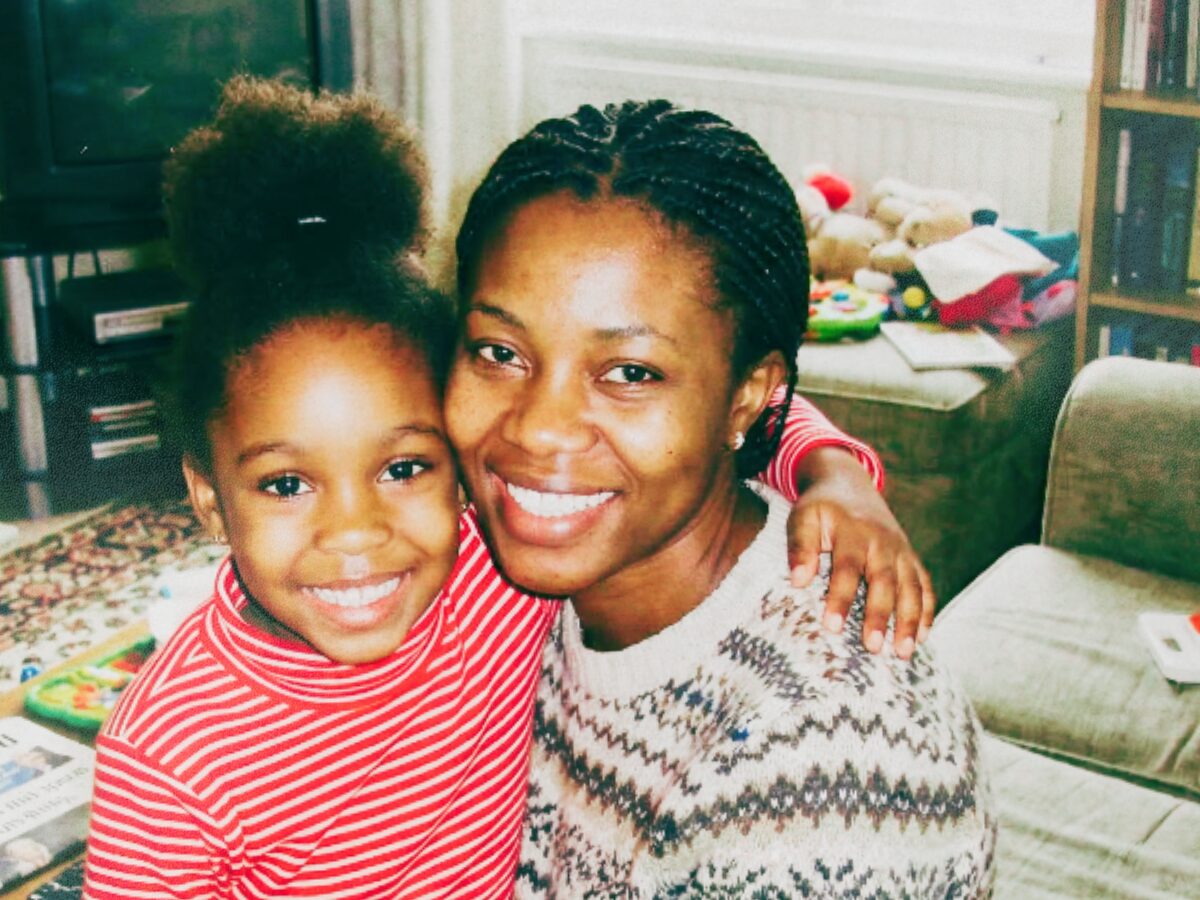
Every Sunday, she was the last one to eat.
It wasn’t a sacrifice she announced. There was no martyrdom in it, no huff before she sat down. She’d just cook, serve, wash the dishes from the cooking while people ate, then finally fix her own plate once my father and my brothers and whatever aunties had turned up that afternoon were settled and fed. By then, the rice had gone a little dry at the edges. She didn’t seem to notice, or if she did, she’d decided that noticing wasn’t something she had time for.
I grew up watching my mother run herself like a generator. She worked full-time as a community nurse, came home and cooked, kept the house, remembered everyone’s appointments, called her sister in Accra every Sunday evening even when she was tired, volunteered at church on Saturday mornings, was the person the neighbours rang when they needed someone sensible. She held everything together, and it always looked so effortless, which I now know is because she’d spent decades making it look that way.
She called it love, and it was, I’m not confused about that. But I’ve spent a lot of my adult life trying to work out where the love ended, and the conditioning began.
There’s a term for what my mother embodied, though she’d bristle at having it named. Researchers call it the Superwoman Schema, which is the expectation placed on Black women to present an image of strength at all times, to suppress their emotions, to resist vulnerability, to prioritise care for others over care for themselves, and to keep driving through difficulty without asking for anything back. It’s a survival mechanism that got passed down through generations of Black families as something closer to a virtue, and studies have consistently linked it to anxiety, depression, and hypertension in Black women. The schema gets transmitted from mother to daughter, not because they set you aside and tell you about it, but because you absorb it through watching growing up.
My mum was a second-generation British Ghanaian woman who had watched her own mother work herself thin, holding together a family in a country that didn’t particularly want them. Strength was the only option in the household she grew up in. And the Black church community she belonged to reinforced it at every turn: the women who showed up every week, who organised, catered, counselled, sat with the grieving, drove the elderly, raised funds, and then came back the following Sunday to do it again.

Research into Black British community life has documented the central, load-bearing role Black women have historically played in church and community structures, often at considerable personal cost. The women who kept these institutions alive did so because somebody had to, and because somewhere along the way they’d absorbed the message that they were built for it.
The Scholars Strategy Network has noted that Black women often internalise the Superwoman role via parental socialisation as well as through repeated experiences of racism and microaggression in institutions that demand more from them while offering less in return. My mother certainly experienced that. She was the most competent person in most rooms she entered, and she knew it, and she also knew that showing it too directly, or struggling too visibly, or asking for too much support, would cost her in ways that were harder to quantify but just as real.
The promise I made myself at 22 was sincere. I was different. I’d seen what it cost her, and I wouldn’t do it. I kept that promise for about three years.
Then I got a job I cared about, and a partner I loved, and a close friend going through a divorce who needed a lot of calls, and an ageing grandmother who needed visits, and a younger cousin who rang me when things got bad, and a work colleague who’d started leaning on me because I was “good with feelings”, and I became the person in my friendship group who could be counted on, who’d always pick up, who’d make the food when someone needed feeding. I kept doing it and doing it, and I was proud of how dependable I was, right up until the evening I sat on the bathroom floor and cried for forty minutes and couldn’t say exactly what I was crying about, except that I was so tired, and I couldn’t remember the last time someone had asked how I was and actually waited for the answer.
Black women are twice as likely as men to experience an episode of major depression, and yet only half as likely to seek help for it. When weakness is culturally framed as failure, and failure is something you can’t afford because the whole structure depends on you, you keep going. You make the food and fix your plate last and call that love.
I started therapy at 26. I rang my mother to tell her, and there was a long silence on the phone. It wasn’t disapproval exactly. It was more like bafflement: why would you need to go and talk to a stranger about things when you can just get on with it? It may be cultural, and frankly it’s not something I’ve looked into, perhaps it’s just my pocket of the community or my mum’s generation, but generally speaking, therapy is relegated to manic episodes and ‘serious’ problems.
What therapy gave me was the ability to see the inheritance clearly. The way I’d learned to equate caring for myself with selfishness. The way rest felt like something I had to earn, which meant it never came. The way I’d built my identity around being useful to other people, so that when I wasn’t useful, when I was just sitting and existing and needing things, I didn’t quite know who I was. Burnout, when it comes for Black women, often doesn’t really look like burnout at all. We just kind of…keep going, we know how to bear (at least look like we’re bearing it on the outside).

What I’ve been trying to do since (imperfectly) is break the chain without dismissing what it cost to forge it. My mother’s self-sacrifice was real love. She was also operating inside a set of constraints that I need to name clearly: as a Black British woman in the NHS in the 1990s and 2000s, working harder to prove the same competence, absorbing the double weight of race and gender in a system that was often hostile to both, she didn’t have the luxury of asking for help.
I don’t want to arrive at a tidy resolution here, because there isn’t one. I love my mother completely. I also understand now that watching her disappear into everyone else’s needs taught me to do the same thing, and that the first act of repair was recognising the lesson I hadn’t consented to learn. The second was deciding not to pass it on.
This week, for the first time, I rang her and asked how she was, and waited, and didn’t let her deflect. She talked for twenty minutes. Mostly about the garden, and about a woman at church who’d been unwell, and about a recipe she’d been trying. But then, near the end, and with a lot of prompting from me, trying to keep her on the topic of herself, almost as an aside, she said she’d been finding things a bit much lately.
I told her that was allowed. She laughed. Said she supposed it was.
I’m going to keep telling her until it stops surprising her. That’s what I’d like to start doing for my mum this Mother’s Day. We talk about self-care as if it’s a bubble bath and a face mask. For Black women carrying the specific weight of the Superwoman Schema, it’s more radical than that. It’s the ongoing act of insisting that your needs exist, that your tiredness is real, that you are allowed to eat first.
I wish I had the words to tell my mother that a long time ago.
If you’re a Black woman in the UK looking for mental health support, Therapy for Black Girls offers a directory of culturally informed therapists.