

Dr Louisa Toxværd Munch is an academic and content creator who believes education is the most radical tool we have. She spoke to TNF about manufactured ignorance, the politics of nostalgia, and why informed citizens are our best defence against the rise of the far right.

We are in trying times, we cannot deny it. It often feels like there is too much to cut through with the rise of Reform UK and the limitless fuckery spewing out of the United States, that there is little hope. One person who is changing this is Dr Louisa Toxværd Munch. Louisa is an academic at the University of Warwick who specialises in critical thinking. Her work has taken her from the classroom and onto our feeds, where she makes videos that encourage her audience to be critical in their approach to the state of the world. Louisa’s content empowers people to be better informed about the forces that are shaping the current political climate, namely neoliberal economics, the power of nostalgia, and the importance of class consciousness. She ends her videos with a tagline: “We can’t have a democracy without informed citizens, and it’s an emergency.”
Significant to her work online is her emphasis on the power of reading. A mainstay of Louisa’s content is recommending key texts to her followers with the aim of empowering them to be better informed on the topics she discusses. As someone who has followed her for quite some time, she has steadily grown my TBR with each video. What stands out the most about her content is how much it makes people feel like there is a glimmer of hope amidst the gloom. She equips her audience with the tools to confront the people in their own lives who may be sucked into the dishonest billionaire-backed politics of people like Nigel Farage. It makes what she does vital. We caught up with Louisa in Manchester recently to learn more about her work, what she has coming up, and how we can all weaponise critical thinking to overcome the systemic barriers that make our society increasingly unequal.

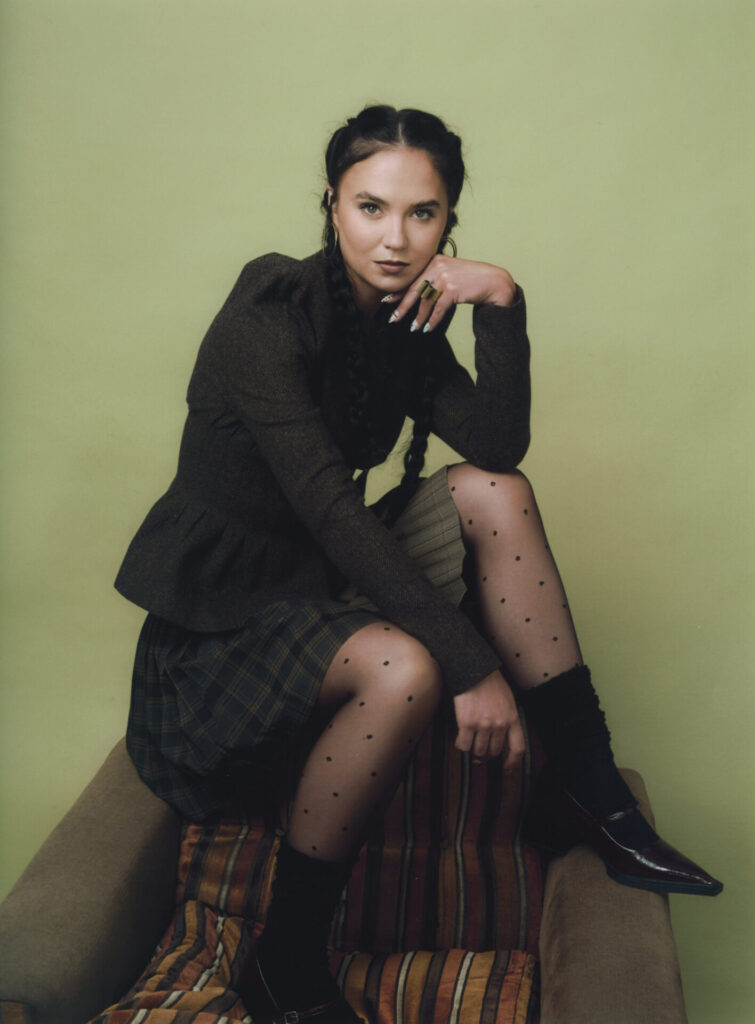
Your content centres around critical thinking. Can you explain what this means and why it’s important?
It’s about asking, ‘What is the next question?’ Not, ‘what is the right answer?’ Critical thinking is different from conspiratorial thinking because while they both set out on the same journey you have different directions. You’re trying to ask questions about how power manifests and a kind of truth behind things, but critical thinking allows you to see the structures of power rather than something behind a curtain, because often there is nothing behind the curtain, or behind the curtain, nobody knows what they’re doing. Essentially is is about understanding power structures and how power manifests in invisible ways. This is how critical thinking works.
Many of your videos include recommendations for books people need to read to be better informed and engaged with the current state of affairs, if you could narrow it down to 5 books what would they be?
One is definitely Capitalist Realism by Mark Fisher. This is all about how we live in a time where people struggle to imagine anything beyond the socio-economic system that we have today, which you can call capitalism, you can call it neoliberalism, whatever you want to call it, we can’t see outside of it. Margaret Thatcher said, ‘There’s no alternative, there’s no alternative’, that was like her motto. She also said, the method is economics, but the goal was to change the heart and soul of the nation, and that’s exactly what she did. People can’t imagine anything outside of capitalism now. Fisher speaks to all of that insidious nature of capitalism.

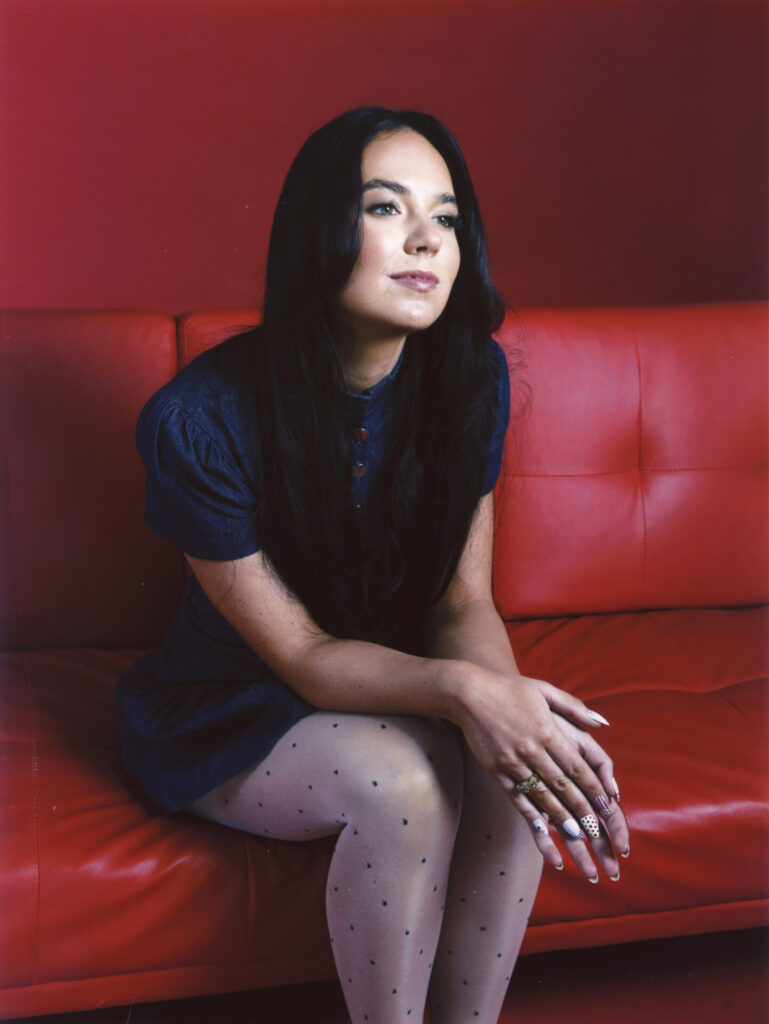
I would say anything in Kafka, The Trial, The Castle, and Metamorphosis. His novels present how power functions in these invisible and really oppressive ways that are very difficult to see because we are in them. We can’t see outside of these systems. Literature like Kafka allows you to understand power in a way that feels almost a part of you, and pull yourself out of that. Another would be The Burnout Society by Byung-Chul Han and Psychopolitics by Byung-Chul Han. He talks about how neoliberalist capitalism functions psychologically, how we have depoliticised mental health and made it a feature of our lives when really it’s a feature of a socioeconomic system that is so oppressive to our psychological well-being.
Grace Blakely’s Vulture Capitalism is another. That is one of the best books that explains succinctly, so well, and accessibly how capitalism functions, and how the economy acts in a way that is outside of politics, or outside of morality, and tells a story of how corporations basically oppress us. It’s the best book that explains succinctly and accessibly how capitalism functions in the 21st century. She takes you through different examples and enlightens you in being able to talk about the economy in a way that you are a part of it. One more would be Liquid Modernity by Sigmund Beaumont, who was a sociologist. He talks about how everything feels so impermanent these days. I think it’s so relevant in terms of people’s relationships, because everybody’s afraid of committing to everything, because that’s the nature of our world now. There is no commitment to anything. That really opened my eyes to see the way that everything works and flows, and we’ve sort of lost our ground in both time and in place in the world today.
Your videos end with ‘we can’t have democracy without informed citizens, and it’s an emergency’, as someone from a working class background in the academic world what does that mean to you?
To me, when I say it’s an emergency, I mean, we have no choice here now. If we don’t get up and start talking about these issues that affect our lives, fascism is going to win. I mean this in terms of academics, we write about all these issues all of the time, we write about the problems, we write about the solutions. But what I found was that I was talking to the wrong people about these issues. In reality, what is our research doing if it isn’t emancipating people and giving people a language in which to call out the oppression in their lives? This is an emergency, because if we don’t start speaking to each other and having some sort of solidarity, then fascism is literally going to win. We’re going to have a Reform UK government, and they’re going to take away your freedom and your rights. I don’t think people understand how close we are if we don’t do something about that. To me, it’s always, always been about education, because if you don’t have a language in which to name these feelings of loss and oppression, then there’s almost nothing you can do about it. Reform are taking advantage of that fact and using this kind of manufactured ignorance to turn people’s feelings of loss into feelings of hatred.


What is our research doing if it isn’t emancipating people and giving people a language in which to call out the oppression in their lives?
Louisa toxværd Munch
So much of your work centres on the idea of nostalgia. Can you tell us more about the socio-political implications of nostalgia? Particularly with the rise of the far right?
Nostalgia is all about loss, and it’s often a time that you’ve lost. You’re only nostalgic when the future doesn’t look bright. People are not nostalgic when the future looks good. People will look back on the past because they can’t see a future. That’s what’s really concerning, because we can never go back to the past, and you always have to ask yourself whose past is it? Is it, you know, a pre-Civil Rights past? Is it a pre-women’s rights past? Nostalgia is incredibly exclusive. It’s exclusionary, and it’s used in nationalism. It’s about who’s inside this past vision and who’s outside, and the outside is normally the scapegoat, the other.
Your content has been credited with making feel more hopeful in the face of a social climate that feels inherently dangerous and hopeless, how do you cultivate hope in your own life?
I was really hopeless before I started doing my social media, and when I realised there were so many people out there that also wanted to have the same conversations as me, thinking in the same way as me, asking ‘What can we do, and what is the alternative to our current system?’. That gave me so much hope. I never, ever expected it in a million years to be sitting here talking about it, because I felt lonely before. To know that we’re all grasping and looking for a different way to describe our times and change things is really helpful to me.

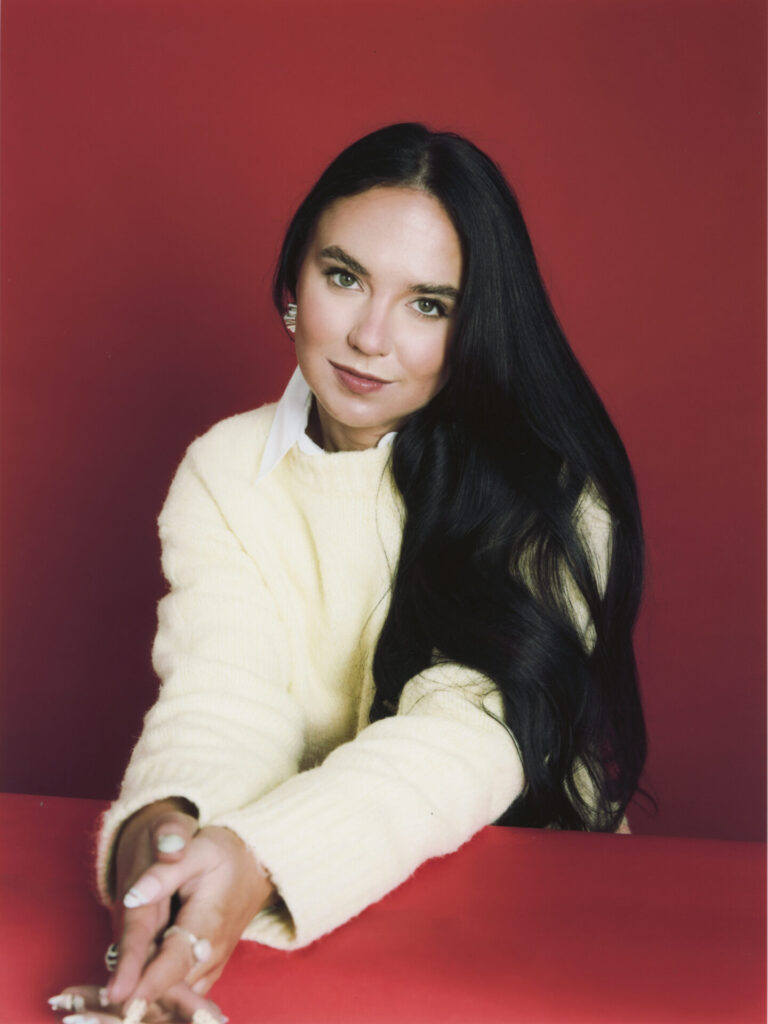
Can you tell us about the things you talk about that intersect with feminism, particularly in relation to the rise of the far right and some of the economic topics you cover?
Patriarchy is one of these systems that is very difficult to see if you don’t have a kind of language to describe the oppression that you feel. We can see this because you have to teach people to think outside of oppressive systems that are so normalised in society, including patriarchy. You can’t have a more equal world without recognising that we have a patriarchal system in place. We have a capitalist, patriarchal, white supremacist system in place that needs to be overthrown.
You can’t have a more equal world without recognising that we have a patriarchal system in place.
Louisa Toxværd Munch
What is the best way for people who engage with your content to get involved in social justice and activism?
The best way people can get involved is to talk to other people. I don’t want my social media work to stay on social media, go out and use what I say if it helps to have conversations with your nan, who is racist at the dinner table, or your mates at the pub who you feel are being unfair to a group, or don’t understand things in the way that you think they could understand things. Ask people questions. Don’t shame them, speak with so much compassion, with a basis where you feel confident enough to, because you have a language to describe these things. You know, there’s a difference between nationalism and patriotism. Explain what that means to people and make people feel that anything is possible, and there is an alternative to the system we have. It doesn’t have to be just the protest role.
Is there anything exciting you have coming?
I’ve got a book coming out in spring 2028. It’s called Glitch, How to Think in a Time of Monsters. It’s about how we can use critical theory to understand the world in a way that empowers us, in a way that allows us to start thinking about these systems so that we can take them down and we can change them.
Creative Directors: Ellie Macieira-Fielding & Adam Saraswati Rawlings
Photographer: Hannah Layton
Stylist: Alice Chadband
Hair Stylist: Rachel Howard
Makeup Artist: Layla Thorpe
Nail Artist: Ella Frances Gordon
Stylist Assistant: Jessica Walker
Production Assistants: May Van Hal & Olive Abadioru