
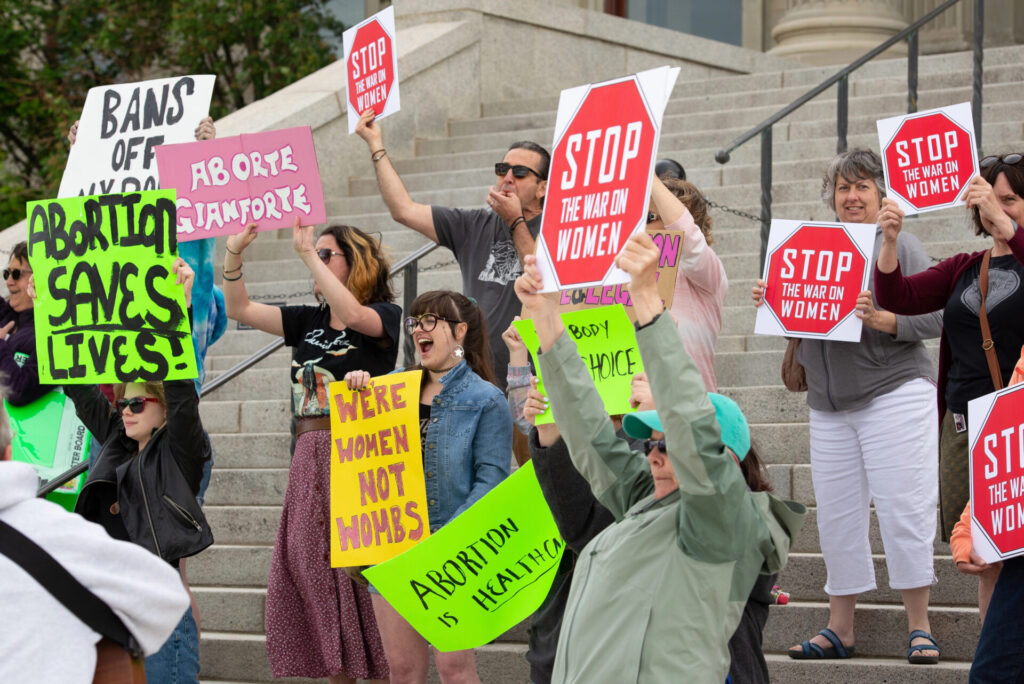
House Bill 1232 would define life from the moment of fertilisation, and experts warn its “deadly force” clause could effectively make it legal to kill women who have an abortion or use contraception like the IUD.
North Carolina has proposed a new law, House Bill 1232, further reducing women’s reproductive rights, almost four years on from the overturning of Roe v Wade. Currently, abortion is allowed up to the 12-week mark, and in the case of rape or incest, up to the 20-week mark.
The bill was filed on 13 May by Republican representative Keith Kidwell and passed its first reading on 14 May. A co-sponsor, representative Ben Moss, withdrew his support on 25 May following public backlash, saying he remains “firmly pro-life” but that the bill’s language “needs more work.” That leaves Kidwell as the sole sponsor. A TikTok video by user @kendallybrown, outlining the main issues, helped bring the bill to wider attention as it began circulating online.
The House Bill proposal redefines the start of life as the point of fertilisation and would recognise it as a legal person. Critics, including labour and delivery nurse Jen Hamilton, have warned that read alongside a clause permitting “deadly force” to defend “another person,” it could effectively allow men to legally murder women who have an IUD or take emergency contraception, since both can prevent a fertilised egg from implanting. The act is described in the bill as “an act to amend the North Carolina constitution to declare that a distinct and separate human life begins at the moment of fertilisation and shall be held inviolate as an individual person and protected by the laws of this state from the moment of fertilisation until natural death, so long as that person is not convicted of a capital offence.”


As one reproductive rights writer describes it, if the bill were passed into law, it would also have a cultural impact. Threats and attacks against abortion providers have increased, with death threats rising by 113% between 2024 and 2025; if the bill is passed, that would further enable the negative sentiment against women’s rights.
While critics are sceptical that the law will be passed, Reproductiverights.org has already categorised the state as “hostile.” If passed, the law would add the state to the list of US states where abortion is fully banned.
Because HB 1232 is a constitutional amendment, the route is long: it would need to pass the General Assembly, appear on the ballot at the November 2026 general election, and win majority approval from voters. Only then would it take effect, with reporting pointing to 1 January 2027.