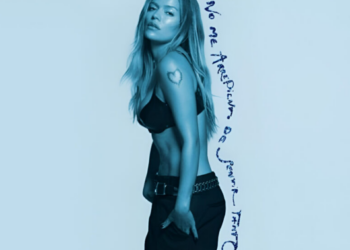
Olivia Rodrigo’s new album, you seem pretty sad for a girl so in love, is a sometimes brutal, always enjoyable ride through the pining and devastation that sits on either side of a relationship.
Heartbreak has served as the primary canvas of Olivia Rodrigo’s career so far. Across Sour and Guts, her first two albums, she has solidified herself as the leader of a new generation of pop artists who want to make you cry far more than they want to make you dance. With her lofty position, the release of her third album was highly anticipated. Third albums tend to be where most pop artists either hit their stride or stall creatively. I find that often it can be the case that third albums are capable of success but still ultimately represent a departure from well-established creative origins – you seem pretty sad for a girl so in love is not that. You seem pretty sad is an album that represents a step up creatively and a more mature approach to narrative songwriting. The album serves as a full beginning-to-end post-mortem of one relationship, taking us on an arc that begins with the giddy yearning of drop dead and crashing down into the dirge that is cigarette smoke. This album embodies so much more of the complexity of heartbreak.
The choice to present a linear chronology to the tracklist is wise on Rodrigo’s part; it demonstrates her ability to move beyond the snapshots that we were provided on Sour and Guts, giving us an all encapsulating story. In a similar vein to artists like Raye who also released an album with this structure earlier this year, she seeks to excise each painful detail to produce a body of work that is expansive and ambitious. In interviews, she has stated that even in the ‘girl so in love’ half of the album, she sought to make love songs that are still washed in a degree of melancholy. While this sounds like it could make for a maudlin experience, there are moments of brevity on this album that show Rodrigo is not a hopeless romantic, even if it doesn’t show her as a hopeful one either.
The 80s is back?
At the start of the year I like to write down a list of pop culture predictions, and this year one was that Olivia would return with a harder and more brash sound. I feel like I can consider that a prediction I got correct. The album has a heavy influence from the alternative pop and soft rock of the 1980s and the 1990s. That serves to make an album that feels a lot more referential and sophisticated than her previous work. She demonstrates her interest in pulling from sounds that are likely to be unfamiliar to her largely Gen Z audience, paying homage to the architects of alternative pop and rock music. Rodrigo goes further by even inviting Robert Smith of The Cure to feature on the track what’s wrong with me. You can’t really make a more deliberate connection to the 1980s than actively seeking out one of its most influential voices to serve as your first collaboration.

I feel like her choice to pursue an 80s sonic direction on the album was a wise creative decision. She sounds comfortable with the new sound but does not feel like she has forced a creative overhaul; it is still an Olivia Rodrigo album but with a new filter. At points, I feel like she is trying to divorce herself from the mainstream pop lane that she has always been attached to, making a body of work that is really sometimes entirely removed from the sounds that currently dominate the charts. When you have the comfort of basically assured success that a titan like Rodrigo has, this must be a lot easier to do. That does not discredit the innovative approach that she has taken, but demonstrates a wider trend – the largest artists are often now the ones who are using their chart security as leverage to make music that is more dynamic and interesting.
The 80s overtones of the album also feed into a cinematic feeling that washes over you as you listen to it. Particularly songs like maggots for brains and drop dead feel like they were pulled right out of the soundtrack of a teen romance movie. No doubt the prevalence of teen movies in the 80s helps sharpen this mental image, given just how 80s parts of this album are. When the album doesn’t have an 80s feel, it veers into the 90s. I can tell Olivia has a lot of respect for the riot girl movement, given how often it feels like her music is its spiritual descendent.
An album, and a story
The album has a dichotic arc – the first half is Olivia pining and falling; the second is reeling and flailing. She shows the build up and the collapse of the central relationship. It is in some ways reminiscent of albums like Taylor Swift’s Red for how this feels like her first real postmortem front to back. Heartbreak has been her North Star as a songwriter, but in prior works it was shown across selective moments across a tracklist, you seem pretty sad is the first time we’ve seen her excise each fragment of the wreckage with full reflection. The title of the album has a greater meaning when you see that this album seeks to oscillate between the early days of tender anxiety and the potential that a relationship promises, before breaking down and leaving Rodrigo not so much in love, but certainly pretty sad. Ultimately, the album is far more conceptual than her prior work because of this. I feel that she has been able to expand on her already established ability to capture the essence of heartbreak, now giving it context and fleshing out the build up as well as the break down.

Overarchingly, because we know the relationship is doomed, the album takes on a sombre tone. Don’t get me wrong, it has its upbeat moments; it is not an album that feels like drudgery to consume. Particularly the first half of the album and the penultimate track have moments that are infectious. With that in mind, she still has melancholic and even nihilist moments in the “pining” phase. Maggots for brains and honeybee have affliction as well as affection. On honeybee she sings about a budding relationship with a tinge of knowing where the story ends before it even starts. Even in maggots for brains, one of the album’s most uplifting tracks, she sings about being essentially catatonic with longing for the song’s muse.
Rodrigo’s central thesis seems to be that love can be all consuming, but when you’re in the midst of it, you can mistake drowning for falling. While I don’t think the album is ultimately entirely pessimistic, it taps into a current of heteropessimism that has been dominating the discourse for a while now. Peers of Rodrigo’s like Sabrina Carpenter and Gracie Abrams are also making music that centres the negative sides of romantic attachments, though this takes on different shades depending on the artist in question. I feel like you seem pretty sad is ahead of the conversation in parts. The cure in particular addresses this feeling of unfulfilment but from a place that focuses on the internal realisation that a man cannot plug in the gaps, rather than centre his impact on you directly.
Subverting expectations
At the central point of you seem pretty sad we have my way. My way is a song that tackles the oft-present ‘other girl’ that has haunted many a pop star’s output. Unlike the predecessors of Taylor Swift’s Better Than Revenge or Paramore’s Missery Business, my way shows a restraint that positions it solidly in the 2020s. Olivia is assertive and direct on the track but avoids the characteristic slut shaming that songs of this nature almost always embody. It makes for a song that is able to capture the energy of the aforementioned tracks of the past without adopting some of the dubious politics that they will never be able to shed. When we think about the topic of the other woman in music, we have so many examples of the trope being approached from a position of moral superiority or of unfiltered vitriol. I believe it is important we do not hold women to an unrealistic standard creatively when it comes to addressing negative emotions towards other women. Olivia toes the line well.
Instead, the track serves as a ‘first crack in the glass’ for the overarching narrative of the album. Across the album, she references insecurities around other women, something she has also expressed on previous tracks such as Obsessed. With my way, the confirmation of her anxieties leads us down a spiral toward the end of the relationship. Even though the song takes on a bold and assured tone, the subtext and its position in the album make me feel like it is the canary in the mine for what is yet to come. Essentially, this song symbolises the beginning of the ‘you seem pretty sad’ arc of the album. Immediately after comes purple, a song that captures the feeling of being consumed by a relationship.

The song is emblematic of that one relationship in your early 20s that just makes you feel lost. As she sings about his red mixing into her blue and making her world purple, she speaks to the discomfort that this can bring – even when on the outside it may appear to be the happiest thing. Women are so often expected to lose a part of themselves in relationships, and it can take a few occurrences of this to truly build a callus to it. With purple, it feels like Rodrigo is acknowledging this, again leaning into the twist of sadness that underscores the loving and pining half of the album. Most direct are the lyrics towards the end of purple that read: I had big dreams ‘til I tied myself to you, Now I’m all consumed. This relationship is comfortable but it is one that has seen her realign her priorities and discard personal dreams for the benefit of maintaining commitment.
To truly kick off the degradation of love that the album takes us on, we next have the cure. The song served as the second single for you seem pretty sad and unlike drop dead, it was one that connected with me immediately. The song is Rodrigo at her best, reflective, emotional, and a little ascerbic. She sings about wanting to find an antidote to her anxieties with the man she loves, but realsises that no matter how much this relationship can be a good thing for her, it is not the cure for what pains her. Set to a driving acoustic guitar, the cure is a sonic outlier on you seem pretty sad, which up until it’s point in the tracklist has been very heavily skewed toward synths and electric guitars. This compounds the feeling this song has of being the real narrative peak of the album, crashing out into a more lush and expansive production in the final minute or so as she passionately belts out the bridge and final chorus.
Olivia and the art of the ballad
Olivia has always been a dab hand at making a good pop ballad. You seem pretty sad has no shortage of them, looking at the relationship from different angles. The first, honeybee, feels like her intrepidation to fall for someone when she has a part of herself that knows it will end in flames. Less, on the other hand, tackles the excruciating pain of the immediate fallout, crashing over itself as she wishes she wasn’t loved enough to be set free. In the second half of the album, as we observe the collapse of the relationship, she takes us through a collection of ballads spliced with contrasting tracks, detailing the stages of grief as we know that the love she has pined for is ultimately doomed.
I enjoy the juxtaposition between ballads and the songs that sit either side of them. After less, we are jolted into expectations. It has heavy 80s drug pop influence, giving us whiplash as we speed out of the oblivion of less and into a hyper girls night out in Silverlake. She could have ended the album on this note, of reflection and of having learned something new about how to navigate relationships. Expectations has that sense of conclusion, almost like the dance number that plays over the closing credits of a film, but she does not choose to end you seem pretty sad for a girl so in love with it. Instead, she has one song left to share, one that feels like a more mature and more bold, albeit less uplifting, place to close out this saga.
You seem pretty sad ends with its strongest track, cigarette smoke. The song is the culmination of the entire arc of a relationship we see start with feverish pining, through the revelation of the cure, ending here with a funeral march. It is her best work yet, capturing a difficult balance between devastation, rage, and reservation. Cigarette smoke really had me saying ‘yep, I know that feeling’, that early 20s breakup that just feels like the real hum dinger toxic relationship. It is like the perfect mirror to drop dead, the album starts with so much optimism and the yearning of wanting to know so much about someone, ending with Rodrigo bargaining a hostage heart in exchange for lost time. It has echoes of some of the greatest songs of its ilk like Both Sides Now by Joni Mitchell or even Silver Springs by Stevie Nicks.
Cigarette smoke has a somewhat operatic production, but I feel like it is made for a live performance where she fully leans into this aspect. The song, with crushing lyrics and her most powerful vocal delivery on the album, begs to be transformed into a spectacle on stage. It has a cinematic quality that closes the album with the feeling of being reeled by the whirlwind of a passionate yet damaging relationship, making you feel the need to catch your breath when all is said and done. Sometimes you hear a song and just know that it is one you will witness become a cult classic, one that fans demand with each tour, one that demands to take on a life bigger than its five-minute run time – that is cigarette smoke.

Her best work yet
Olivia Rodrigo has yet to release a lacklustre album, something that is quite a feat when you consider her young age and her already very promising longevity as an artist. You seem pretty sad for a girl so in love feels like a departure from her past works, though, notable already for eschewing her prior format of a purple album cover with a four-word title, the album shows us a more evolved Olivia. It has not represented an abrupt sonic change or a denial of her creative origins, but instead has done what good artists have always done, it has built on the foundation of what came before. Songs like begged encapsulate this well, while it has sonic and lyrical similarities to Sour or Guts, it feels like a refined adaptation.
It is often a little bold to discuss works that are new and speculate on their legacy. While some albums cement their singular status as a classic on arrival, most need to take time to clear a lane for themself. You seem pretty sad has the feeling of being somewhere in the middle. It is undeniably her most sophisticated body of work and one that feels like a step up creatively. My trepidation comes from knowing that Olivia will likely continue to build after this album, exploring new facets of herself. If anything, you seem pretty sad has me building even higher expectations for the future. With this album, she has proven that she knows well how to construct a whole narrative around a relationship, reflecting on each phase of it to produce a body of work that is deeply evocative of love and heartbreak in your early 20s. Overarchingly, it is a mature, cohesive, and emotionally vulnerable album that is representative of one of pop music’s most discerning and focused songwriters.