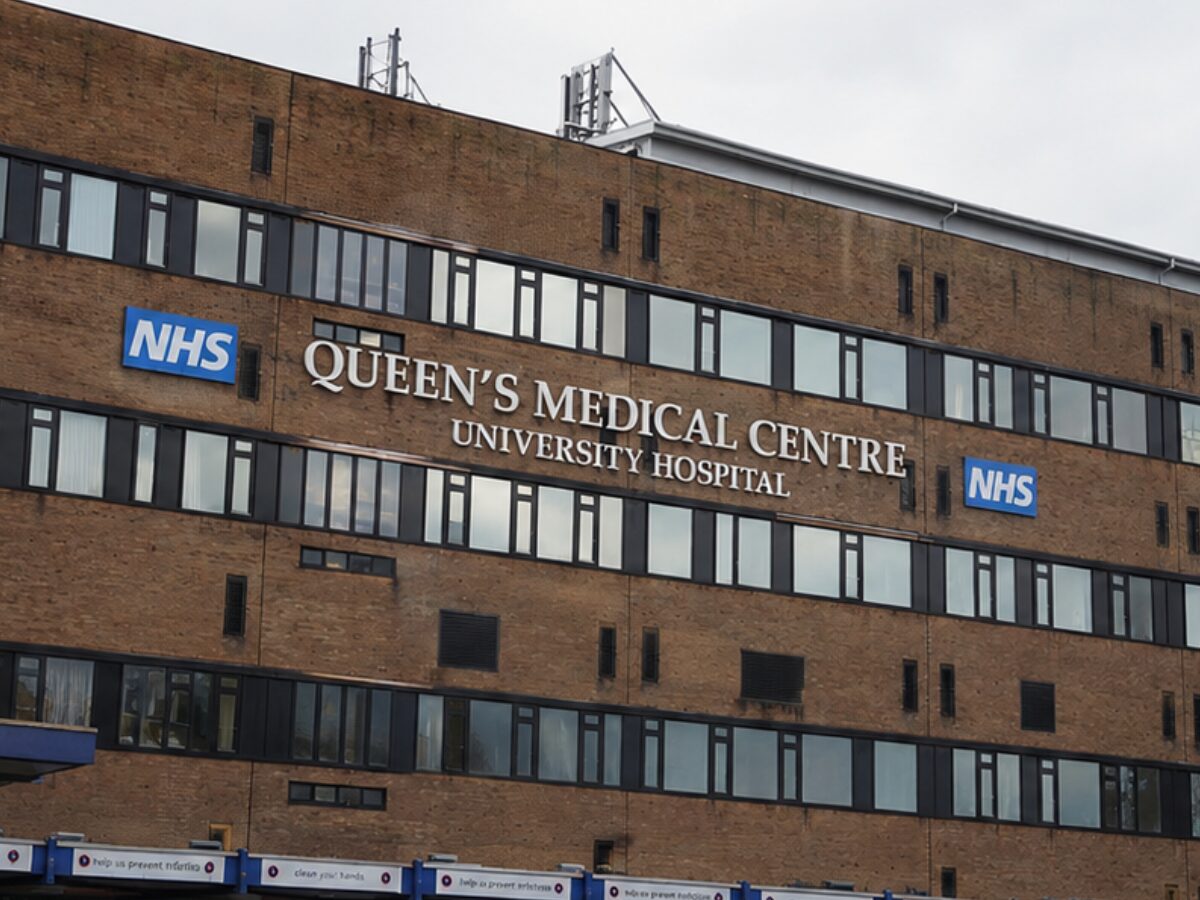
Published on 24 June, the Ockenden report examined the care of almost 2,500 families at Nottingham University Hospitals and found harm stretching back more than a decade. What it describes is also a warning about how England treats women giving birth.
Content warning: This article contains discussion of baby loss, stillbirth, maternal death and medical trauma.
More than 500 mothers and babies were harmed, and many of them died, because of poor maternity care at a single NHS trust. That is the central finding of the Ockenden report, published on 24 June, the largest maternity inquiry the NHS has ever held.
The review looked at maternity and neonatal care at Nottingham University Hospitals NHS Trust (NUH) between 2012 and 2025. It found that 444 women and 76 babies suffered avoidable harm after substandard care.
The inquiry examined the deaths of 27 mothers and concluded that failures in care affected the outcome in six of them. It found 31 newborn babies who died would probably have survived, or avoided serious harm, if they had been cared for differently. Almost 2,500 families gave evidence, along with more than 800 current and former staff, which is what makes this the biggest review of its kind in NHS history.
The inquiry exists because a small group of Nottingham families refused to let their children’s deaths be filed away. Harriet Hawkins was stillborn in April 2016 after an obstructed labour was misdiagnosed, and her death was later found to be avoidable. Her parents, Sarah and Jack, both NHS staff at the trust, spent almost 10 years pushing for answers against what Donna Ockenden calls “obfuscation, delay, callousness and incompetence”. Their fight, joined by other bereaved families, forced this review into being.
The trust admitted six charges of unsafe care after three babies died
Inside the NHS, these problems were well known. Between 2015 and 2022, six external reviews examined the trust’s maternity service, and every one criticised the culture, the behaviour of staff and the way the unit was run, despite the harm continuing.
Between April and July 2021, three babies died in NUH’s care. Those deaths led to a criminal prosecution, and in February 2025 the trust pleaded guilty to six charges of failing to provide safe care to three mothers and their babies. It was fined more than £1.6m. A coroner had already called the trust “obstructive” over the way it withheld evidence from grieving families.
Staff told the inquiry why standards slipped. Only 11% said there were enough of them to work safely. More than 40% had seen or experienced bullying from managers or colleagues, and Ockenden describes “intimidating cliques” that no one challenged. At its worst, the midwifery shortfall topped 120 full-time posts.
Women told to take paracetamol and go home
Many accounts show that when women raised concerns, they were often not believed. Phone triage was often dismissive, with advice that families felt was about how busy the ward was rather than about the woman in front of them. The report describes a culture of not admitting women who arrived in labour, even when sending them away puts them and their babies at risk.
One woman who came in for help was asked if it was her first baby and told to “take some paracetamol and have a hot bath”. In an account from 2013, a mother warned a midwife at 25 weeks that her baby had almost stopped moving, and was told to sit down and make time to feel him move. A week later, there was no heartbeat, and her son was stillborn.
Some women were refused pain relief outright, including one who begged for an epidural in 2019 and was told it was coming until it was too late to have one. Others told the inquiry their consent was simply bypassed, with drips and procedures pushed on them despite birth plans that said otherwise.
A lot of harm was never recorded
Some of the most serious failures are the ones the trust never wrote down. Between 2012 and 2024 the review found more than 100 cases with significant or major concerns about care, including stillbirths and severe injuries, where no incident was ever reported or investigated. Because the trust never logged them, it never examined them, and the review concluded that the same mistakes kept recurring as a result.
The clinical pattern showed things such as babies not being monitored properly during labour, heart-rate traces being misread, signs of distress being missed, and midwives not escalating to doctors quickly enough. Among babies left brain-injured by oxygen starvation around birth, a condition called hypoxic ischaemic encephalopathy, the mother’s care was rated as significantly or seriously substandard in just over half of cases.
A baby disposed of as clinical waste
The inquiry also examined what happened to families after a death, and found a repeated failure to treat dead babies, and their parents, with basic dignity. In 2019, a baby who died in pregnancy was disposed of as clinical waste by laboratory staff after a post-mortem, against her parents’ explicit wishes, taking away the goodbye they had planned. Babies were logged in records as a ‘fetus’, a ‘sample’ or a ‘specimen’. In 2016, a baby was placed in a mortuary space that already held the body of an unrelated adult, and the family were never told.
One staff member described finding a baby kept in an ordinary domestic fridge in a bereavement room, where babies were wrapped and stored for up to 72 hours in case parents came back to see them.
Another family asked for their medical records and opened an envelope at home to find graphic post-mortem photographs of their baby, sent alongside an itemised bill for the cost of his death. While the review was still underway, in 2025, the trust withdrew its funding for PETALS, the counselling service for parents who lose a baby.

Black women are most at risk
Nottingham is one of England’s most diverse and most deprived cities, and the figures reflect that. Of the 27 mothers whose deaths the inquiry examined, 14 were not white British and 11 lived in the most deprived parts of the city. Only 8% of the trust’s midwives are from a global majority background, women who needed interpreters often went without, and Ockenden records accounts of racist behaviour on the wards.
MBRRACE-UK, which reviews every maternal death in the UK, finds the same gaps nationally. Black women are nearly three times more likely to die during pregnancy or soon after birth than white women, and women in the poorest areas are twice as likely to die as those in the richest.
The overall maternal death rate is now around 20% higher than it was in 2009, the year the government promised to halve it. Campaigners at Five X More have spent years putting these numbers in front of ministers. We have written before about how readily women’s pain is dismissed; for black women, being disbelieved on a maternity ward can be the difference between living and dying.
1p of research for every £1 of care
The Royal College of Midwives puts England short of more than 2,500 midwives, and in 2024, most of the midwives it surveyed said their units were not safely staffed. Clinical negligence now costs the NHS almost as much as it spends delivering maternity care. NHS Resolution figures cited in the report put maternity at 51%, around £2.5bn, of the entire harm bill.
Maternity also sits inside a system that has always treated women’s health as secondary. The Academy of Medical Sciences notes that for every £1 the NHS spends caring for reproductive health conditions, it spends about 1p researching them. Women wait longer for diagnoses, are taken less seriously when they are in pain, and remain under-represented in the trials that decide how all of us are treated.
What the government says it will do now
In response, the health secretary, James Murray, said Martha’s Rule would be rolled out to every maternity unit in England. It gives women and families the right to an urgent second opinion from a separate clinical team when they believe something is being missed. The government also said NHS staff who refuse to give evidence to maternity inquiries could face up to two years in prison, an attempt to break what Ockenden calls a culture of silence. A separate national inquiry into NHS maternity care, led by Baroness Amos, is due to report next week.
England has produced reports like this one before, at Morecambe Bay, at Shrewsbury and Telford, at East Kent, and ministers now admit that recommendations from those inquiries were never put in place. Bereaved families said much the same things each time. Whether this report changes anything turns on whether the women raising the alarm are believed the first time, rather than after the next inquiry has counted the dead.
Support after baby loss is available from Sands on 0808 164 3332 or at sands.org.uk. The Birth Trauma Association offers support to women affected by traumatic birth at birthtraumaassociation.org.uk.