As it’s Black History Month and ADHD Awareness Month, it’s the perfect time to open up difficult conversations surrounding the treatment of Black neurodivergent women. We spoke to the founder of ADHD Babes to find out more.
The month of October is both Black History Month and ADHD Awareness Month. Both of these months overlapping represent the turbulent experience that Black people with ADHD face. The intersection of race and medical care is one that often goes overlooked for many people; however, it is important to draw attention to the experiences of black and marginalised communities when receiving diagnoses. 13% of people who are screened as positive for ADHD are black, which is higher than any other racial group in the UK.
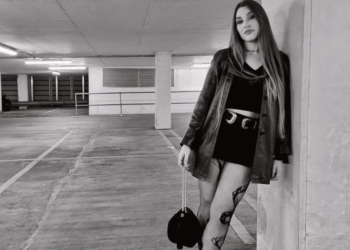
I spoke to Vivienne Uchebuaku Isebor, founder of ADHD Babes, who has been working to undo the stigma and support black neurodivergent women in the UK.
Getting a diagnosis and creating a community
Vivienne was inspired to start ADHD Babes after getting a ‘late diagnosis’ in her early 20s and experiencing a deep sense of loneliness and loss.
She said: “It felt like a period of mourning and confusion with no points of reference. I attempted to visit support groups but always felt like the odd one out and that the spaces were not made with me in mind”.

ADHD Babes is a group for Black women and Black non-binary people of African and Caribbean descent with ADHD. They do not need to have a clinical diagnosis; the organisation accepts self-diagnosis.
Vivienne was encouraged by her partner at the time to create her own space. “This led to a Facebook group that slowly developed into the community group we are today”.
She added, “Community has been the backdrop to my upbringing. I was a Black Saturday school child, grew up in a Nigerian family with numerous cousins and extended family, alongside weekly church visits.
“As an Igbo Nigerian, ideas around diplomatic leadership trickle into our mission statement. This, coupled with my love for Black history, Pan-african principles and Black Feminist teachings, ADHD Babes is deeply rooted in self-empowerment, equity and joy”.
Challenges unique to black women
Vivienne told The New Feminist of struggles facing black women that are overlooked and cannot be understood by others: “The layered triple bond of facing challenges due to race, gender and disability is often overlooked. You can work twice as hard as others – as we have been advised to do – and still be seen as aggressive or unprofessional because you present as a woman in a sexist society.
“You can do all the right things, ask for all the right support, then be told you are not struggling enough because society sees Black women as ‘strong’ and inversely less deserving of care,” she adds.

The stereotype of the ‘strong Black woman’ is one that is still perpetuated in today’s society. It leads to a lack of care and a lack of support for Black women who are suffering. There is an added complexity when neurodivergence is involved, which goes overlooked. This cultural expectation leads to the underrepresentation and support for black women, which directly negatively impacts the mental health of black women.
Vivienne adds, “Living through this while juggling so much is exhausting”.
Spaces in feminist argument
When looking at black history month and ADHD awareness through the feminist lens, it is important to recognise that work still needs to be done to promote intersectionality within feminism and ensure all women are involved in these conversations.
We asked Vivienne if she feels that mainstream feminism has created enough spaces for the voices and experiences of black neurodivergent women.
“No. Feminism, in my opinion, has moved away from the core values of equity amongst genders and fallen victim to the ‘us versus them’ approach to mobilising. Ensuring that we start from a common goal of creating equity, which includes considering intersectionality, would naturally include the voices of marginalised groups.
“Power and privilege exist. Acknowledgement of power means people can use their privilege to push for equity. Listening with an open heart and being willing to be uncomfortable can create safer spaces for us to go together”.
We also asked what Vivienne would want organisations, health care professionals and professional spaces to know about supporting black women with ADHD.
“I understand the resources are tight and the system is struggling. This does not mean we should suffer because of it. More is needed, and if that means thinking of completely new ways of working, more community-based work rather than expecting communities to come to you, then so be it.
“We are not asking to be treated differently from anyone else; we are asking for our existence to be seen in its entirety and for our case to be held with compassion and curiosity. The lack of support is literally costing us our lives. We need better”.
The importance of awareness months
Black history month and ADHD awareness month, as are any months that bring awareness to important identities, are very important to bring around conversation and reflection. Feminists can and must do better to give a voice to all women, and we must uplift and support all women and all identities – not just during awareness months, but always.

Vivienne told us how much the overlap of black history month and ADHD awareness meant to her, highlighting that “being black and neurodivergent make up a big part of my identity”.
“I feel proud that I am part of such beautiful communities. It pushes me to celebrate, to indulge in the joy and magic of it, to be intentional about my power despite the difficulties and because of the strength of my people”.
You can check out ADHD Babes’ community on Instagram @ADHDBabes