
CW: discussions of mental health, suicide
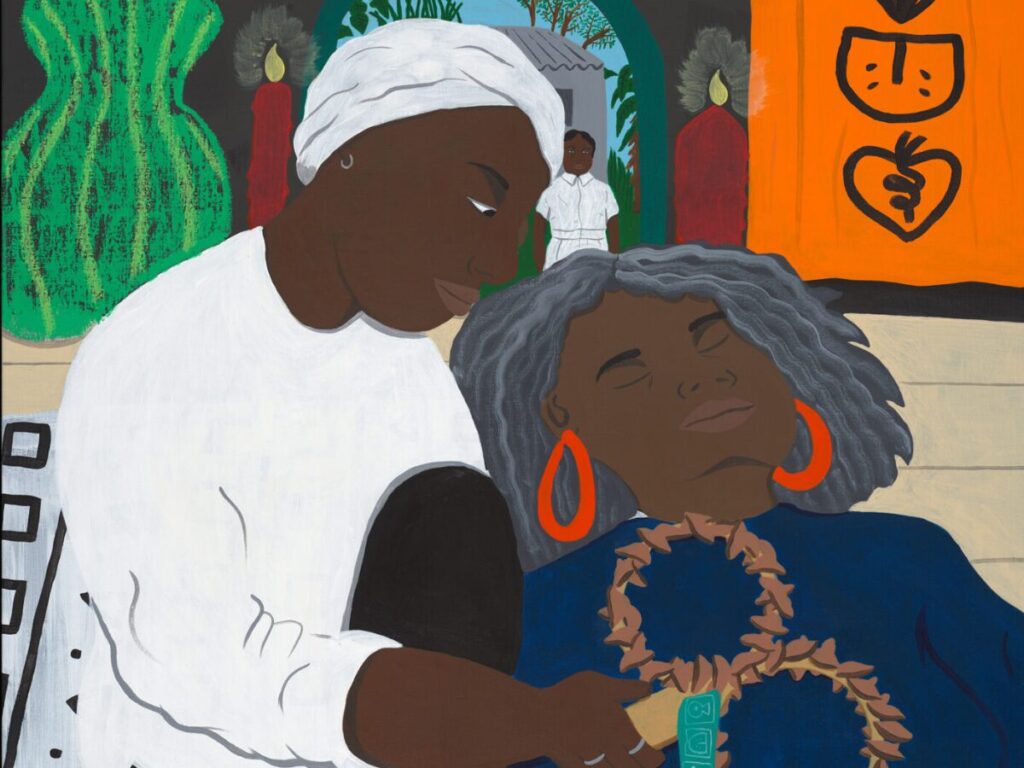
Rudy Loewe is a multidisciplinary artist whose work explores socio-political dynamics, drawing upon African and Caribbean folklore and histories to create works that speak to identity, collective memory, culture and resistance. We spoke to them about their latest exhibition launching at the Wellcome Collection: Intimacies of Care – Spaces of Grief and Possibility.
If you haven’t heard of Rudy Loewe yet, get to know. Although you may not know their name, you’ve likely seen their art already in the background of your commute, displayed as part of Art on the Underground. Last week, Rudy Loewe’s latest collection, Intimacies of Care – Spaces of Grief and Possibility, launched at the Wellcome Collection, highlighting the experience of Black people whose engagement with the mental health system is shaped by racial discrimination.
Rudy drew upon archival research and the lived experiences of workshop participants from ADHD Babes, the Black Trans Foundation, and Black and Neurodiverse. I spoke with Rudy about the ideas at the heart of their multimedia collection, from the role of politics and history in imagining more hopeful futures through art to questions of accessibility, the lived realities of navigating an unjust and unequal mental health landscape, and the process of creating the collection.


What artist or artwork inspired you to create such politically impactful work?
There’s a work by Donald Rodney called In the House of My Father. It’s a photograph of a hand with a tiny house in that hand made of skin held together with pins. And yeah, I think this kind of work by black disabled artists was really powerful, this kind of care and intimacy being explored in ways that are extremely vulnerable and work with the materiality of the body in ways that typically we’re told are disgusting.
Many of your works start with archival research. Why is this important to you?
When I was younger, I had this idea that I didn’t like history, and that’s because the history that you get taught at school is just kings and queens. Moving into my adult life, I started to learn about social histories, and I thought ‘oh wow this is amazing’. Turns out I’m interested in the histories of everyday people… And also, it’s important not to let people get lost in history, because the way that history is written by people with dominant voices. Part of the work that I try to do is to make a space for those voices.

How did the “Intimacies of Care” concept develop?
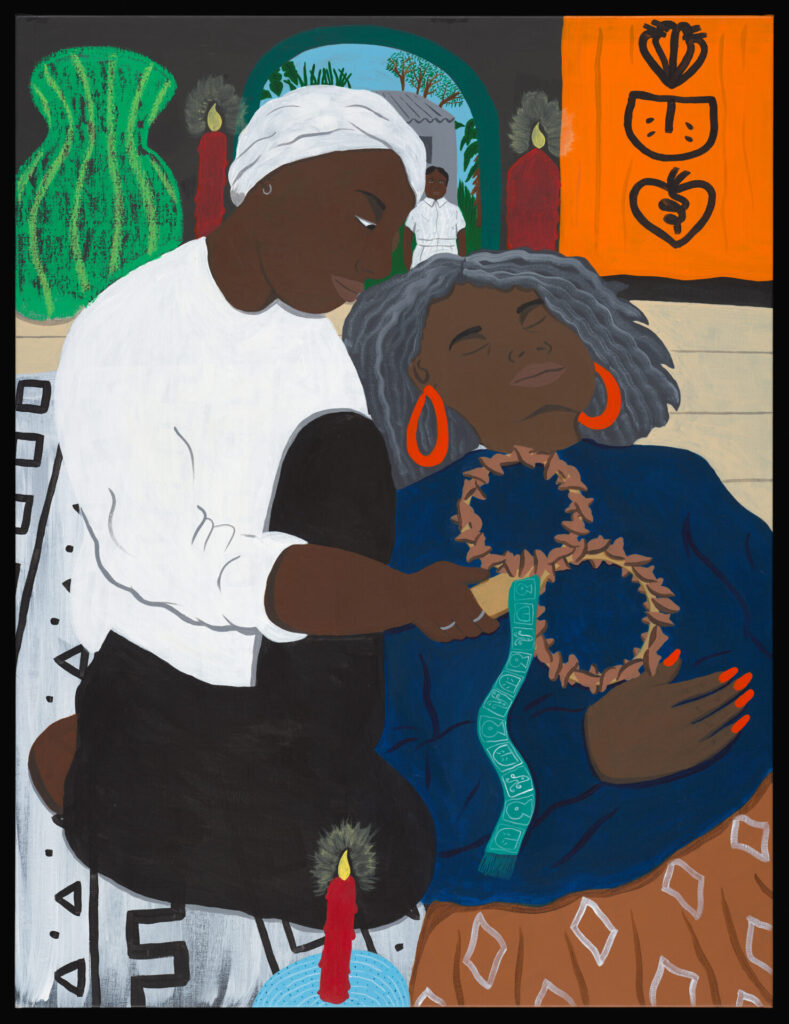
I knew that I wanted to make an exhibition specifically about black people’s mental health, particularly because of these horrendous statistics that black people are four times more likely to be sectioned under the Mental Health Act… Also, just knowing, on a personal level and on a community level, how widespread this issue is of people not receiving the care that they need.
My favourite piece in the collection is “The Search for Care / The Lack of Care” (2026). What does this specific work mean to you?
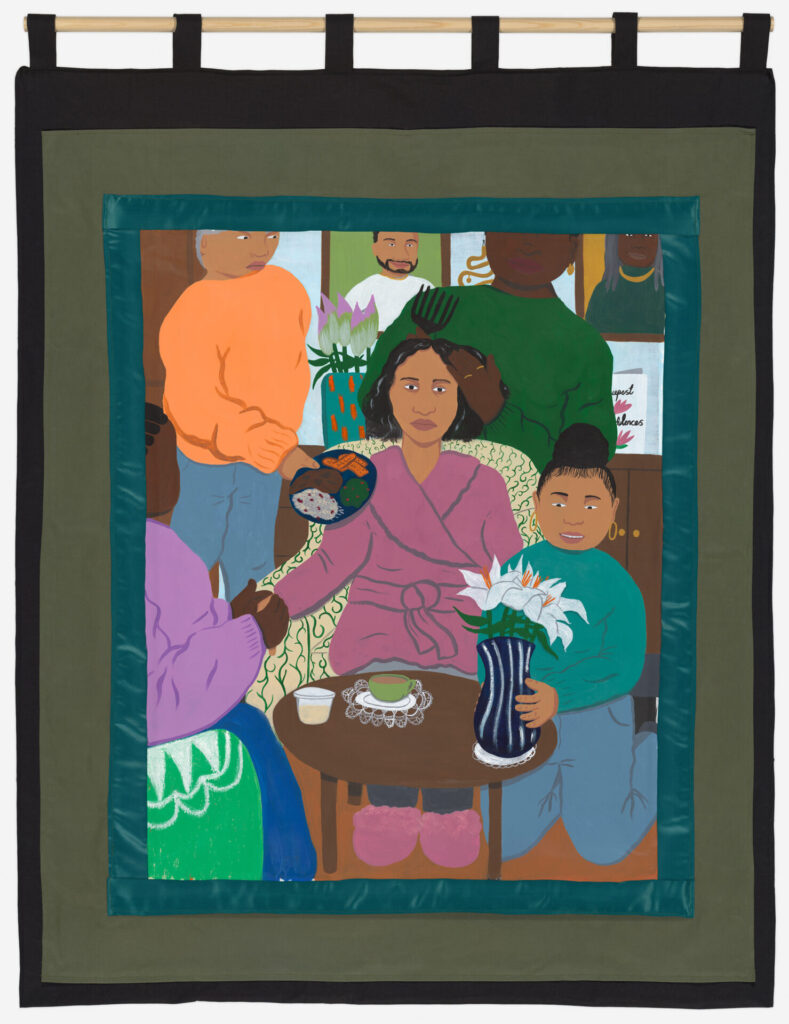
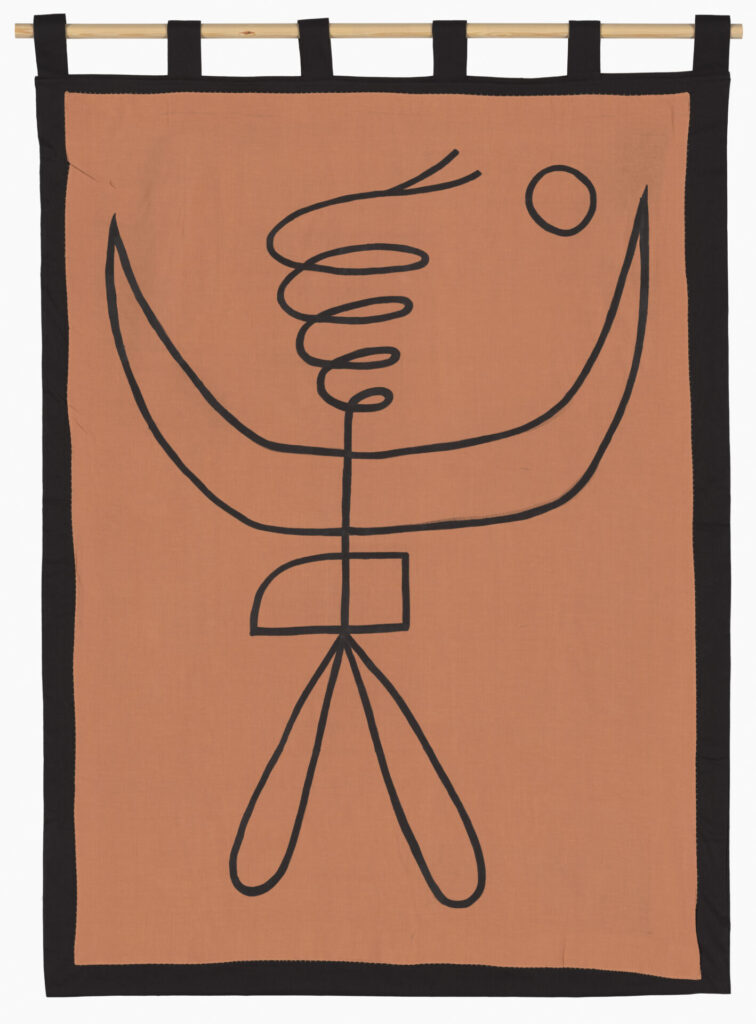
More so than any other work, it represents this dynamic of when you’re looking for care, and you’re kind of just met with either literally nothing or things which are kind of just short fixes or incarceration. And then on the other side, really thinking about the fact that, you know, something else could be possible, something more. And so all of those examples came out of, well, they’re all the experiences and dreams, hopes of the workshop participants I worked with.

What made you think multimedia was the right medium for this exhibition?
I knew that I wanted to make something that was multi-sensorial. I wanted to make something where people could come into a space and feel held, and there were things that they could hold, that they could touch. One of the great things about working with Wellcome is that they already have their own accessibility framework, so this was the perfect space for me to push myself in how I could try and integrate more sensorial experiences for visitors. My spiritual practice is such a component of what keeps me mentally stable. So I thought, I don’t think I could have an exhibition about mental health and not have some kind of spiritual practice holding the exhibition.
“I’m a storyteller. It could be a sculpture, a painting, anything. I use art to tell stories.”
Rudy Loewe
You use the term carceral care in the exhibition. What does this mean to you?
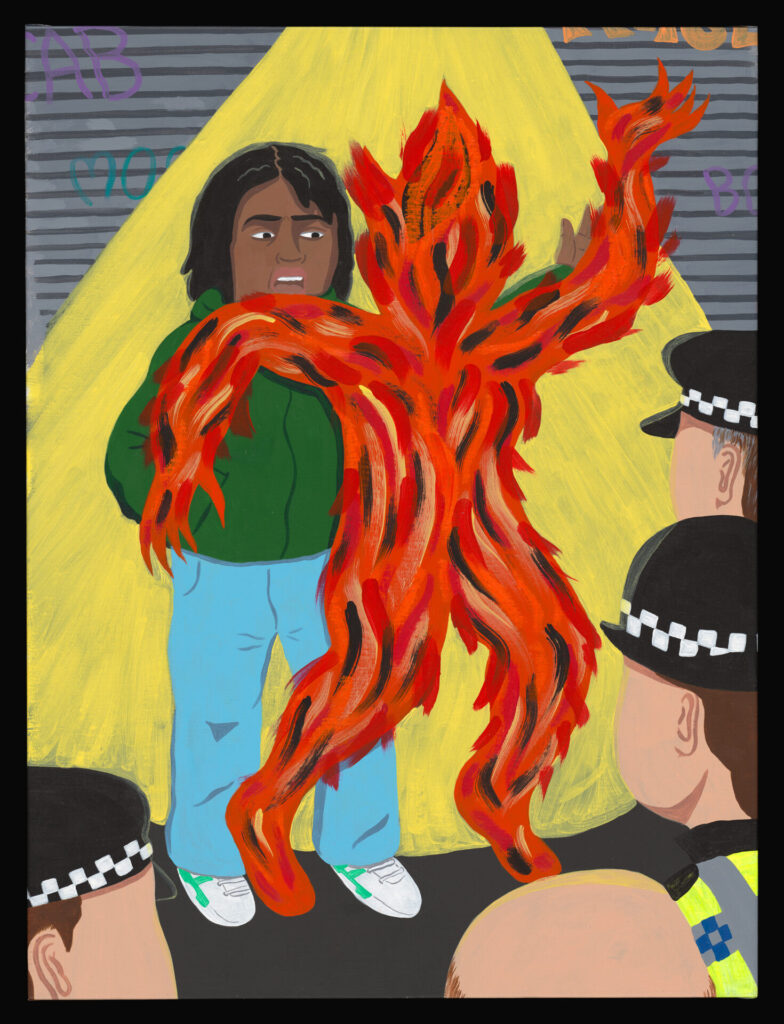
I see carceral care as a model that uses the same mechanisms as the prison system, so this can be locking people up, it can be physically restraining them, it’s surveillance, it’s this kind of punitive system…Professor Dominique Moran describes this as the carceral turn. An example I read recently was that 40% of NHS trusts are now using this 24-7 surveillance system on inpatient mental health services. That is not about caring for people. That is not about making sure someone is mentally stable or that they are safe or taken care of. That is about doing something in a way where someone is being watched, and it’s about money; it’s about what is going to be cost-effective.
Do you feel any hope for the future of the mental health system and potential reform?
The way that I feel hopeful is in the way that we organise to campaign for change and organise to protect each other. Even just within the exhibition, I started a petition which is coupled with the List of Demands (2026) work, which is a call to redesign the current mental health system. And the reason why I really truly believe that it is possible is because I come from communities of queer, trans and disabled people who have kept each other alive. We have done suicide watch for each other; we have managed to protect each other through practices of mutual aid, which have stopped people from being sectioned, which have literally kept people alive at times. So I really do believe that when we are resourced and when we feel like we can take action, then something can change.
What’s the essence of what you would like audiences to take away from this collection?
I would love for people to have a lasting engagement with black people’s mental health and to understand this is a really important issue, and it’s not an issue that only black people should kind of be aware of. The fact that systemic inequality is embedded in the healthcare system is something that everyone should be concerned with. At the same time, I hope that people leave with a feeling that something can be changed. It’s not stagnant and doomed; there is a possibility for us to kind of come together and challenge things as they are.

Quick Fire
Your best ideas come from…
The things that I feel the most passionate about.
If you could only work in one medium for the rest of your career, what would it be?
That’s not possible!
What’s the best piece of advice another artist has given to you?
It’s not necessarily advice as much as it is action, but I think about some of the Black women artists whom I’ve met, like Sonia Boyce, who have shown me through their actions how to be so generous, especially to younger artists, to make space for them and open a door. That is something that I really deeply value.
You can visit Rudy Loewe: Intimacies of Care – Spaces of Grief and Possibility at Wellcome Collection from 9 July 2026 to 7 February 2027.