

Classical music is having a big resurgence, mostly thanks to women. We spoke to Anna Clyne and Lizzie Ball, who are at the forefront of the genre, about why a new generation is finally tuning in.
For decades, classical music has struggled to shake off its reputation as an exclusive, inaccessible art form, with an over-reverence for tradition. It’s a genre which has a beautifully long and rich history, spanning centuries and continents, but it also has deep-rooted structural inequalities. Donne’s research suggests that, from its analysis of global concert repertoire, only 7.5% of works were composed by women.
Yet, over the past few years, the classical music landscape has been shifting. Classical music is starting to consistently engage with demographics it has long struggled to reach, and these audiences are demanding something more from classical in return.
Gen Z are now more likely than their parents’ generation to listen to classical music. Fever’s recent research into this cohort suggests that globally, social media is fuelling a reenergised interest in live music, and these audiences specifically are looking for genre-bending and innovative live performances.
Data on music consumption of this generation is emergent, but it’s clear from cultural trends and tastes of Gen Z that women are the centre of gravity for this transformation. Some of the most successful women in music today – Rosalia, RAYE, Laufey, St Vincent, Lady Gaga – actively draw upon classical techniques, are seeking collaborations with renowned composers, and are seeking out orchestras to accompany their live performances.
Where classical music used to demand reverence and tradition, today’s audiences are valuing openness, experimentation, and something that feels more innovative, in an increasingly algorithmic world. The women driving this change – as composers, performers, and listeners – appear drawn to collaboration over hierarchy, experimentation over predictability, and deeper emotional connection to the art they consume.
To help me understand why this cultural moment feels different, I spoke to two trailblazing women, who I see as central to this evolution: GRAMMY-nominated and Ivor Novello Award-winning Anna Clyne, one of the most performed living composers, and Lizzie Ball, globally renowned musician, founder of Classical Kicks and current Creative Co-Director of Ronnie Scott’s Classical. Their careers are strikingly different, but they both share a refusal to accept rigid boundaries between genres, audiences or artistic identities. Both women are redefining what classical music can look like in the 21st century. Their stories suggest that classical music’s resurgence is not just a case of attracting younger audiences; it’s about approaching the genre with a different set of values.
“Collaboration brings a different perspective to the work and offers an opportunity for me to examine my own craft from a different angle.”
Anna Clyne
On the day before the world premiere of her new work Sirens, I met Anna Clyne on a spring morning in central London, slipping into a small slot in her busy press schedule. Anna, born in England and currently resident in the Hudson Valley, New York, did not grow up in a house with classical music, but began composing and playing pieces on the piano aged seven, after a family friend donated a piano with missing keys to her. Until her final year of university, her compositions were largely self-taught and self-directed, with the piano and then the cello acting as a space where she could ‘let her imagination run free and have a moment of meditation’.

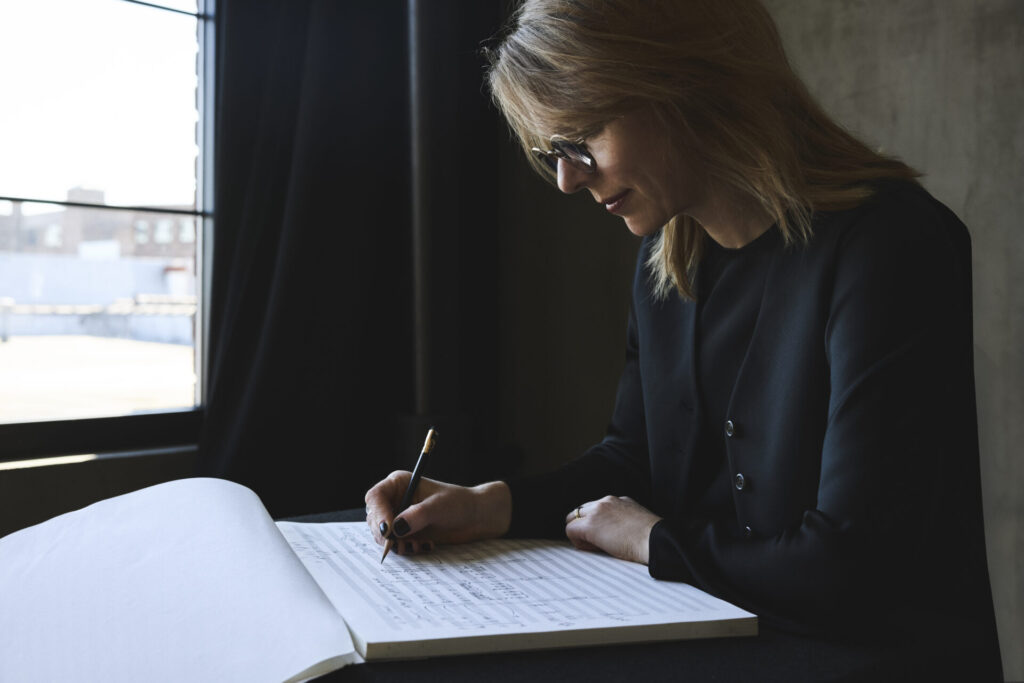
As I expected, Anna’s journey from being a self-taught girl from Oxford to being one of the most internationally renowned composers was far from straightforward. She described the years after graduating and moving to New York as ‘challenging’, and having to find ‘imaginative’ ways to make ends meet, including working as a florist. Despite these setbacks, I was struck by speaking to Anna about how community and collaboration were so important on the road to becoming a professional musician, acting both as a source of creative inspiration, proof of what was possible, and also a source of practical help.
When I asked her what kept her going through these challenging moments, she noted that mentors – Julia Wolf, Marin Alsop, and even Steve Reich – took her under their wing, giving feedback and introducing her to wider networks of musicians. Eventually, this led to a commission from Carnegie Hall, and “one thing led to another”. She said, “That’s one of the really beautiful things about the classical music community is that it’s still very grassroots, and there is a support network between generations.”
Anna was modest about her remarkable career and how unique she is. In hindsight, she described being the “only woman in my year at Manhattan School of Music…but I just kind of forged ahead.”
I imagined how challenging it must have been when there was very little template provided to her of women making a full-time career from classical music. For someone who describes herself as comfortable with the ‘solitary nature’ of composing, establishing herself in a field where women remain underrepresented required both persistence, conviction in her one artistic voice, and a determination to carve out a place on her own terms.
It’s clear to me that, to get to where she is today, Anna had to forge her own path. Her music reflects this. Her work crosses mediums and genres, referencing literature and engaging with art. She’s worked on film scores and on a project with the Houston Ballet. Now, when she is commissioned to write a piece, there are often “no parameters”, so she finds inspiration from literature, art, poetry, and even incorporates her own artwork into the process.
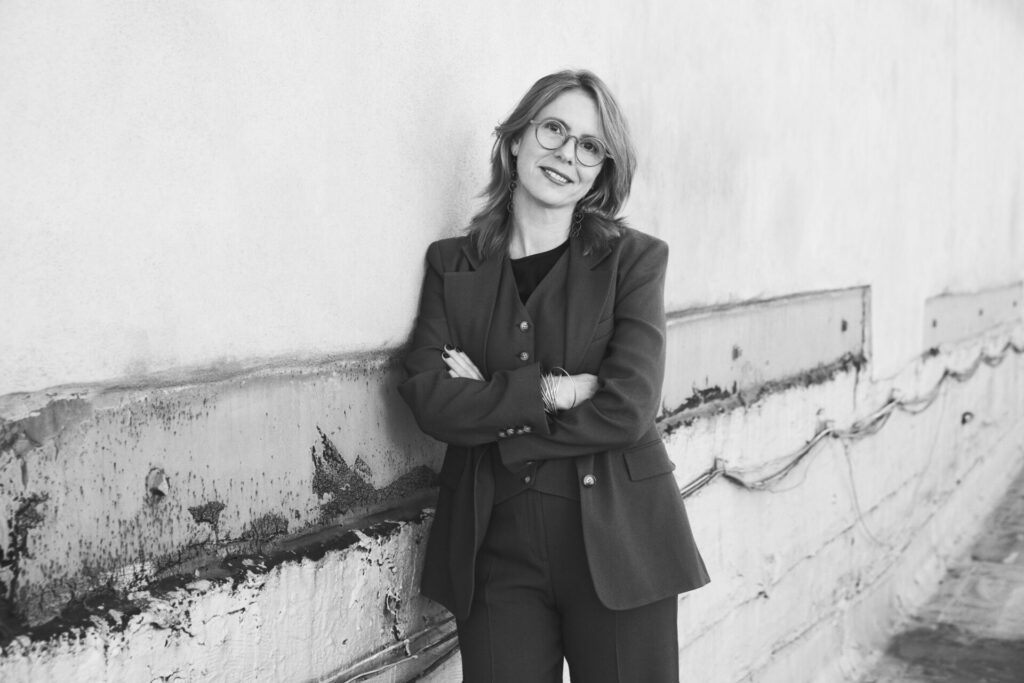
Listening to Anna’s music, this level of openness and collaboration shines through. She said that “collaboration brings a different perspective to the work and offers an opportunity for me to examine my own craft from a different angle.”
From an audience perspective, anchoring her work by referencing another artist, such as her piece DANCE, which is structured around a Rumi poem, is a brilliant hook, deeply accessible to a non-professional ear.
Anna Clyne is not a new composer, but in the post-pandemic era, classical music has opened up new opportunities for her genre. When I asked her why she thought we were seeing such a resurgence in interest for classical music, especially for the next generation, she said that coming out of a pandemic together, when we were deprived of live music, there was a “real craving for live music” in a shared space. What is so magical about a concert is that it’s a “very live visceral experience, but most importantly a shared experience, which has a certain humanity and spirituality.”
She also welcomed the fact that orchestras are programming now in ways which are increasingly inclusive and exciting; orchestras are becoming a space for exploration and exchange. She said, “Someone might come to a concert to hear a Mozart symphony and discover a piece by Caroline Shaw or Paola Prostini, or someone could see a piece by a living composer and through that be introduced to Mozart; it’s a two-way process.” She also cited St Vincent as an artist using pop and rock in collaboration with live orchestras, such as the Boston Pops or the New York Philharmonic. And then finally, she noted how technology has given orchestras new tools to engage the younger audience, binding the orchestral sound world with more electronic sounds and instruments, as Anna’s own work does.
“I never felt the need to box myself, but the industry tries to do that.”
Lizzie Ball
From Aldwych, I crossed the river to meet Lizzie Ball. As a solo musician and mum, she welcomed me into her home while looking after her son. The overlap between her music and her personal life felt instinctive. A photograph of Lizzie and her father playing piano together as a child sat nearby; the piano that once occupied her living room has since given way to her son’s toys. Music for Lizzie, as is the case for many female musicians, has never seemed to be confined to the concert hall. It moves fluidly through work and home, and being a musician and mum necessarily requires agility.
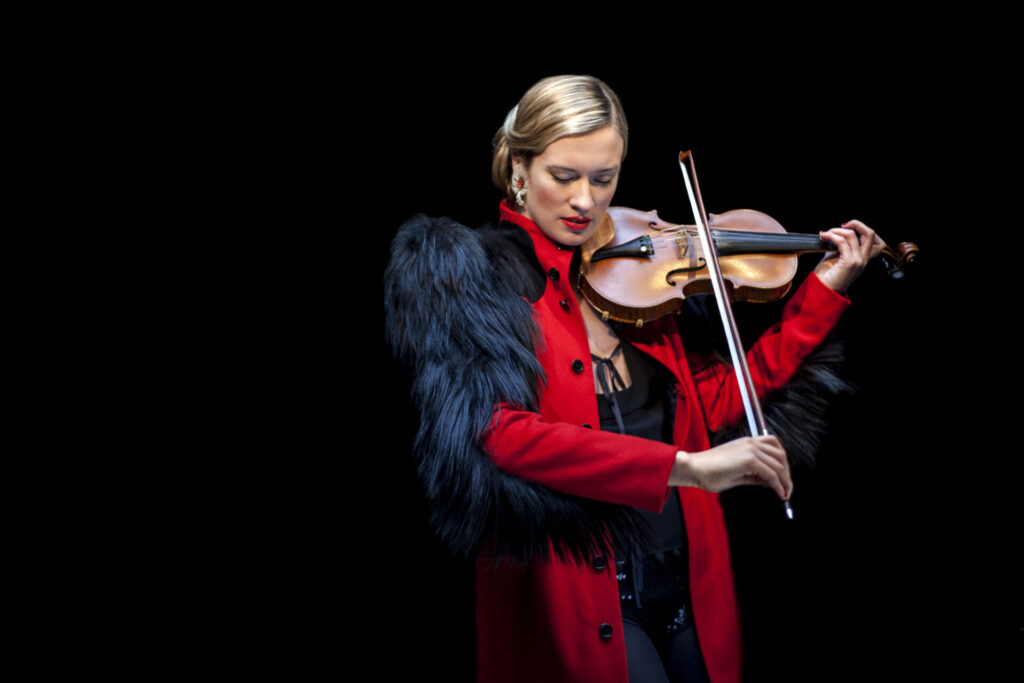
Lizzie has built a working life which defies easy categorisation. She’s been described as a producer, violinist, orchestra leader, educator, artistic director and life coach. She’s worked with contemporary pop musicians like Rudimental, acted as orchestra leader for Ariana Grande at the BBC, worked on film scores and appeared on internationally renowned stages. “People didn’t know what to do with me”, she laughed. “I never felt the need to box myself, but the industry tries to do that.”
The instinct to challenge convention underpins Classical Kicks, the series she founded at Ronnie Scott’s in 2012. What began in what she remembers as a ‘sticky-floor’ became the first classical music night in the jazz club’s history. Today, she leads Upstairs at Ronnie’s every Monday, in what is now a “gorgeous, refurbished venue”; audiences can encounter classical music in a setting which feels intimate, alive, and open rather than intimidating.
Listening to Lizzie’s music (one of my favourites being Hasta Siempre), it became clear to me why Lizzie has pursued these multi-disciplinary projects. Her style is instinctively energetic, versatile and technically flawless: it’s clear that she combines multiple musical languages, from the jazz she listened to at home, to the rigorous classical music training she received at Cambridge.
Women composers have always existed, but until very recently, it’s proved a lot harder for women to have their work platformed in the same way. From a female perspective, she describes the landscape as being easier now than it was a few decades ago. Now in her forties, she remembers the early 2000s as really being “a hangover from the 80s and 90s” in terms of the industry’s attitude towards women. She said that it’s promising that the next generation of talent she speaks to now, such as in the National Youth Orchestra, has a language for advocating for themselves. Yet, there are still double standards for women in the music industry, including the assumptions that female musicians will “look sexy” and the assumption that men will be the artistic leaders. As a life coach, working with incredibly successful women, including CEO’s, she’s also noticed that women still struggle with internalised negative beliefs in their own potential and are “constantly talking themselves down.”
Just as important, however, is the growing network of female musicians who are supporting one another. Women have also been a source of inspiration and support for Lizzie. She spoke admiringly of musicians such as Nicola Benedetti, whose control of every aspect of her artistic identity – from how she performs to how she dresses. She remains close to many of the women she studied alongside at university, a community she still turns to for advice and encouragement. Like Anna’s experience of mentorships, it’s clear to me that collaboration is one of the defining strengths of contemporary classical music.

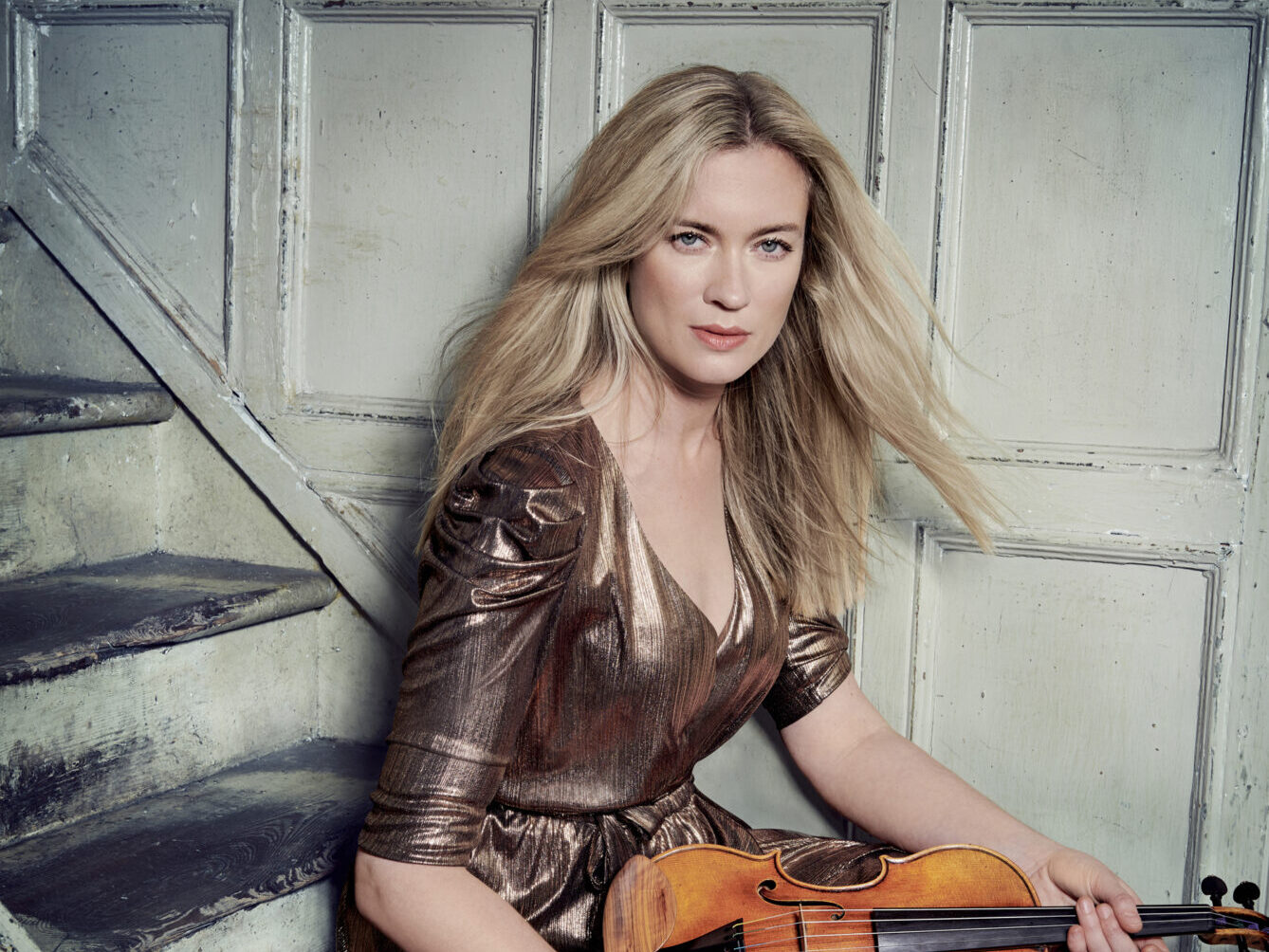
Asked about the future of classical music, Lizzie spoke of the need to protect live music and its spaces, alongside leveraging the new tools that the digital world has given us. For young musicians with an entrepreneurial spirit, social media has opened up new routes to access audiences. The next generation, she argues, is increasingly expected to not only perform but to build an online public persona – a skill which music colleges and conservatoires have been slow to teach.
Perhaps this is where women have proved particularly influential in classical music’s resurgence. Rather than simply preserving the tradition, many have become builders of new audiences and new spaces around it. Whether through innovative performance formats, interdisciplinary collaboration or online communities, they have helped make classical music feel more welcoming, more human and more culturally connected. As Lizzie put it, every project she does now has to have “something a bit more”– a fresh perspective or a new concept.
The future, she believes, is bright, provided audiences continue to value live performance. Her own career has been built on what she describes as a ‘fuck it, I’m going to keep going’ attitude. In today’s economic climate, that resilience is needed more than ever. But if classical music is to thrive, it will not be because tradition alone sustains it. It will be because people, especially younger audiences and women, claim classical music as belonging to them, too.