

The Fatal Flaw, Paris Paloma’s new album, is a mythological and artistic exploration of the process of becoming and resistance through creation.
It is no small feat to make an album that, through the power of curation and songwriting, is able to lay out the central thesis of the project with its first words. Paris Paloma’s The Fatal Flaw does just that, opening with the lyric ‘I have something to say’. As you start to explore the album, it becomes apparent that Paloma was not mincing her words; this album is unafraid to take time to engage with a myriad of themes and ideas. Paris Paloma is probably best known for her song Labour, which has become online shorthand for the blueprint of modern feminist protest music. With this in mind, it is no surprise that with her second album she is continuing to make music that is inherently political and cognisant of the times. By breaking the fourth wall on arrival, she disarms us but also prepares us. This is an album that makes it clear that it is expected that you hear the lyrics and take them in, for they are its essence.
The Fatal Flaw is not a compilation of protest music, though (more on this later). Paloma has expanded on her sonic world by making an album that also muses on love and loss in ways that suit her penmanship well. It is a project that seeks to show the mosaic of thoughts and feelings that she experienced while making it. In that way, it is an intimate album, one that shows us an artist digging deeper into themself.


Paris Paloma and Art
One of the most central themes or motifs of the album is a reflection on art and art history. Through Rothko, Pre-Raphaelite, and I Cry in Front of Paintings, Paloma invites us to reflect on the way that art is a vehicle for inner understanding and, excuse the pun, is a canvas for introspection. Rothko sees Paris standing in front of a painting by the Latvian-American painter and standing for hours, lost in it. The song juxtaposes these images of Paloma musing in the gallery with a reflection on a relationship that has extinguished her belief in its course. When one looks at Rothko’s work, simplistic and expansive, I can see how Paloma came to utilise his work as a metaphor for a sense of loss and uncertainty.
When it comes to Pre-Raphaelite, one of the album’s singles, Paloma is seen using the period of art and how it produced images of women as a portal through which to muse on the complexity of women’s relationships with one another. She writes a bittersweet love letter to other women, marvelling in the female gaze while she feels held beneath it. It is a song that touches on an aspect of how women relate to each other that is underexplored in the pop culture canon. Often, we admire the women we most envy, and to come to terms with that reality is often difficult. Paloma tackles it head on.

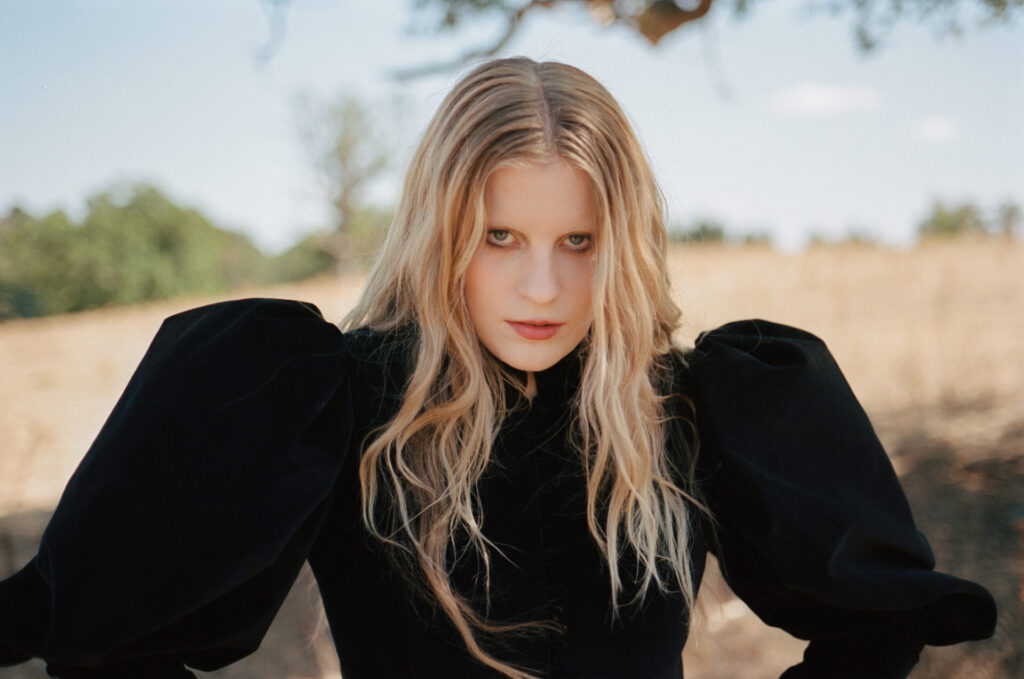
Perhaps Miyazaki, the opening track, is her most punchy statement about art. The song is a direct response to the continued propagation of generative AI. Named in honour of Hayao Miyazaki, creator of Studio Ghibli, she draws attention to the idea that AI pirates the hard work of actual people. Miyazaki’s art style was one of the first to be imitated by generative AI, something he was vocally unhappy with. Paloma similarly expresses her frustration with AI, making it clear that it cannot ever replicate the tangibility of human art. The song is astute in the fact that Paloma, rather than directly pointing at AI and attacking its output, takes the approach of exploring what it is to actually be a creative. As a person also in the creative world, I think it’s probably the most needed and relatable song on the whole album. We are all so exhausted with having this nuisance technology crammed down our throats. We know that what a human makes is invaluable because it is driven by the singular desire to create. A piece of algorithm and code could never have such complexity and nuance drive what it does.

With the collection of artists summoned on The Fatal Flaw, Paloma is able to give the album a defining, grounded yet culturally sophisticated texture. To utilise classical art the way she does, she will likely be introducing the works she discusses to at least some of her audience. She does so, in a way similar to Rosalía’s use of religious history and classical music on Lux, to produce something that is defiantly analogue. She’s able to utilise her love of art and alchemise it into meaningful lyricism and poetry. It demonstrates a real ability to understand art as an act of creation rather than the prisons of medium. Art, of all forms, has a radical humanity and honesty that is captured well by Paloma.
Mythological music
The thing that hit me immediately as I listened to The Fatal Flaw is just how much it feels like an album that was made for scoring a fantasy novel; particularly some of the work of R. F. Kuang or even Tolkien came to mind. Paloma uses a colourful palette of fantastical imagery to communicate emotions that are visceral and vulnerable. Paired with the production and instrumentation, the album feels primed for a witches’ coven to play while they conjure their spells. Ultimately, the album becomes quite a tactile piece of work. It’s one that makes you feel every breath intake, every strummer of a guitar, every drum beat, and does so in a way that makes you understand that this is a project that is more than anything focused on the idea of being tangible and fantastical in equal measure.
The Fatal Flaw, to me, is an album that explores inwardly to break down the barrier between what is transcendent and what is temporal. This balance is struck on songs like The Bleeding Part of Me, Stem The Flow, and get her the fucking flowers, which communicate about heartbreak and relationships that have left Paloma worse off, but with such imagery summoned that it is hard not to picture her as a bloodied soldier stumbling away from a battlefield strewn with elves and fae. It’s an intelligent choice, feeling natural and comfortable for her, and also placing herself in a lane of her own with how she chooses to muse on that which she has experienced.

Mythology is most obviously a driving force when we look at the song Pyrrhus, a haunting reflection on the Homeric character, son of Achilles. She reflects upon his rather grisly and, up until now, underplayed and under-focused-on story in the Homeric Epics. Utilising the story of Pyrrhus, she draws a realistic and tangible comparison between this ancient mythological figure and the folly of men who are victims and perpetrators of the crimes of the Manosphere. It’s something that she has been able to do, and create one of the album’s most resonant, thoughtful, and moody songs. Pyrrhus is also incredible because of its largely minimalistic production. It gives space to what Paloma is trying to say, and also, because she’s so emotive, even if you were not familiar with the legend of Pyrrhus, the way that I am, you can hear the song and feel what she’s trying to say. For me, it is one of the album’s greatest highlights.

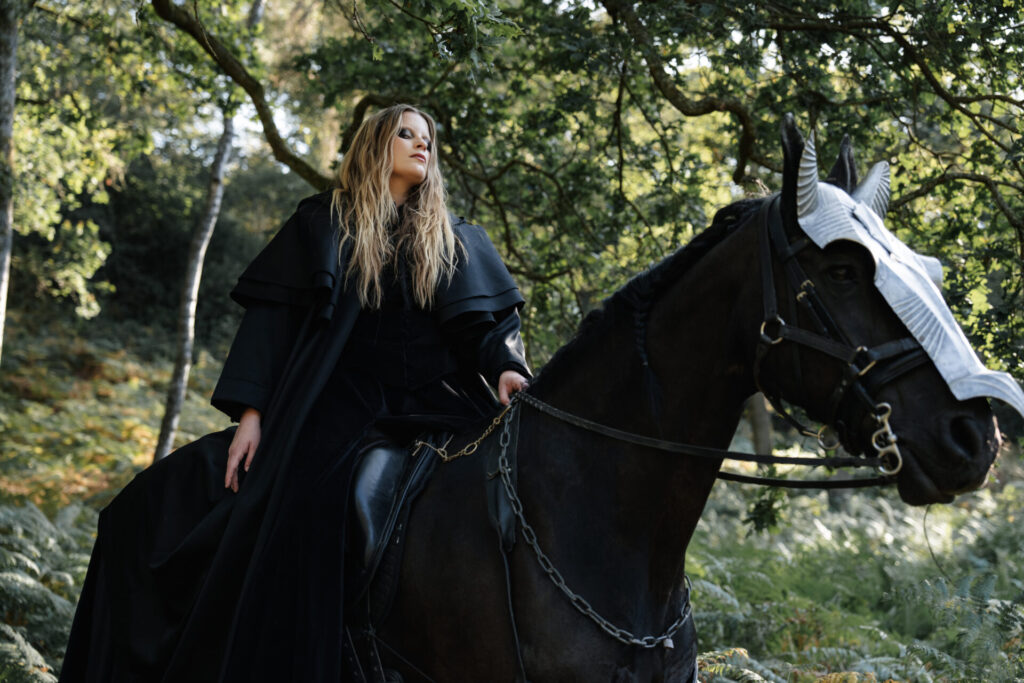
Pyrrhus takes us into another song that deserves specific consideration, Silhouette on the Hill. On my initial listen, I singled it out as the song that I was most drawn to, and in several subsequent listens, it is a song I am always excited to get to in the flow of the album. It is a rootsy revenge anthem that summons the curse of Stevie Nicks’ Silver Springs in its first verse. Silhouette on the Hill is so undeniably dark and witchy it feels perfectly timed for the breaking of autumn. Paloma is unafraid on the track, dousing it with everything she has to make it a fiery landmark in her discography. I recommend adding it to the playlist when you and your girls have a body to hide.
Paris Paloma, the protest artist
There is something quite uniquely difficult about writing music that is both engaging and enjoyable as listened to, and also carries a specific fervent social message. Paloma has been able to do that because she doesn’t sacrifice the actual craft of a song. She understands that elements of production and the way that she emotes certain lyrics can help further a political message or a social underpinning theme of what she’s trying to say. First and foremost, she knows that the focus has to be on making music that is actually consumable and enjoyable. She was able to do this with Labour so effectively that it put her in great stead to continue that trend in her work. Particularly with The Fatal Flaw, there are a myriad of different topics and ideas that are being touched upon. All are given the appropriate amount of space and time to really be fully formed.

She avoids making music that has an inkling of a message, but rather suffers in the way that so many do by trying to sand off the edges of what she’s trying to say to be palatable. Instead, she’s able to trust herself and her ability to hone with a scalpel the exact beats of the message that she’s trying to convey. Delivering her musings in a way that is sharp, concise, punchy, and detailed. That is what makes the greatest protest music; think of Zombie by the Cranberries or Nena’s 99 Luftballons – these are songs that have pointed and unflinching social messages but are so expertly made that they are just unavoidably great songs when removed from what they are saying. The Fatal Flaw is able to strike this balance, down to a fine art. Songs like Good Boy, Good Girl, Miyazaki, Pyrrhus, and Pre-Raphaelite are unafraid of making Paloma’s views heard, while also being excellently made music that brings everyone into the conversation through how enjoyable they are.
It is a balance that you do not always see, and one that I think she has made one of her most identifiable traits as a writer and as a performer. It is something that cannot be overstated, just how effectively it is done. I think that particularly touching on related but different themes has made this album more successful; it is, in its DNA, a political and a feminist body of work. She touches on artificial intelligence, and the manosphere, and body image, and does so in a way that does not feel preachy, but instead in a way that is authentic. Paris may or may not like the mantle of being a protest artist, but I think that is unavoidably who she is, lifting the conversation to the surface and holding it in front of us to hear as we enjoy the music.
What is the fatal flaw?
The Fatal Flaw takes its title from the opening line of The Secret History by Donna Tartt. Tartt asks if the fatal flaw truly exists, and as a north star for inspiration, you can hear how this idea has shaped the album. It is a project that, amidst its social and political musings, cannot be ignored on the grounds of how it tackles heartbreak and fatalism in love. The motif of fantastical language, even touches of magical realist songwriting, gives weight to the idea of whether such a flaw is real. This tension is best explored, I feel, on get her the fucking flowers. It is a devastating ballad that details a relationship in which affection is rationed. She sings of clinging to a bouquet like a talisman to be savoured and conserved due to its rarity. The imagery she summons is visceral and brutal, singing of how she would starve herself of affection to prove how much she loves the person who is denying her the attention she deserves. It is a side of her that is more vulnerable than any that is shown on the album at the point that it falls in the track list.
She can weave the personal into the wider social context of The Fatal Flaw, with songs like get her the fucking flowers speaking to a larger conversation about modern relationships and expectations (one that has been lively online for a long time). It is reminiscent in this sense of works like Beyoncé’s Lemonade that similarly wove a conversation about society into one about her own family life and inner world. You can see this continual throughline in works of Paloma’s like Stem the Flow.


The album closes with I Cry in Front of Paintings. It is the apex of the album, but comes at you initially more like a lullaby than a blade. As she gently croons us into a sense of tranquillity, we are hit with a wave of reflection and melancholy. Paris speaks about how resistance is futile, again connecting the personal to the wider social landscape. The title comes from the bridge; she sings about how she knew that she would always cry in front of paintings, but the ones that bring her to tears are not the ones she expected. As I listened to it, I had the imagery in my head of The Execution of Lady Jane Grey by Paul Delaroche. The painting symbolises a sacrificed innocence. The closing track feels similarly symbolic. Paris closes the album with an aura of having learned and found peace, one that only comes from the knowledge we gain from that which often hurts us.
Much like the painting, positioning femininity as sacrificial and as discardable, but also as pure and as greater than the system that seeks to utilise and subjugate it, The Fatal Flaw is a seminal musing on power, love, and womanhood. It feels like an observation about how we picture our lives differently from how they end up. The things we thought would haunt us d,on’t but the things we didn’t expect are fatal. Perhaps most significant, though, is how The Fatal Flaw is an expression of power. Paloma does not dilute herself but instead doubles down on her own perspective. It culminates in a project that is cutting, liberating, and revealing. As for the proverbial fatal flaw, I don’t know if such a thing exists, but I know that this album and its creator would not shy away from it if it does.