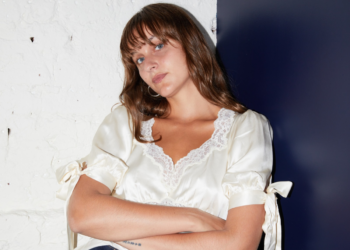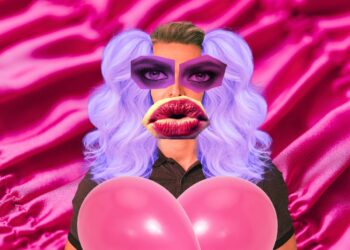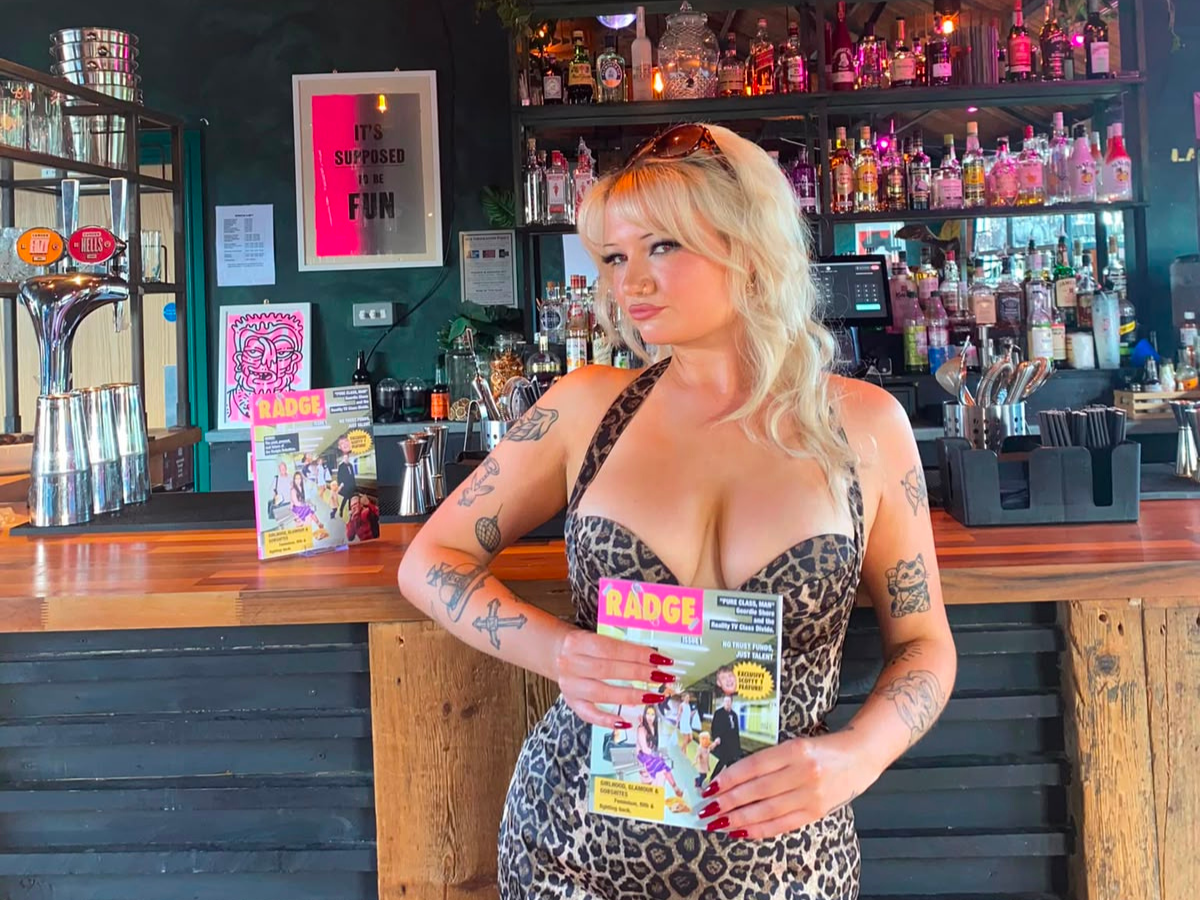
Meg McWilliam is an artist and writer from the North East of England. She gained an online following after sharing her punchy political art in lockdown, and is known for shattering the North East arts scene through her magazine RADGE. RADGE aims to platform Northern, working-class stories, without abandoning the culture inherent to the story. Our writer, Meg Thomas, chatted with Meg to discuss the famous rise of RADGE, and where it sits in the national arts scene.
Meg McWilliam has a gregarious presence: bouncing through with beautiful blonde hair and a calm, kind demeanour. I’d been following Meg’s work for a couple of years, and have felt privileged enough to watch her career rise. Meg’s artwork is varied, but the character at the heart of it is always certain. Whether it be lockdown artwork or RADGE launch parties, the work of Meg McWilliam is defined by a glamorous resilience to an often drab media landscape.
Meg’s journey as an artist
I was interested to find out where Meg’s passion for art had been sparked. Our conversation began with her childhood, where Meg expressed gratitude for growing up working class. Her artistic streak was nurtured by her mum, who pushed her to pursue her natural passion for the arts due to her own regrets of not doing so:
“My mam was a nurse, but left the job to care for my brothers. My mam was always creative, drawing on our bedroom walls and stuff. When I was going to sixth form, I wanted to do really academic subjects. She said I would hate that. She wanted to do creative subjects, but said that as a working-class person she couldn’t.”
Meg’s art has never strayed from her North East roots; she seamlessly weaves North East culture into her work. In 2024, her piece Renationalise the Parmo was shown at the BALTIC – a playful way of celebrating her region. Before RADGE, Meg built a platform through her art and presence on social media. Meg’s art is known for its bold colours and scathing political commentary. We explored the beginnings of this journey:
“In lockdown, around 2021, I was doing my art foundation degree, and I was just really pissed off at the government. We were looking at Dada art, and at this point I’d never considered doing collage. I saw this artwork reacting to a turbulent political time, and decided to make one about Boris Johnson cutting free school meals…I thought nothing of it, put it on TikTok and it got 35k likes. The penny dropped, and it made me realise I was good at what I did. So, I made the MegMcArt Instagram account”.
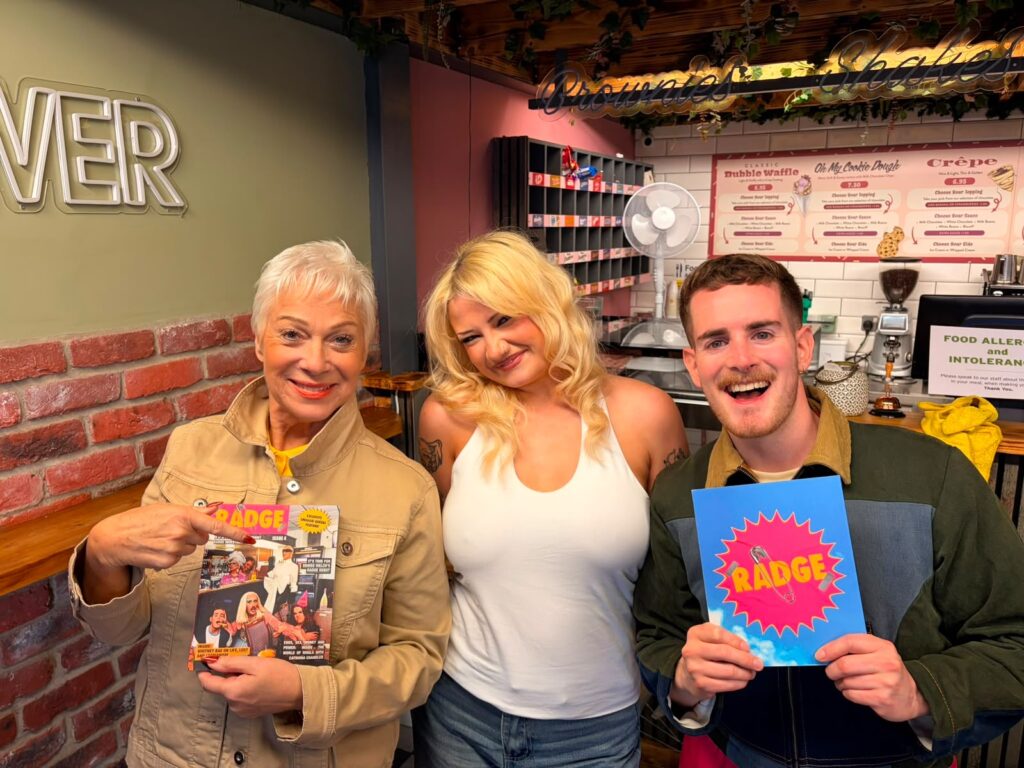
While she established her platform through her infamous art style, Meg is known for being Editor-in-Chief and founder of RADGE magazine. Having recently celebrated its first birthday, RADGE has had a riveting first year – with features ranging from Denise Welch to local grassroots trans collective – Dollhaus.
RADGE was born out of a final project for Meg’s university degree: “One art piece can say a thousand words. But, one hundred and four pages of artwork and people’s stories can say so much more.” Clearly, RADGE was born out of a deep love and connection for the North East arts scene, and the hunger for such a publication was obvious. Despite Meg “not expecting anything from it”, RADGE has thrived. From 50 first copies and a sold-out launch party, to now being mentioned in the Sunday Times Style Hot List, to HUCK and DAZED. Meg’s work has captured the hearts of creatives across the country, through sticking true to her roots.
Battling the British media
RADGE has had masses of success, but this has not been without challenges. It would be ignorant to look past the Southern-centric nature of our media landscape, and the extra barriers Northern artists have to push past in order to achieve success. I asked Meg: where does RADGE sit in our Southern media landscape?: “(Before RADGE) There was nothing that told the stories in pit villages. RADGE shows what the North has to offer, and paints us in a positive light. I want it to be that when people hear about the North East, they think about the things that are published in RADGE”.
Looking to the future
As RADGE looks back on a brilliant first year, I was eager to find out what Meg’s proudest moments have been working on the project: “Maybe being on the Sunday Times Hot List. I don’t read the Sunday Times; someone sent it to me on Instagram! I was in Durham station and grabbed a copy – and was like, oh my God I’m in the Sunday Times!”
RADGE’s first year has been a mega success – highlighting the public’s desire for authentic, politically driven stories from real people. In the age of AI and doomscrolling, the success of an independent print magazine is an act of resistance. Looking ahead to a promising future, Meg reflected on her goals for the future: “My dream would be to work with Bob Mortimer, but I think he’s retired! Really, I think I’d love to work on RADGE full time. I’d want to do that; I’d want a magazine studio. I went to London with HUCK – and it was like The Devil Wears Prada; they made this massive open space and big MacBooks. So, that would be the absolute dream. I’d love to do a feature with JADE as well; she supports the magazine! I know it will happen one day.”

Offering a new narrative of Northern pride
Projects such as RADGE cannot be separated from the political moment they were born within. Meg’s art was born through an anger at the upper-class Tory governments. In our interview, we discussed the rise of Reform in the North of England specifically, and how easily this is contorted into certain derogatory stereotypes about the North.
I wanted to explore the role that projects such as RADGE can offer within creating a counterculture to the caricatures associated with the North: “The North East has such a rich cultural history of solidarity, through the labour movement – and it gets demonised! We get put in a box of sausage rolls and having no teeth. I think it comes from people thinking we’re less educated.” As hate and support for the far-right rises across our religion, work such as Meg’s shines through like a beacon of hope – reminding us of a Northern identity rooted in community, solidarity and trust.
Meg’s hard work and passion are clear; it’s an honour to see the rise of an artist whose work expresses the political and social frustration of the masses, whilst still being in touch with culture, glamour and beauty. Our conclusion was simple: hatred, posh uni students and Reform are not welcome at RADGE Magazine